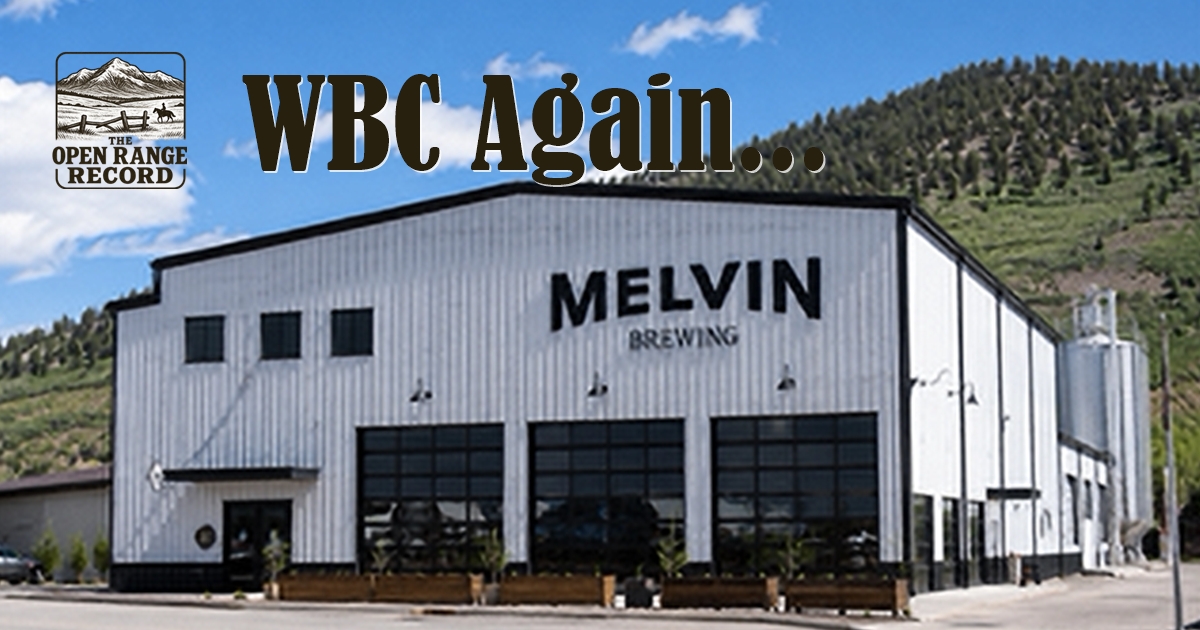
The $10 Million Question
On July 7, the Alpine Town Council is expected to consider a resolution that could mark the final chapter in one of Wyoming's most unique economic development projects. Public records show a progression from public land ownership and Business Ready Community funding to long-term lease agreements, wastewater infrastructure, corporate restructuring, approximately $4.5 million in commercial financing, and a reported $10 million commercial listing. The investigation asks how the project reached this point and what taxpayers should expect before public ownership ends.
How Alpine Became the Owner
Public records show Melvin Brewing conveyed land to the Town of Alpine in 2014.
That transfer allowed the Town to pursue Business Ready Community funding for
the project. Rather than a private company financing the entire facility alone,
the Town became the public owner while the brewery became the tenant under a
long-term lease with an option to purchase.
“The town of Alpine will construct, own and lease a 20,000-sf facility to
Melvin Brewing for 15 years at 3% interest. The total amount of the amortized
lease payments to be recaptured will be the grant amount of $2,949,425.00 minus
the cost of the utilities which could be up to $440,000.00 +/-, this equates to
approximately $2,500.000.00 in recapture plus interest over 15 years.”
The Town was not operating a brewery. It was administering a public-private economic development project. The agreements that followed established the obligations that would shape the partnership for more than a decade. All of this was done through a Wyoming Business Council Grant
The Public's Investment
Owning the
property was never the Town of Alpine's end goal. The purpose of the
partnership was to encourage economic development while protecting the public's
investment until the project reached the point envisioned by the original
agreements.
Like many Business Ready Community projects across Wyoming, the expectation was
not simply that a building would be constructed. The larger goal was to create
lasting economic benefits for the community through private investment, new
employment opportunities, and long-term economic growth. The original Melvin Brewing pitch always sounded great for the town:
“As a result of the expansion project, Melvin Brewing will create 28 permanent jobs with a median wage of $25 per hour and benefits, inclusive of a retirement plan, medical insurance, profit-sharing, training and education.”
Rather than selling the property outright, the Town retained ownership while
the brewery operated under a long-term lease that established the
responsibilities of both parties. The agreement provided a pathway toward
eventual private ownership, but only after the conditions established by the
parties had been satisfied. Years later, that accountability would become
increasingly important as ownership of the brewery changed hands.
A New Owner, Same Obligations
Nearly eight years after the original agreements were signed, the project entered an entirely new phase. The original operators stepped away, and a new ownership group appeared before the Alpine Town Council seeking approval to assume the existing lease and related agreements.
Public records show the Town considered an assignment transferring the lease from the original operator to Get Down LLC, doing business as Melvin Brewing
Company.
“This assignment and assumption of lease (the “Assignment”) is made and entered into this 14th day of September, 2022 by and between Melvin Brewing Company, LLC (“Assignor”) and Get Down, LLC, a Wyoming limited liability company (“Assignee”).”
As the paper trail continues, another name appears repeatedly in the public
record: Colby Cox. Corporate filings associate Cox with Get Down LLC, Roadhouse
Brewery Group and Convergence Investments. Separate Town records also show Cox
later appearing before the Alpine Town Council regarding redevelopment concepts
for the former Clinger (Nordic Inn) property.
Those are separate projects, and nothing in the documents reviewed establishes
they are connected. Their significance is that the same developer became
involved in multiple significant projects within Alpine during roughly the same
period.
Within months of the assignment, another set of documents appeared in the
Lincoln County Clerk's Office. Those records were not about who operated the
brewery but were about how the operation would be financed, documenting a
commercial financing package totaling approximately $4.5 million.
Following the Money
One of the most misunderstood parts of the Melvin Brewing project is the commercial financing recorded shortly after Get Down LLC assumed the lease in 2022. Public records include a commercial mortgage, a Uniform Commercial Code (UCC) Financing Statement, an Assignment of Rents and related financing documents totaling approximately $4.5 million.
At first glance, many readers assume the company mortgaged property it did not
own. The documents tell a more nuanced story. The financing appears to be
secured not only by the leasehold interest, but also by equipment, fixtures,
inventory, accounts, contract rights, licenses, permits and other business
assets.
Taken together, the documents suggest the lender viewed the leasehold interest
and operating business as valuable collateral capable of supporting substantial
commercial financing. That naturally raises another question. If the business
was able to obtain approximately $4.5 million in commercial financing, why
continue under the Town's lease instead of exercising the purchase option at
that time?
Public records reviewed for this investigation does not answer that
question. There may be legitimate business reasons, including refinancing,
expansion, operational needs, or capital planning. The point is not to
speculate, but to recognize where the public record ends.
A Second Public Investment
The brewery
building was not the final public investment associated with the project. Years
later, the Town pursued additional funding for a wastewater pretreatment
facility designed specifically to accommodate brewery operations.
“A RESOLUTION AUTHORIZING SUBMISSION OF APPLICATION TO THE
WYOMING BUSINESS COUNCIL UNDER THE BUSINESS READY
COMMUNITY GRANT AND LOAN PROGRAM FOR A BUSINESS
COMMITTED PROJECT ON BEHALF OF THE
GOVERNING BODY OF THE TOWN OF ALPINE FOR THE PURPOSE OF: A NEW WASTEWATER PRE-TREATMENT SYSTEM AND BREWERY EXPANSION”
“NOW, THEREFORE, BE IT RESOLVED BY THE GOVERNING BODY OF THE TOWN OF
ALPINE, that a grant application in the amount of $3,000,000 be submitted to
the Wyoming Business Council for consideration of assistance in funding the
Alpine Wastewater Pretreatment System and Melvin Brewery Expansion Project”
Public officials described the project as necessary to support continued
operations while protecting the Town's wastewater system. That investment
raises another important policy question. If public infrastructure is
constructed primarily to serve a private enterprise, how should taxpayers
evaluate the return on that additional investment? Community members have also
questioned how the infrastructure has been financed over time, including
whether utility ratepayers have absorbed part of those costs.
This investigation does not attempt to answer those questions. It simply
follows the agreements and asks whether the public received the benefit
envisioned when additional taxpayer resources were committed.
By this point in the story, the partnership had evolved well beyond a single
brewery building. It now involves public land, state funding, a long-term
lease, additional public infrastructure, corporate restructuring, and millions
of dollars in public and private investment.
The next section asks the question that naturally follows: Who ultimately receives the benefit of the value created over the life of the project?
Listing Agreement Questions
As this investigation was nearing completion, another question emerged concerning the process used to market the property for sale. According to sources familiar with the transaction, the listing agent indicated that Colby Cox had signed the listing agreement for the property, and so did the Town of Alpine.
However, in a recorded conversation with Town personnel, Open Range Record was told that the Town had not yet signed a listing agreement and that a sales-related agreement was expected to be discussed at the July 7th Town Council meeting. In addition, a review of the Town's publicly available resolutions from late 2025 through early 2026 did not identify a resolution authorizing the listing of the property for sale.
Those facts do not establish that anything improper occurred, but they do, however, raise reasonable questions about the sequence of events. If the Town of Alpine remained the legal owner of the property at the time it was marketed, when was the listing authorized, who approved it, and when were the necessary agreements executed?
The July 7th meeting may provide those answers. Regardless of the outcome, the public has an interest in understanding how and when decisions involving publicly owned property were made before title is transferred into private ownership.
Who Gets the Upside?
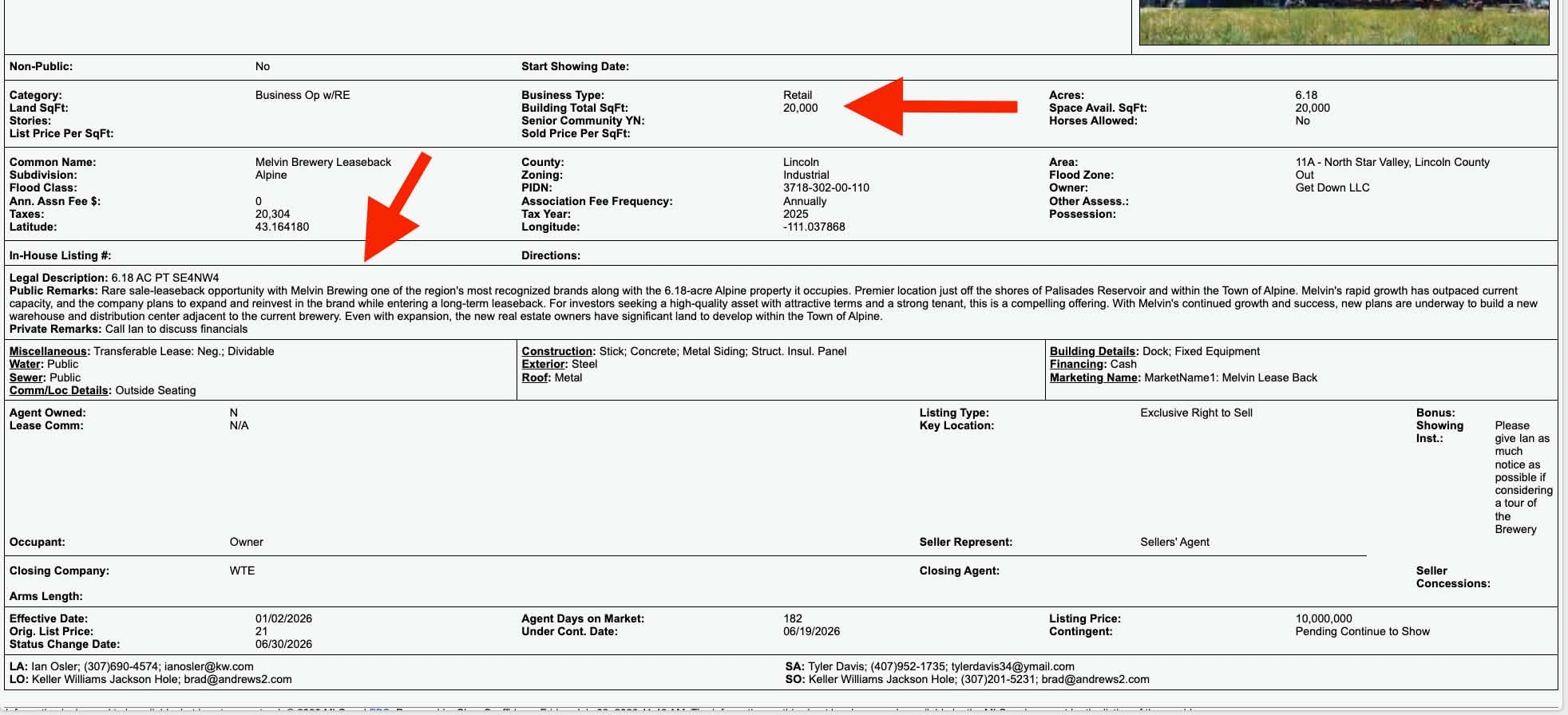
More than a decade has passed since the Town of Alpine agreed to participate in one of the most ambitious economic development projects in its history. During that time, the public record shows an extraordinary progression. Land was conveyed to the Town, public funding helped construct the brewery, and the brewery operated under a long-term lease with an option to purchase. Additional public investment later supported wastewater pretreatment infrastructure. The lease was assigned to a new operator, approximately $4.5 million in commercial financing followed, and today the property is for sale for a reported $10 million.
Who ultimately receives the benefit of the value created over the past twelve
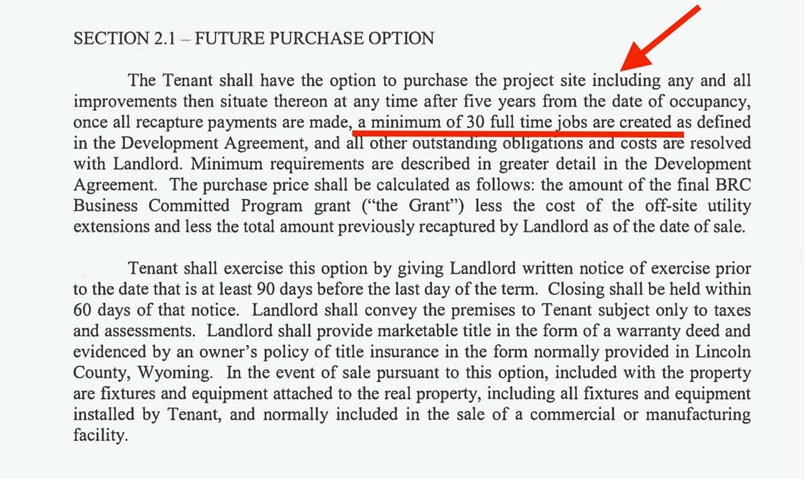
years? The original agreements anticipated that the brewery could eventually
purchase the property. The issue is not whether a purchase option exists. The
question is whether every obligation required by those agreements has been
satisfied before public ownership comes to an end.
“The tenant shall have the option to purchase the project site, including any and all improvements then situate thereon at any time after five years from the date of occupancy. Once all recaptured payments are made a minimum of 30 full-time jobs are created as defined in the Development Agreement and all other outstanding obligations and cost a resolved with Landlord. Minimum requirements are described in greater detail in the Development Agreement. The purchase price shall be calculated as follows: the amount of the final BRC Business Committed Program grant, less the cost of the off-site utility extensions and unless the total amount previously recaptured by the Landlord, as of the date of sale.”
Public records also show that after Get Down LLC assumed the lease in 2022, it
secured approximately $4.5 million in commercial financing. Roughly four years
later, the property appeared on the market as a reported $10 million
sale-leaseback opportunity.
The public record does not explain why that structure was chosen. There may be
legitimate business reasons. Before the Town transfers title, however, citizens
deserve to understand how public officials determined that the agreements had
been fulfilled and why they believe the project has reached the point
envisioned when it began.
The Lesson for Wyoming
The Melvin
Brewing project is about more than a brewery. It is a case study in how
public-private partnerships evolve over time. Communities invest public
resources because they hope to create jobs, strengthen local economies, and
encourage private investment. Those goals are worthwhile.
But successful partnerships require transparency as well as good intentions.
They require accountability, and they require a clear understanding of what
taxpayers were promised in return. This investigation has not attempted to
answer every question. Instead, it has followed the documents and identified
the questions they naturally raise.
Whether readers ultimately view the Melvin Brewing project as a success or
believe it offers lessons for future economic development efforts, one
principle should unite everyone: When taxpayer dollars help create private
opportunity, taxpayers deserve to know how their investment performed.