NEWS
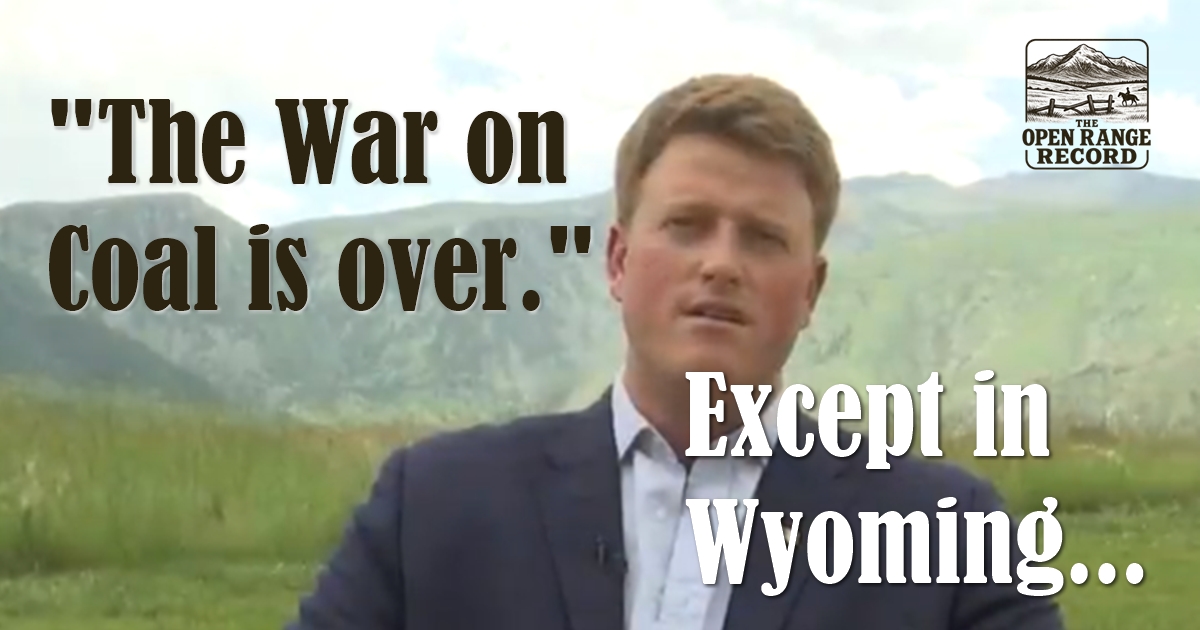
Cyrus Western has declared victory. “The war on coal is over,” the EPA regional administrator told Cowboy State Daily after the agency announced its repeal of most Biden-era power-plant carbon-emission standards. Gov. Mark Gordon applauded, adding, “I have consistently advocated for market-based solutions over ones driven solely by politics.”
There is an inconvenient piece of Wyoming history missing from Western's victory lap. While Cyrus Western triumphantly declared that the war on coal is over, he neglected to mention that the EPA’s rollback will not remove Wyoming’s own carbon-capture requirements—because of a bill he voted for.
Gordon signed that bill. Eric Barlow voted for it, too.

House Bill 200, enacted in 2020, directed the Wyoming Public Service Commission to establish low-carbon electricity portfolio standards built around carbon capture, utilization, and storage. It also authorized utilities to recover compliance costs from their customers.
Western and Barlow voted for the bill on final House passage and again when the House approved Senate changes. Gordon signed it on March 24, 2020—during Donald Trump’s first administration, before Biden took office and four years before the federal standards now being dismantled.
Wyoming receives the federal rollback, and its coal industry could benefit, as power plants elsewhere face fewer restrictions. But Washington’s decision leaves Wyoming’s separate requirements intact. Gordon is celebrating relief from a federal burden while the state burden bearing his signature survives.
His claim to favor market-based solutions makes that contradiction harder to overlook. Directing a commission to establish generation requirements and allowing utilities to charge customers for compliance is government intervention. Calling it a strategy to save coal does not make it voluntary.
Wyoming’s framework does not require every coal plant to install carbon-capture equipment immediately. As of July 2025, regulators had established no portfolio requirement above zero, while utilities continued feasibility work. Customers were nevertheless paying: the Public Service Commission reported approximately $3.9 million collected by Rocky Mountain Power and another $883,312 by Cheyenne Light, Fuel and Power. Those are the report’s historical figures, not current totals.
Lawmakers could have changed course this year. Rep. Christopher Knapp’s HB56 sought to repeal the low-carbon requirements. It died in the Senate Minerals Committee led by Senators Tara Nethercott and Jim Anderson. That leaves three records worth remembering amid the celebration: Western voted for Wyoming’s law; Barlow voted for it, and Gordon signed it.
If carbon-capture mandates obstruct affordable coal power when imposed by Washington, they definitely do the same thing when Wyoming does it. The victory speech is easy. Removing the mandate they helped create would require action in Cheyenne.