NEWS
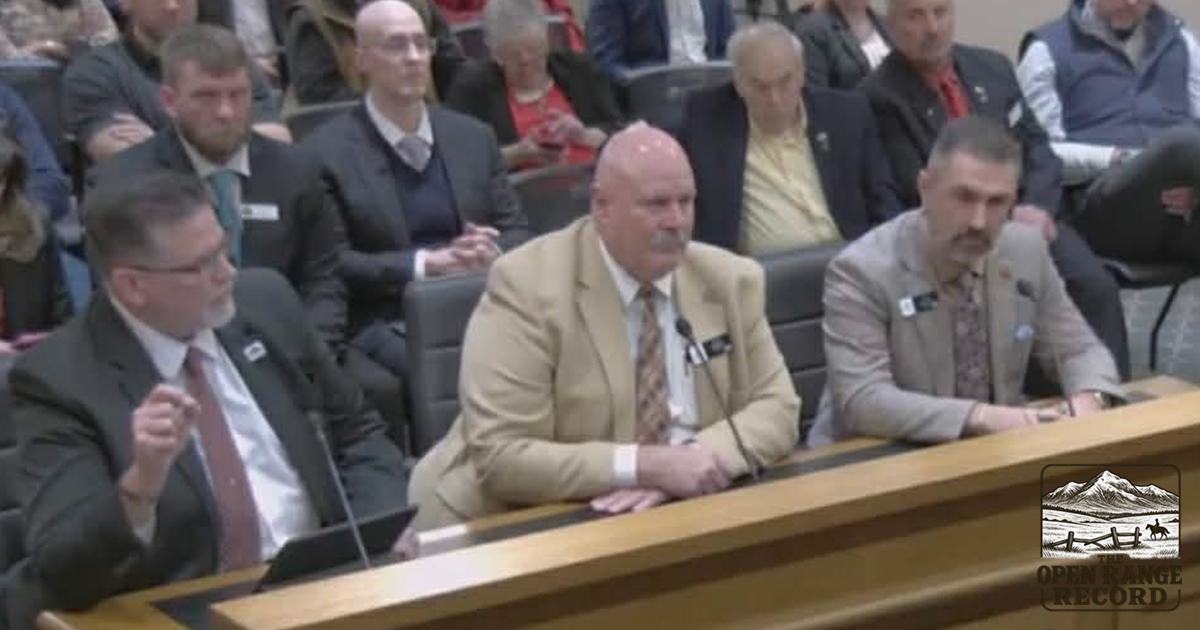
For two hours inside the Wyoming House Education Committee on February 18, 2026, one reality stood out clearly. Three prominent association representatives, Brian Farmer, representing the Wyoming School Boards Association; Boyd Brown, representing the Wyoming Association of School Administrators; and Tate Mullen, representing the Wyoming Education Association, all stood in unified opposition to all three education bills before the committee. Their concerns centered on administrative burden, operational flexibility, and exposure to liability.
Supporters' concerns were different though; they are asking for their rights, transparency, and accountability. That contrast exposed a defining question for Wyoming. When statutory rights are debated, who ultimately holds authority, professional associations or the public?
Three Bills, One Structural Question
The committee heard three significant measures:
- HB0157 – Protection of Parental Rights: Cause of Action
- HB0159 – Safeguarding Personal Expression at K-12 Schools
- HB0178 – Public Unions: Transparency and Dues Withdrawal Limitations
Each bill addresses a different issue. Together, they raise a broader structural question: Are statutory rights in Wyoming truly enforceable — or are they merely declaratory?
HB0157 Raises the Question - When a Right Must Have a Remedy
Wyoming law recognizes parental rights as fundamental under W.S. 14-2-206. However, under the Wyoming Governmental Claims Act (WGCA), government entities are generally immune from suit unless the Legislature creates a specific exception. HB0157 seeks to close what supporters describe as a gap between recognition and enforceability.
If a right exists, there must be a remedy when it is violated. During testimony, the Wyoming Department of Education acknowledged the structural dilemma. Dickie Shanor, speaking on behalf of Superintendent Megan Degenfelder, explained that the department frequently receives complaints from parents but must direct them back to local school boards and trustees. Parents return seeking answers, yet the department has no enforcement authority to offer additional recourse. HB0157 would create a judicial pathway where none clearly exists.
Representative Ocean Andrew challenged testimony from Brian Farmer, who argued that parents already have access to judicial review under other statutory provisions. Andrew pointed out that prior attempts to create a clear private right of action had failed, and that judicial review is not the same as a defined cause of action. Farmer’s primary concern was exposure to monetary relief. Boyd Brown echoed those liability concerns.
Bill Winney described the issue more bluntly: parents are facing down publicly-funded bureaucracies while paying legal expenses out of their own pockets. Bureaucracies can endure prolonged disputes; families often cannot.
Supporters included Wyoming Family Alliance, Moms for Liberty, and Senator Pearson as a co-sponsor. Senator Pearson shared that she had spent three and a half hours listening to parents recount what she described as heartbreaking stories of frustration and lack of accountability within some districts. She emphasized that attorney fee provisions are critical because many attorneys will not take cases against school districts without them.
Sarah Beth Nolan of Alliance Defending Freedom reinforced that point. She explained that one way legislatures protect parental rights is by providing a mechanism to hold the government accountable. She referenced a Florida case in which a lawsuit failed because the legislature had not created a private cause of action. As the court noted, the legislature “could have but did not” include one. Nolan closed by stating that ensuring rights are effective is now before Wyoming lawmakers.
HB0159 Addresses Personal Expression in Schools
HB0159 addresses personal expression protections in K-12 public schools. The bill prohibits school districts and employees from disciplining or discriminating against students for lawful political, religious, or ideological expression, provided that expression does not substantially disrupt school operations or infringe on the rights of others.
Supporters argue that the bill clarifies statutory guardrails to prevent viewpoint-based enforcement while maintaining order. If violated, a student and their family may bring a civil action seeking declaratory or injunctive relief. Courts may award equitable relief and reasonable attorney fees.
During testimony, Sarah Beth Nolan took questions as an expert witness. When asked whether the bill would allow a student to display extremist symbols, she clarified that the measure does not expand speech protections beyond the First Amendment. True threats and unlawful conduct remain unprotected.
The Wyoming Department of Education supported the bill. However, Brian Farmer, Boyd Brown, and Tate Mullen opposed it.
Representative Singh referenced a recent public gathering outside the Capitol and asked Patricia McCoy whether the bill would apply in that context. McCoy responded that, in her opinion, it would not.
Representative Erickson attempted to table the bill, but Representative Strock had already moved to advance it.
HB0178 – Discussed Transparency and Dues Withdrawal in Public Unions
HB0178, brought forward by JD Williams, shifts focus to public-sector unions and financial transparency. The bill addresses two primary areas. The greater transparency in union financial operations, including disclosure of administrative costs, political spending, and lobbying activities and clearer procedures and limitations regarding payroll deduction authorization and employee withdrawal from dues payments.
The Wyoming Department of Education supports the bill for two reasons. One it is good policy to separate government employers from labor organizations, and two, since this involves government employees and taxpayer dollars, the added transparency is a helpful thing.
Supporters frame the bill around informed consent and employee autonomy. Public employees, they argue, should fully understand their financial obligations and have straightforward mechanisms if they choose to withdraw.
Opponents raised concerns about administrative complexity and operational impact.
Will Rights move from Paper to Practice
Throughout the two-hour meeting, the divide remained clear.
Associations emphasized protecting systems, limiting liability, and preserving operational flexibility. Legislators bringing the bills emphasized responding to families and constituents seeking enforceable rights and greater transparency. Associations advocate for institutions. Legislators answer to voters.
When rights, transparency, and accountability are debated, Wyoming’s constitutional structure is clear. Authority rests not with professional associations, but with elected representatives and the citizens who sent them there.
All three bills advanced out of committee. The debate now moves forward, but the central question remains, will Wyoming’s statutory rights remain symbolic, or will they become enforceable in practice?