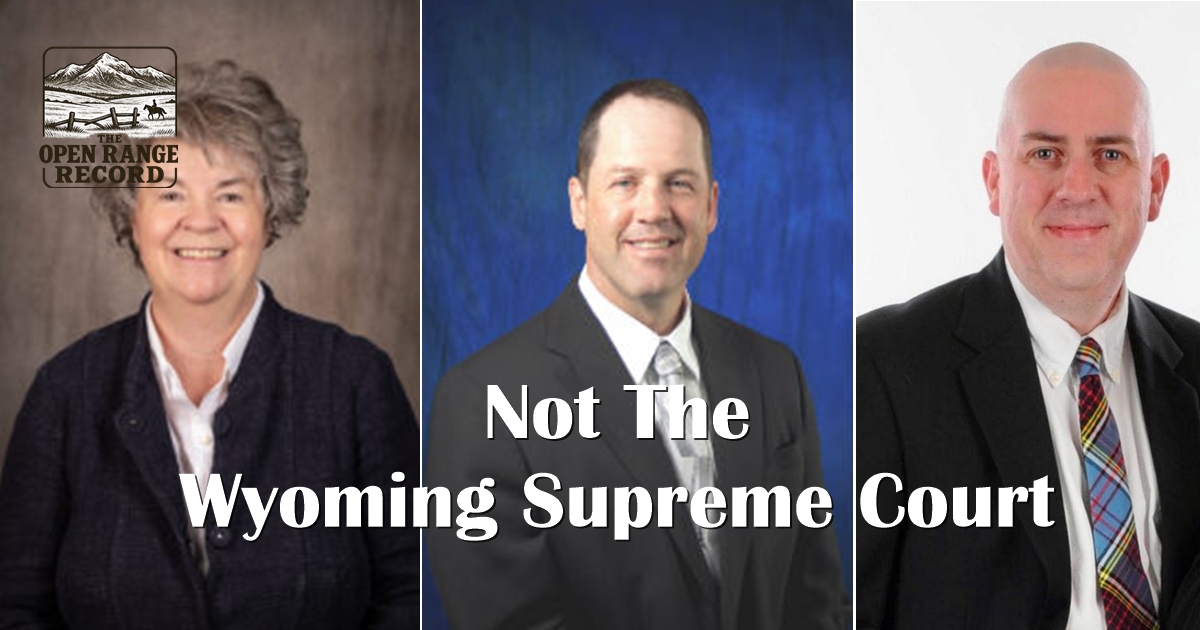
A major political crisis has erupted in Wyoming after a two-member majority of the State Board of Equalization effectively blocked the legislature’s popular four percent property tax cap. Board Chair Jayne Mockler and Vice-Chair Martin Hardsocg issued a formal directive refusing to certify local property valuations, sparking widespread uproar by claiming the legislative relief violates the uniform taxation clause of the state constitution.
The unprecedented move bypasses the judicial system and creates an immediate gridlock for county offices. While the State Board of Equalization consists of three members, the controversial regulatory report was authored solely by Mockler and Hardsocg. The third board member, Karl Anderson, was not named in the directive. Public records have since highlighted a specific political pattern behind the two administrators controlling the panel.
Mockler is a prominent, long-time Democrat who spent sixteen years in the Wyoming Legislature before being appointed to her seat by Governor Mark Gordon in 2025. Federal campaign finance filings show she regularly funds national progressive candidates, including recent contributions to Harris for President and ActBlue.
Conversely, Hardsocg maintains an official registration as a Republican within the state, allowing the panel to satisfy statutory requirements regarding bipartisan representation. However, federal data reveals that Hardsocg has consistently donated to national Democratic entities, including the Democratic National Committee and the Campaign for Democracy PAC, since late 2023.
This recent action of the board follows a failed attempt in January 2026, when the same pair drafted a lawsuit to challenge the tax cap in court. Governor Gordon intervened to block that legal filing, leading the board members to utilize their certification authority to force the issue without judicial involvement. Mockler defended the move to reporters, stating that capping increases treat identical properties differently based on local appreciation spikes and that residential property taxes are currently not uniform under the law.
Legal and real estate experts point out a glaring logical contradiction in the board's rationale. Critics argue that if unequal valuation hikes make a tax law unconstitutional, then the entire property tax system itself fails the test by naturally punishing residents based on volatile housing markets. By trying to protect uniformity, the board may have inadvertently validated the arguments of total tax abolitionists. Furthermore, legal experts emphasize that administrative agencies are designed solely to execute laws and possess no constitutional authority to invalidate statutes, a power reserved strictly for the courts.
Attorney General Keith Kautz intervened on Thursday to address the administrative maneuver, announcing that his office will fully defend the legislature’s tax relief statutes. This promise provides vital reassurance to local offices caught in the regulatory crossfire. County assessors describe the directives as highly disruptive, as they now face two directly conflicting legal obligations: state law requires them to apply the cap, yet a separate statute requires them to follow all formal board directives.
The standoff threatens to delay the entire annual property tax collection cycle, as the board must certify property valuations by the first Monday in August. Converse County Assessor Dixie Huxtable expressed deep frustration with the bizarre situation, questioning how local officials can be asked to go against the law. Delayed certifications could freeze municipal budget planning, stalling local road maintenance, emergency services, and forcing counties to borrow funds to maintain basic operations.
The sudden removal of the four percent threshold also threatens vulnerable populations. Real estate experts note that fixed-income elderly residents rely entirely on predictable statutory caps to survive inflation and avoid housing instability. The ongoing chaos has added fuel to a growing grassroots movement backing a looming ballot initiative to cut residential property assessments by fifty percent. In response, state lawmakers are already drafting emergency legislation to explicitly strip administrative boards of the ability to delay statutory relief and restore institutional order.