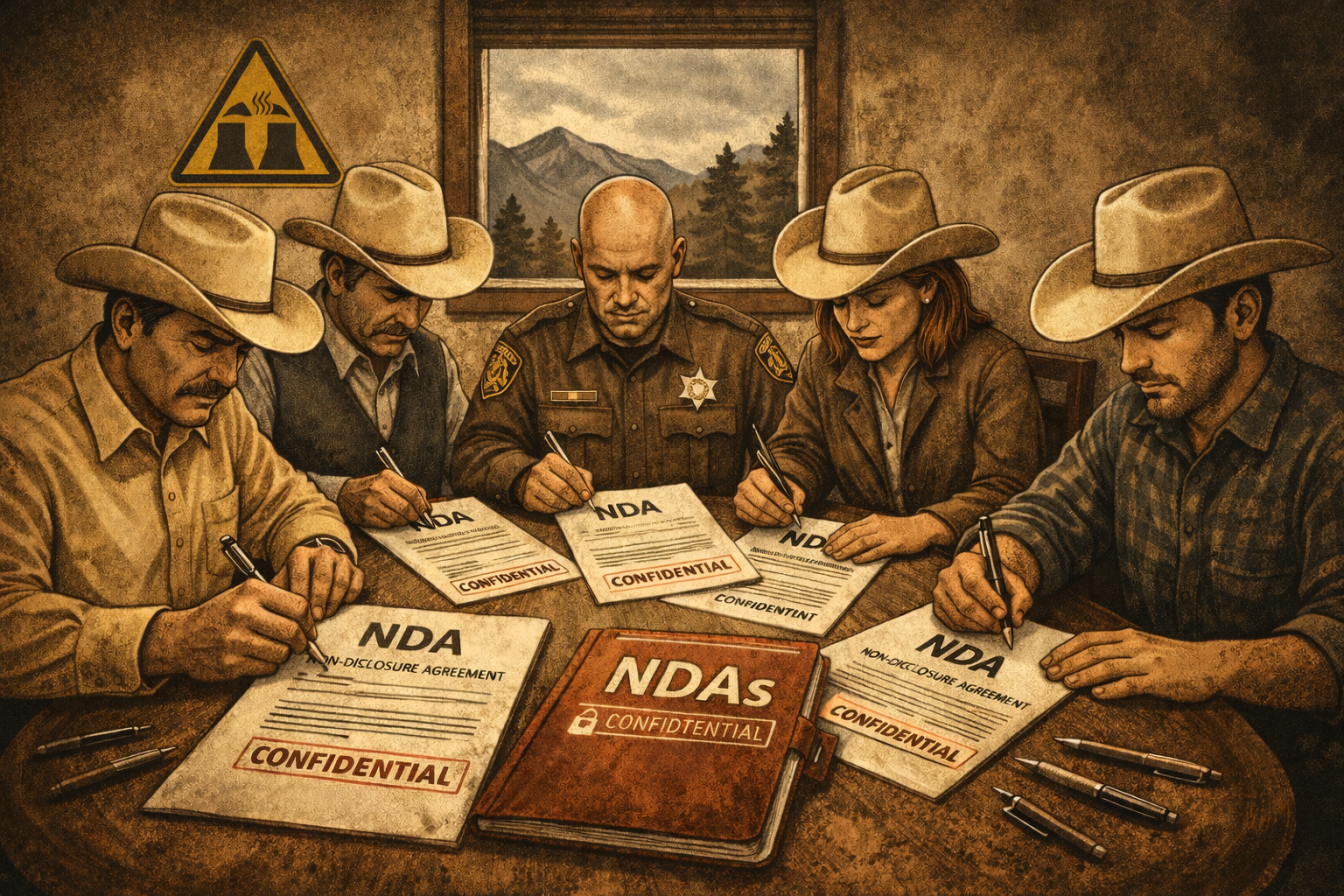
Two bills died on the House floor this week. Different topics, same underlying question: who controls the information — and who ultimately gets the final say?
HJ0003: Let the People Vote
House Joint Resolution 3 would have required voter approval before Wyoming could store spent nuclear fuel waste on a case-by-case basis, placing that authority directly in the hands of voters. Because it was introduced during the budget session, it required a two-thirds vote to advance. It failed 32–30. Official bill history: HJ0003.
Opponents argued that requiring voters to weigh in on each proposal would create uncertainty for industry recruitment. But that perspective raises a more fundamental question: when do citizens get meaningful input — before decisions are made, or only after projects are already underway?
Public comment during permitting is not the same as public consent at the outset. If direct voter approval is considered problematic, it is worth asking whether the process is structured primarily for public empowerment or economic certainty.
HB0135: No NDAs for Public Officials
House Bill 0135, titled “Public officials — nondisclosure agreements,” also failed introduction. The bill would have prohibited public officials from entering into nondisclosure agreements related to public-funded projects that conceal the use or commitment of public funds, financial incentives or liabilities, land-use and infrastructure impacts, or information otherwise subject to open meetings and public records law. The measure failed introduction on a 36–25 vote. Official bill digest: HB0135.
HB0135 preserved lawful confidentiality protections already allowed under Wyoming’s Public Records Act. It did not eliminate trade secret protections. Instead, it sought to prevent public officials from agreeing to silence themselves regarding matters involving taxpayer funds and public infrastructure commitments. It also would have granted Wyoming residents standing to challenge agreements entered in violation of the statute.
Sidebar: The TerraPower Timeline and Federal Framework
Supporters of limiting voter approval often argue that large industrial recruitment requires discretion and early-stage confidentiality.
TerraPower’s Natrium project provides a recent example worth examining. When TerraPower announced in 2021 that Kemmerer would host its advanced nuclear demonstration reactor, the decision appeared fully formed. State leaders, local officials and federal partners were aligned, and site selection had narrowed to communities including Kemmerer, Gillette, Glenrock, and Rock Springs before the final announcement.
Projects of this magnitude typically involve extended negotiations, federal coordination, and funding discussions before public disclosure. That reality raises a transparency question: at what stage should communities be informed, and when should they be allowed to weigh in? Permitting processes include public comment, but by the time permitting begins, significant political and financial commitments are often already in motion.
The federal framework governing spent nuclear fuel storage further clarifies the distinction. The U.S. Department of Energy has adopted a consent-based siting approach for federal interim storage facilities, emphasizing early engagement and willing host communities before a federally managed consolidated storage site is selected. However, TerraPower is a private company. Its reactor licensing and any associated onsite storage fall under the jurisdiction of the U.S. Nuclear Regulatory Commission rather than DOE’s consent-based initiative.
That distinction matters. It underscores the limits of federal consent requirements when nuclear-related projects originate with private developers rather than direct federal siting decisions.
The debate is not about whether Wyoming should pursue advanced nuclear energy. It is about when the public is brought into decisions that carry long-term consequences. HB0135 would have limited secrecy in public-funded negotiations. HJ0003 would have placed spent nuclear fuel storage decisions directly before voters. Both failed.
When proposals that expand voter power or limit secrecy consistently fail, citizens are left to ask:
Is transparency a governing principle in Wyoming — or a campaign-season talking point?