NEWS
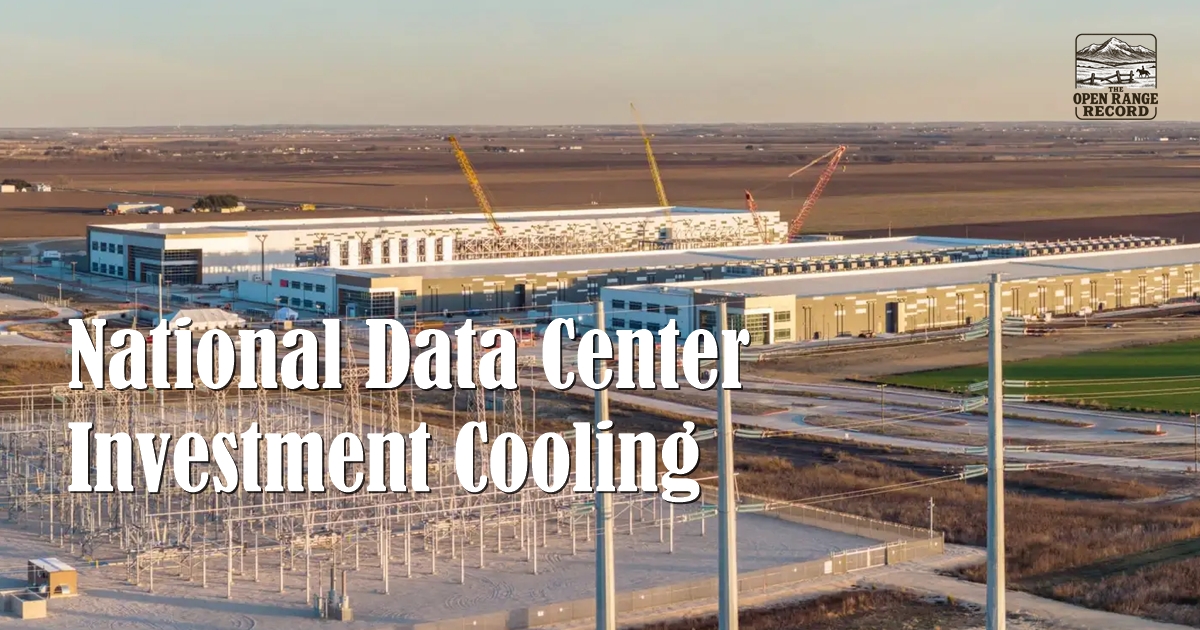
As state leaders and local “economic development” officials continue pushing Wyoming as an emerging hub for artificial intelligence data centers, a dramatic shift on Wall Street raises troubling questions about the long-term viability of these projects. Major private equity firms, institutional lenders, and tech joint ventures are scaling back, delaying, or outright scrapping planned data center developments across the country. The sudden tightening of capital and growing skepticism over return on investment threaten to turn Wyoming's economic ambition into a costly trap for local communities.
A glaring warning signal arrived recently with setbacks in a $5 billion joint venture between Alphabet Inc., the parent company of Google, and private equity giant Blackstone Inc. The initiative, internally designated as Project Braid, was created to build and lease high-performance computing facilities. However, financial reports confirm the joint venture ran into severe execution hurdles, leading to the outright scrapping of a planned data center project in Cheyenne, Wyoming, alongside project freezes in Texas. Project executives acknowledged that data center developments now face just a 50 percent chance of meeting planned delivery dates, down from 90 percent three years ago, due to severe equipment shortages, power grid bottlenecks, and rising construction costs.
This setback in Cheyenne is part of a broader pullback across national financial markets. Financial institutions and market analysts are sounding loud alarms over the massive debt load backing the physical AI buildout. Analysts at Morgan Stanley estimate that debt used to finance data center construction could surpass $1 trillion by 2028, with a significant portion flowing through high-risk private credit markets and lower-grade debt bonds. The Bank of England issued a formal warning regarding the growing risk of a global market correction, cautioning that sky-high tech valuations could collapse if the ongoing costs of physical data infrastructure fail to yield clear corporate profits.
The core financial problem lies in a growing mismatch between infrastructure costs and actual revenue generation. While tech giants spend hundreds of billions on physical hardware, software profitability remains elusive. Industry disclosures reveal that leading AI firms like OpenAI expect to report tens of billions of dollars in annual operating losses through 2028, burning cash at unsustainable rates while facing diminishing returns on raw computing power. As cheap open-weight models compress the market value of AI processing, the expected revenue generated by every megawatt of data center capacity is shrinking. Investors who eagerly poured capital into speculative data center deals two years ago are now demanding proof of financial returns before funding further construction.
Despite these clear national warnings, Wyoming's political establishment continues to champion data centers as a cornerstone of the state's economic future. State regulatory frameworks and regional incentive packages have aimed to lure tech developers with promises of low-cost power and tax incentives. However, financial experts warn that if the national data center market cools, rural host communities will bear the heaviest burden. Local power grids face immense operational stress, and utility customers risk absorbing the costs of expensive transmission upgrades built to serve computing campuses that may end up bankrupt or abandoned mid-construction.
Lenders and market watchdogs emphasize that assuming linear, perpetual growth in data center demand is a dangerous fallacy. Private equity firms are facing mounting scrutiny over data center debt risks, and major money managers are quietly scaling back their exposure to Big Tech infrastructure spending. If Wyoming continues to align its economic development strategy with an industry facing shrinking margins, soaring debt, and widespread project cancellations, the state risks inheriting empty industrial shells and stranded power assets rather than lasting economic prosperity.