NEWS
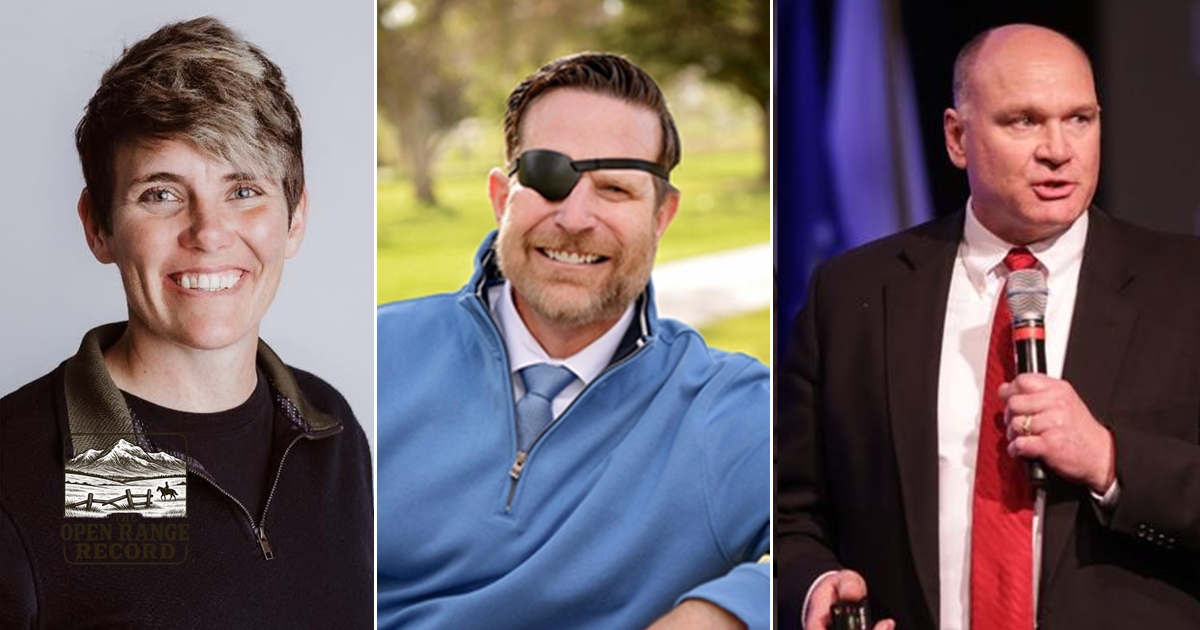
Six candidates are seeking the office of Sweetwater County Sheriff: Ozzie Knezovich, Rich Fischer, Randall Tryzbiak, Matthew Wharton, Richard Kaumo and Amanda Buller.
The office of the sheriff carries significant authority. The sheriff oversees law enforcement within the county, makes decisions affecting individual liberty and public safety, works alongside local, state, and federal agencies, and takes an oath to support, obey, and defend both the Constitution of the United States and the Constitution of Wyoming.
With that responsibility in mind, The Open Range Record sent all six candidates the same six questions. Rather than focusing on campaign slogans, the questions were intended to give candidates an opportunity to explain how they understand the oath they are seeking to take and how that oath would guide them when difficult questions involving government authority, individual rights, and public safety arise.
The questions addressed the oath of office, constitutional rights, the Second Amendment, the Tenth Amendment and federal authority, protection of children, and what a sheriff should do when a law, order, or policy raises constitutional concerns.
Three candidates, Knezovich, Wharton, and Buller submitted responses. Fischer, Tryzbiak, and Kaumo did not submit responses by the deadline. If they would like to respond to the email, we can publish a follow-up.
The following is a detailed look at how each participating candidate answered the same six questions.
Question 1: The Oath of Office
The sheriff swears to support, obey, and defend the Constitution of the United States and the Constitution of Wyoming. What does that oath mean to you personally, and how does it guide your decisions when there is political pressure or public opinion pushing in another direction?
Ozzie Knezovich
Knezovich answered from the perspective of someone who has previously served as an elected sheriff. He said that experience taught him the responsibility that comes with the office and that “Sheriff” should not be viewed simply as a title.
For Knezovich, the oath represents a responsibility to protect the people of the county
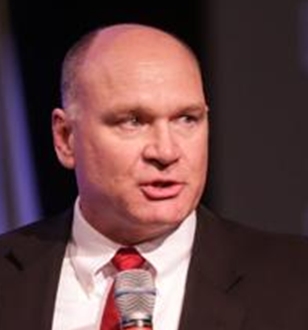
from threats and to stand for both the United States and Wyoming constitutions. He also described the sheriff as an elected voice of the people who is ultimately accountable to them.
Knezovich said he has personally faced political pressure and pressure from public opinion while serving as sheriff. In his view, neither can justify abandoning the oath.
“At no time can a Sheriff yield to these pressures and abandon his Oath to support, follow and defend the Constitution of the United States or the State of Wyoming.”
He said the Constitution has been the foundation for every decision he has made as an elected sheriff and peace officer.
Matthew Wharton
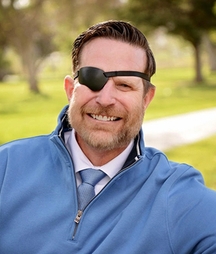
Wharton described the oath as “a promise, not just words repeated during a ceremony.”
He connected that commitment to two previous oaths in his life: the first when he joined the United States Army, and another when he became a Wyoming peace officer. In both cases, Wharton said he understood that he was promising to support and defend the Constitution and faithfully carry out his duties. He said the oath must come before politics, friendships, outside pressure or whatever opinion happens to be popular at the time.
Wharton did make a distinction between listening to the public and allowing public opinion to dictate law enforcement decisions. A sheriff should listen to the public, he said, but decisions involving arrests, searches, investigations, and the use of government authority must be based upon law and facts.
“There will always be pressure from different directions,” Wharton wrote. “The oath is what keeps those decisions grounded.”
Amanda Buller
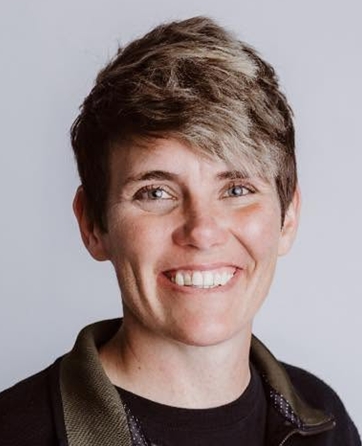
Buller also rejected the idea that the oath is merely something an officer recites upon taking office. She said she first took the oath more than 13 years ago and takes it just as seriously today, describing it as “a living promise with the community.”
Buller focused on why constitutional protections become particularly important when exercising them may be difficult or unpopular. “The Constitution isn’t meant to be convenient,” she wrote. “It’s there to protect the rights of every person, especially when those rights are unpopular or when there is pressure to take shortcuts.”
She said that as sheriff, her decisions would not be based on politics, public opinion, or personal beliefs. Her responsibility, she said, would be to uphold the Constitution, follow the law, and serve the people of Sweetwater County with integrity.
Question 2: Constitutional Rights
How do you view your responsibility to protect the constitutional rights of every citizen, including those with whom you may personally disagree? Can you give an example of how you would balance public safety with constitutional liberties?
Knezovich
Knezovich took a firm position on equal constitutional protection. He said the Constitution does not give an elected sheriff the ability to choose whose rights will be protected based upon who they are or what they believe.
“This is non-negotiable,” he wrote, adding that everyone in Sweetwater County would be treated equally.
On the second part of the question, balancing public safety with constitutional liberties, Knezovich did not provide one specific scenario. Instead, he challenged the idea that constitutional protections can be separated from public safety. He said peace officers are taught from the academy forward that public safety itself is based upon the Constitution and Bill of Rights.
“Everything a peace officer does is subject to the Constitutions of the United States and the State of Wyoming,” Knezovich wrote. His answer therefore treats constitutional limitations not as something an officer weighs against public safety after the fact, but as boundaries governing law enforcement from the beginning.
Wharton
Wharton emphasized the limits placed on law-enforcement authority and provided a specific example from his work involving digital evidence. He began with the principle that constitutional protections extend to everyone, including people with whom an officer may personally disagree. Law enforcement officers are entrusted with considerable authority, he said, but that authority has limits.
Wharton said personal beliefs, political opinions, and public anger cannot determine who receives constitutional protection. He then applied that principle to searches of phones and computers. A device may contain evidence of a serious crime, Wharton explained, but the possibility that evidence exists does not automatically give law enforcement the right to search it.
Officers still need probable cause and proper legal authority and must remain within the scope of that authority. Wharton also acknowledged that emergencies sometimes require officers to act quickly to protect someone from immediate harm. Even then, he said officers must be able to explain why their actions were both necessary and lawful.
“Public safety and constitutional rights should not be viewed as competing interests,” Wharton wrote. “We can protect the public without ignoring the rights of the people we serve.”
Buller
Buller said every person deserves to have his or her constitutional rights protected regardless of whether she personally agrees with that individual. “The Constitution doesn’t apply only to people we like or agree with,” she wrote. “It applies equally to everyone.”
She pointed to criminal investigations as an example. Even when officers are dealing with dangerous situations or individuals who hold different views, Buller said law enforcement must respect due process, obtain warrants when required, and ensure constitutional protections are maintained throughout the process.
Buller also connected constitutional policing directly to public trust. In her view, respecting constitutional rights does not weaken public safety. She said citizens who trust law enforcement to treat them fairly and lawfully are more likely to report crimes, cooperate with investigations, and work alongside officers to keep their communities safe.
“It all starts with trust,” Buller wrote.
Question 3: The Second Amendment
How do you view the Second Amendment and Wyoming’s constitutional right to keep and bear arms? What are your thoughts on background check requirements, and how will you balance enforcing federal law while respecting constitutional rights?
Knezovich
Knezovich cited both the Second Amendment and Wyoming’s constitutional protection of the right to bear arms. His interpretation was direct: “Shall not be infringed means, shall not be infringed.”
Knezovich did not reject background checks altogether. He said background checks help keep firearms away from individuals who have lost or do not have the legal right to possess them, giving felons and foreign terrorists who illegally entered the country as examples.
His answer then turned to the relationship between federal law and constitutional rights. Knezovich cited Article VI of the U.S. Constitution and the Supremacy Clause. He said that if a federal law is constitutional, it should be enforced. If it is not constitutional, he said it should be challenged through the framework established by the nation’s founders.
Wharton
Wharton said he strongly supports both the Second Amendment and Wyoming’s constitutional right to keep and bear arms. He connected that position to his experience with firearms throughout his military and law-enforcement careers and acknowledged that lawful firearm ownership is important to many Wyoming residents for self-defense, hunting, recreation, and family tradition.
Wharton specifically said he supports the background checks currently required when a firearm is purchased through a federally licensed dealer. He also supports holding people accountable when they knowingly provide firearms to prohibited persons or illegally traffic firearms.
At the same time, Wharton identified several policies that would concern him: proposals placing unnecessary burdens on lawful gun owners, creating a firearms registry, or treating responsible citizens like criminals. Wharton said the sheriff is required to enforce the law but also has a responsibility to ensure county personnel are not asked to participate in actions lacking proper legal authority or violating constitutional rights.
Buller
Buller said she strongly supports both the Second Amendment and Article 1, Section 24 of the Wyoming Constitution and believes the right of law-abiding citizens to keep and bear arms should be protected.
On background checks, Buller did not specifically state whether she supports or opposes them. Instead, she focused on the sheriff’s role in the process. She said it is not the sheriff’s responsibility to create policy, but rather to faithfully enforce legally enacted laws while ensuring those laws are enforced constitutionally.
If laws change, Buller said she would enforce them fairly and equally while respecting the constitutional protections afforded to every citizen. She added that constitutional rights and responsible gun ownership can coexist, and Wyoming’s longstanding tradition of responsible firearm ownership should be respected.
Question 4: The Tenth Amendment and Federal Authority
The Tenth Amendment reserves powers not delegated to the federal government to the states or the people. How do you view the role of a Wyoming sheriff when federal policies or directives appear to conflict with state law or constitutional principles?
Knezovich
Knezovich drew a distinction between a federal policy or directive and actual legal authority. He said he knows of no federal policy or directive by which a sheriff is automatically bound. At the federal level, he said, a sheriff is bound by the U.S. Constitution, laws passed by Congress, and case law.
Knezovich again cited Article VI and the Supremacy Clause. His position is that constitutional federal laws should be enforced, while laws believed to be unconstitutional should be challenged through the mechanisms established by the Constitution. He also cautioned against individual officials simply deciding for themselves which laws are constitutional.
“No one has the right or authority to arbitrarily decide what is or is not Constitutional,” Knezovich wrote. He said the Constitution’s framers provided mechanisms for challenging laws and added, “We either believe in the Constitution and its remedies or we don’t. We can’t have it both ways.”
Knezovich then addressed a hypothetical situation involving the federal government sending troops or federal officers to disarm law-abiding Wyoming residents. He said such an action would either represent a willful violation of the Second Amendment or mean the Constitution no longer existed as governing authority. Under that scenario, Knezovich drew a clear line: “There is no way I will ever allow anyone in Wyoming to have their guns taken based on the above scenario.”
Wharton
Wharton began by defining the sheriff’s position within the Wyoming government. “A Wyoming sheriff is a county official whose authority and responsibilities come primarily from Wyoming law,” he wrote. Federal agencies have important responsibilities, but their authority is not unlimited.
He supports cooperation between local and federal agencies when that cooperation has a lawful purpose and benefits public safety. He said cooperation should not, however, be driven by politics or pressure to commit county resources to something outside the sheriff’s lawful authority.
If Wharton believed a federal directive conflicted with state law or constitutional protections, he said he would review the actual legal authority behind the directive and consult the county attorney or other appropriate legal counsel.
He rejected two different approaches. “I do not believe a Sheriff should simply declare a law unconstitutional because he personally disagrees with it,” Wharton wrote. “At the same time, a Sheriff should not blindly follow a directive just because it came from a federal agency.” Wharton said the decision ultimately must be based upon the Constitution, the law, and controlling court decisions.
Buller
Buller described the Tenth Amendment as an important reminder that the federal government’s powers are limited and that many responsibilities belong to the states and the people. She said her primary responsibility as sheriff would be to serve and protect the people of Sweetwater County.
Buller supports working cooperatively with federal agencies, saying those relationships are important in fighting crime and protecting communities. She also placed a limit on that cooperation. “Cooperation should never come at the expense of the constitutional rights of our citizens or our responsibility to meet the needs of our local community,” she wrote.
If a federal directive clearly conflicted with the Constitution or state law, Buller said she would seek legal guidance, rely upon the courts when appropriate, and ensure any actions taken by her office remained within the law and consistent with her oath.
Question 5: Protection of Children
What role should the sheriff’s office play in protecting children from drug trafficking, human trafficking, online exploitation, and sexual predators? What would be your top priorities in those areas?
Knezovich
Knezovich described protecting children as an ultimate responsibility of the sheriff and said the sheriff should lead county efforts involving drug trafficking, human and sex trafficking, online exploitation and sexual predators. His response also included direct criticism of the current Sweetwater County Sheriff’s Office.
According to Knezovich, the Sheriff’s Office does not have a drug unit and has refused to assist some Sweetwater County jurisdictions in removing drug dealers from their communities. Knezovich pointed specifically to the town of Superior. He said the mayor asked him in December 2023 to serve as the town’s police chief because, according to Knezovich, the Sheriff’s Office had refused to help with the drug problems the community was facing.
Knezovich said he now performs that work without pay and works with DCI to remove drug dealers from Superior. These claims were made by Knezovich in his submitted response and are presented here as his account.
As sheriff, Knezovich said one of his priorities would be establishing a Safe Streets Task Force model to address gang and drug violence. He said he previously created such a model while serving as sheriff, and that it became a national model. Knezovich attributed a 44 percent reduction in drug and violent crime between 2007 and 2015 to that effort. He also said he has already spoken with the U.S. Attorney for Wyoming about establishing a Safe Streets Task Force model here. Those statements are Knezovich’s account of his previous record and current discussions.
Knezovich also cited extensive previous experience involving crimes against children. He said he worked as a sex-crimes detective and investigated numerous cases. As sheriff in 2009, he began a community-awareness campaign addressing human and sex trafficking and partnered with other agencies to develop state and federal task forces.
According to his response, those efforts included training hotel and motel employees to detect potential human and sex trafficking, increasing the number of detectives assigned to track sex offenders, working with outside agencies on sting operations targeting online predators, and partnering with faith-based nonprofit groups involved in rescuing children from sex traffickers.
Knezovich said his 35 years as a peace officer and 17 years as an elected sheriff would allow him to begin forming similar partnerships immediately if elected in Sweetwater County.
Wharton
Wharton said protecting children has been a major part of his law enforcement career. He cited experience investigating crimes against children, conducting child forensic interviews, examining digital devices, and working Internet Crimes Against Children cases with local, state and federal agencies.
His response focused heavily on how technology has changed crimes against children. Wharton said predators now use social media, messaging applications, online games, and other digital platforms to contact and exploit children. Because of that, the Sheriff’s Office needs trained investigators and appropriate equipment capable of keeping pace with changing technology.
His priorities would include maintaining digital-forensic capabilities, continuing child forensic-interview training, properly following up on reports involving children, and ensuring deputies know how to recognize signs of abuse, exploitation, trafficking and grooming.
Wharton also placed significant emphasis on communication between agencies. He said the Sheriff’s Office must work with local police departments, the Department of Family Services, prosecutors, schools, medical providers, child-advocacy professionals, DCI and federal agencies.
One of his more specific concerns involved repeated reports. When multiple reports involve the same child, family, residence, or suspected offender, Wharton said that information needs to be connected and reviewed. Important warning signs should not be missed simply because separate reports were handled by different people or agencies.
Wharton also acknowledged the limits of law enforcement, saying no sheriff can promise every crime against a child will be prevented. What he did promise was that reports involving children would be taken seriously and protecting children would remain a priority.
Buller
Buller called protecting children one of the most important responsibilities of the Sheriff’s Office. Her priorities would include aggressively investigating crimes against children, strengthening partnerships with schools, parents, prosecutors, and organizations supporting victims, and ensuring deputies receive training to recognize signs of abuse, trafficking and online exploitation.
Like Wharton, Buller specifically identified the internet as a changing threat to children. “The internet has created new opportunities for predators, which means law enforcement has to continue adapting,” she wrote.
Buller also emphasized prevention alongside enforcement. She said educating children and parents about online safety, human trafficking, and drug awareness can help prevent victimization before it occurs. “Every child deserves to feel safe,” Buller wrote, “and every parent deserves to know that these crimes will be treated with urgency and compassion.”
Question 6: Constitutional Limits
Have you ever encountered a law, order, or policy that you believed raised constitutional concerns? How would you handle a situation where you believed a directive conflicted with your oath?
Knezovich
Knezovich answered yes; he has encountered such situations several times while serving as an elected sheriff. He provided several examples from his previous career.
Knezovich said that in 2014 he was among the few sheriffs in the country to have been endorsed by the NRA. He also said he spent ten years opposing what he viewed as increasingly unconstitutional gun laws in Washington and testified as an expert witness in litigation involving gun rights.
He also cited a 2016 dispute involving the Spokane City Council and rail traffic. Knezovich said he teamed up with BNSF and Union Pacific railroads to oppose an effort by the council to impose a $261-per-car fine involving trains carrying Wyoming coal and oil through Spokane. Knezovich said he considered the proposal a direct violation of Article IV of the Constitution and stated at the time that he had a duty to stand against it.
His third example involved his 2019 opposition to Washington’s sanctuary-state law. Knezovich again cited the Supremacy Clause and said that if people or elected officials dislike a law, they have the power to change it, but constitutional laws remain enforceable until that occurs.
His response included a strongly worded statement he said he directed toward then-Washington Gov. Jay Inslee over enforcement of federal law. Taken together with his earlier answers, Knezovich’s position is that a sheriff has an obligation to defend constitutional rights while also using the Constitution’s established remedies for challenging laws believed to be unconstitutional.
Wharton
Wharton approached constitutional limits through situations he has encountered during actual criminal investigations. He said investigators sometimes believe evidence exists but do not have the legal authority necessary to obtain or search it. According to Wharton, that issue occurs particularly often with digital investigations.
A search warrant may authorize officers to search specific devices, accounts, dates, or categories of evidence. It does not, he said, give investigators unlimited authority to search anything they want. When the evidence investigators want and the legal authority they possess no longer align, Wharton said the answer is to stop.
Investigators should preserve the evidence through lawful means, consult prosecutors when necessary, and seek additional authority from a judge before proceeding. Wharton said he would use a similar process if he believed an order or policy conflicted with his oath. He would raise the concern, ask for clarification, seek legal review, and document the issue. He said he would not ignore a serious constitutional concern simply because the directive came from someone holding a higher rank or title.
But Wharton also identified a point where consultation would end. “If an order were clearly unlawful, I would not carry it out. Rank does not excuse a constitutional violation.”
As sheriff, Wharton said his responsibility would be to enforce the law fairly, protect people’s rights, and make decisions he could both explain publicly and defend in court.
Buller
Buller said she has encountered policies or directives throughout her career that raised legal or constitutional questions. She noted that law enforcement officers regularly encounter situations in which the law is not always black and white. When that happens, the proper response is to ask questions, seek clarification, consult prosecutors and legal counsel, and ensure officers are acting within the law.
If she genuinely believed a directive conflicted with her oath or the Constitution, Buller said she would respectfully raise the concern through appropriate channels rather than simply ignore the issue. She summarized her position by returning to the oath: “My oath is to the Constitution…not to politics, personalities, or public pressure.”
Buller said every sheriff has a responsibility to ensure the authority entrusted to the office is exercised lawfully, fairly and with accountability.
The next Sweetwater County Sheriff will not face these questions only in theory. The office will make real decisions involving searches, arrests, firearms, drugs, cooperation with federal agencies, investigations involving children and the limits of government power.
Campaign signs can tell voters a candidate’s name, and material can tell voters what a candidate wants emphasized. These questions were intended to go further by giving candidates an opportunity to explain the principles they say would guide them once the campaign is over and the responsibilities of the office begin.
Now the decision belongs to Sweetwater County voters.
The badge carries authority. The oath establishes the boundaries within which that authority should be exercised.