NEWS
What Really Happened
Chairman Case Questions “Animus” and Process in Weston County Fallout
House Bill 86 — the proposed Election Code Reform bill — died this morning in the Senate Corporations Committee on a 2–3 vote.
The measure would have added the Wyoming Secretary of State as an authorized complainant to the Governor in removal proceedings against a county clerk — but only in cases involving alleged violations of the Wyoming Election Code of 1973.
While the bill was framed as a statutory clarification, the hearing made clear that something deeper was at play: the lingering Weston County clerk controversy — and the political friction between the Secretary of State and the Governor’s office.
The Weston County Origin
HB86 grew out of the 2024 Weston County situation, where electors filed a verified complaint with the Governor regarding the conduct of the county clerk. Months passed. The Governor’s office declined to act, arguing that the complaint did not specifically cite the false post-election audit that later became central to the controversy.
The process stretched for roughly 15 months before removal proceedings were ultimately pursued. Secretary of State Chuck Gray supported HB86, arguing that as Wyoming’s chief election official, his office should have a statutory path to issue a verified complaint when election code violations by a county clerk are involved. His position was simple: accountability should not require a procedural obstacle course.
Chairman Case: Process, Jurisdiction — and Tone
Early in the hearing, Chairman Case raised a pointed procedural question: why did this bill come out of the Management Audit Committee instead of being brought first to Senate Corporations and Elections?
Management Audit had investigated the Weston County situation, but Corporations is the traditional policy committee for election law. Case’s questioning suggested some frustration — or at least surprise — that the proposal didn’t originate in his committee.
There was discussion that Corporations had a heavy lift on election bills, and that Management Audit’s broad oversight authority made it a logical venue. Still, the exchange underscored that committee jurisdiction matters — and this bill did not take the typical route.
The 'Animus' Question
Opposition: “Political Leverage, Not Improved Governance”
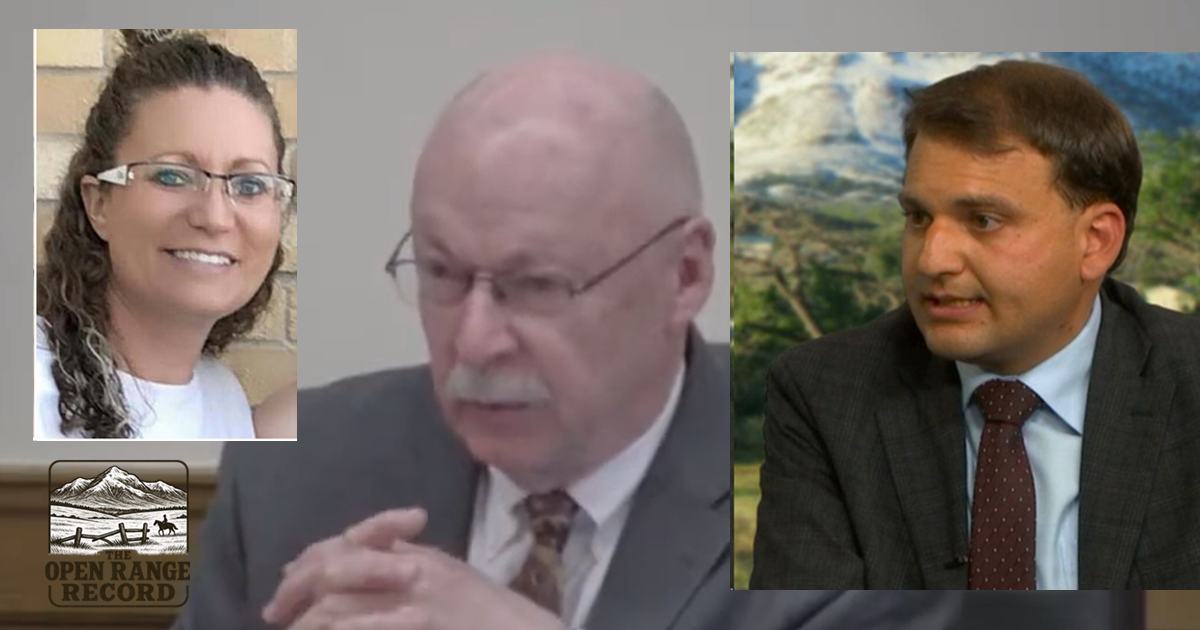
Gail Symons spoke in opposition to House Bill 86, urging the committee to reject what she characterized as an unnecessary expansion of authority. Symons argued that current law already provides county voters and county commissioners with a direct statutory path to file verified complaints with the Governor when misconduct or malfeasance is alleged. Symons failed to mention that all of that had already occurred. She is known to only provide partial testimony to committees that benefits her position.
Marguerite Herman of the League of Women Voters echoed that concern. She warned that creating a third origin point for complaints — beyond county electors and county commissioners — risks undermining a system she believes ultimately worked.
Herman emphasized that removal of an elected county officer is an extreme remedy and argued that the people who elected that official should remain the primary drivers of any removal process. Together, their testimony framed the bill not as a technical correction, but as a structural shift in who holds the power to initiate removal proceedings.
The most revealing exchange came when the conversation turned toward the strained relationship between the Secretary of State and the Governor. During testimony, the committee chairman speculated that the bill may stem from a lack of collaboration between the two offices.
Chairman Case went further, raising the question of whether the animus that exists between the Governor and the Secretary of State contributed to the delay and escalation in the Weston County situation. That moment shifted the tone of the hearing.
Was HB86 about tightening statutory clarity? Or was it a legislative response to executive branch friction? Secretary Gray pushed back, stating his support for the bill was not driven by personality conflicts but by accountability concerns.
The Vote

What the Hearing Really Revealed
The bill’s defeat leaves current law intact: verified complaints against county officers must originate from qualified electors of that county, the board of county commissioners, or existing statutory pathways. The Secretary of State remains without independent authority to initiate removal complaints — even in election code cases.
But the hearing exposed more than a statutory disagreement. It revealed a committee protective of its jurisdiction, a governor’s office cautious about expanding removal authority, a Secretary of State frustrated with procedural barriers, and senators openly acknowledging tension between two statewide offices.
Whether HB86 was a needed reform or a symptom of executive branch friction depends on perspective. What is clear is that the Weston County fallout continues to shape Wyoming’s election law debate — and the political relationship at the top of state government is no longer an unspoken factor.