NEWS
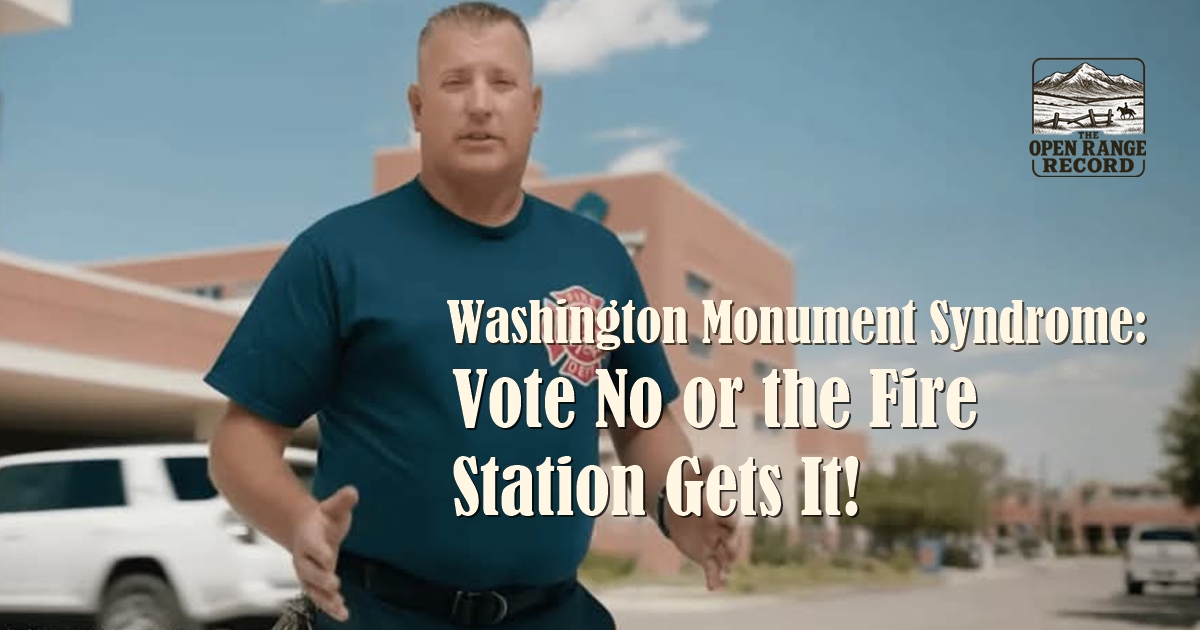
Across Wyoming, local government associations, county commissioners, and special district boards are escalating an organized campaign against Proposition 1, the citizen-led ballot measure establishing a 50 percent property tax exemption for primary residences. But rather than offering taxpayers an honest review of county budgets inflated by years of windfall tax assessments, public entities are turning to a classic political extortion tactic: Washington Monument Syndrome.
Formally recognized in public administration, Washington Monument Syndrome, or the "Firemen's First Principle," describes a bureaucratic strategy where agencies faced with tax cuts or budget caps deliberately threaten to shutter their most vital, popular, and visible services first. Instead of cutting quiet administrative waste, bloated consultant fees, or expanded agency overhead behind closed doors, bureaucrats hold volunteer fire departments, sheriff patrols, and county road maintenance hostage to trigger public panic.
That exact playbook is now unfolding across Wyoming’s 23 counties in the final weeks leading up to the November election.
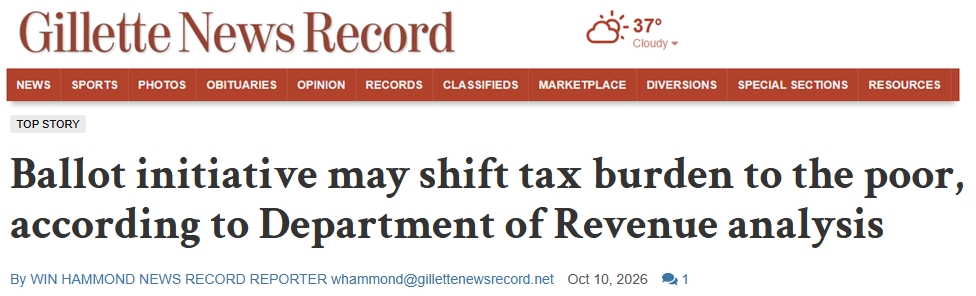
In county commission meetings, public forums, and official agency mailers, local officials are warning residents that passing Proposition 1 will immediately strip funding from emergency medical services, force the closure of rural fire stations, and leave county roads to deteriorate. What these public agency campaigns conveniently omit is that local government budgets expanded rapidly over the past four years, riding a wave of historic property value spikes that extracted record tax revenues directly from homeowners.
Rather than examining how to scale county operating budgets back to pre-windfall levels, local government lobbies are weaponizing public safety to protect their peak revenue baselines.
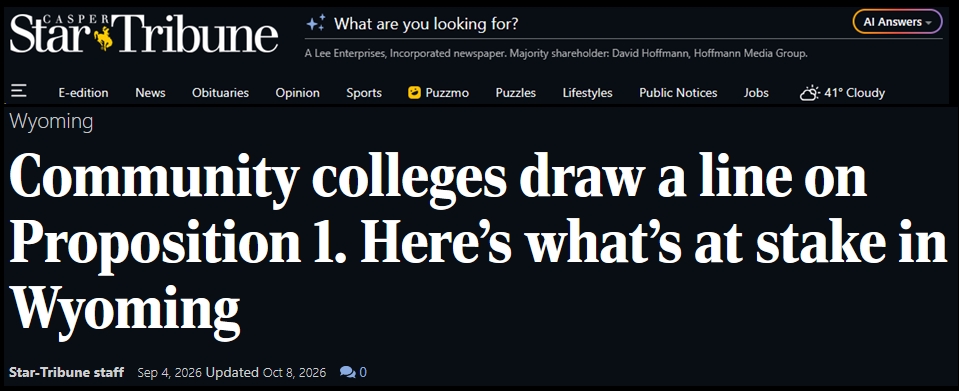
The hypocrisy is particularly acute given the legislative record. Just last year, 23 state senators voted on the floor for a 50 percent property tax cut with zero state backfill, acknowledging that true tax relief requires local government units to adjust their spending. Yet today, when everyday citizens put that exact same 50 percent relief structure on the statewide ballot, public agencies claim that living under those terms will collapse local civilization.
Even Governor Mark Gordon has penned an op-ed that threatens the same services with no basis for making the claim. In the Cowboy State Daily, Gordon wrote on October 12,
"Wyoming families deserve affordable taxes and a disciplined government, and during my terms as your governor you have gotten both. We cut government, streamlined regulations, provided tax relief, and ensured a healthy and strong state. We did not cut the legs out from under communities and counties. They also deserve ambulances when they call, firefighters when their homes are threatened, safe roads to work and school."
Compounding taxpayer frustration are concerns over public resources being leveraged to influence the ballot box. Taxpayer-funded groups like the Wyoming County Commissioners Association and various municipal leagues have mobilized messaging campaigns framing Proposition 1 as a threat to essential services. By parading volunteer firefighters and sheriff deputies in front of local media cameras while leaving administrative line items untouched, county machines are executing a textbook case of malicious compliance: give us every dollar we demand, or the fire station gets it.
Wyoming voters evaluating the flood of warnings surrounding Proposition 1 are beginning to recognize the pattern. When government institutions respond to citizen-led tax relief not with fiscal discipline, but with threats to pull emergency services off the road, it is not an exercise in responsible budgeting. It is Washington Monument Syndrome brought home to the Equality State, a bureaucratic hostage strategy designed to protect government revenue at the expense of the people who pay the bills.