NEWS
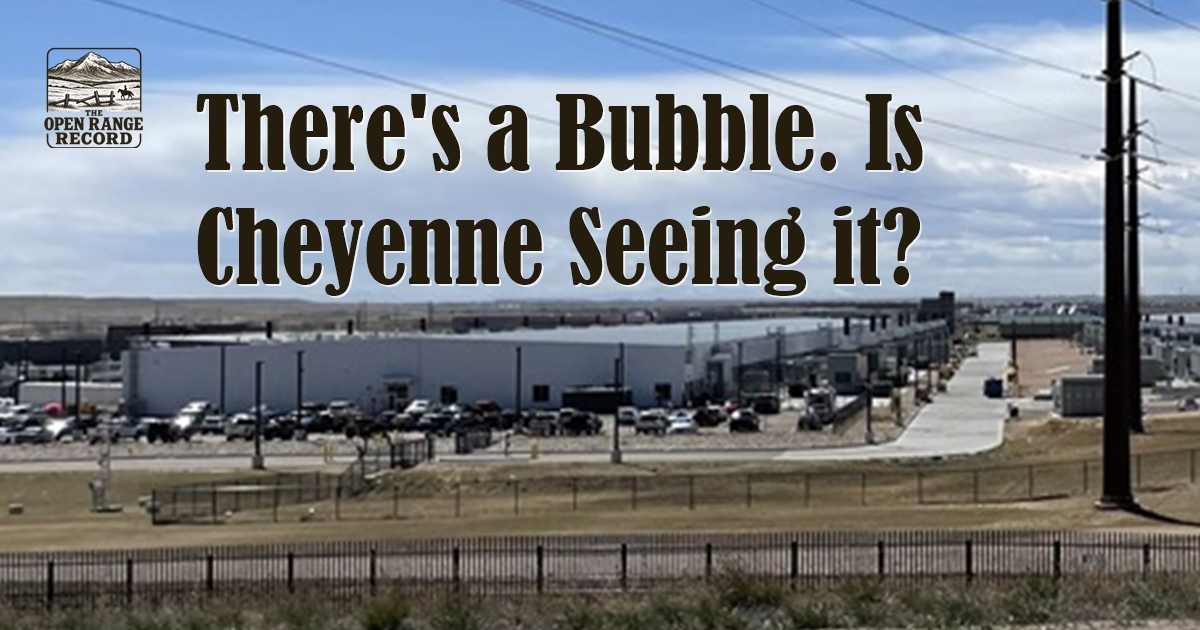
While Cheyenne political insiders continue rolling out the red carpet for tech conglomerates, global financial markets are sending an unmistakable warning signal. The massive national gold rush to construct gigawatt scale AI data centers is running into a wall of soaring costs, unmanageable power demands, and crumbling Wall Street funding models.
The most dramatic evidence of this national shift arrived when tech giant Oracle Corporation issued a formal legal force majeure notice to delay its lease obligations on a flagship $165 billion data center campus. The financial fallout was immediate. Nearly $18 billion in debt associated with the project plunged into secondary market distress, trading down to 89 to 91 cents on the dollar, while Oracle burned through billions in negative cash flow attempting to support its infrastructure expansion.
Across the country, the speculative frenzy is unraveling. Over 300 bills targeting data center regulation have hit state legislatures. State power grids like the Electric Reliability Council of Texas have paused massive interconnection queues, and local utilities are admitting they cannot supply the required power without forcing drastic rate hikes onto everyday residential consumers.
ERCOT’s September 14 notice describes an audit required before affected data-center projects could advance through interconnection. On September 21, Gov. Greg Abbott directed the Texas Commission on Environmental Quality to halt data-center permits pending required information and audits. His directive required projects to cover electrical infrastructure costs and protect community water supplies.
Yet back in Cheyenne, the state establishment appears eager to ignore these market realities. Even though local officials, like Cheyenne City Councilman Mark Moody have urged caution. He sponsored a 12 month moratorium on approvals of AI data centers. His proposal was eventually defeated after hours of public testimony. Of data centers, Moody told The Open Range Record, “We need to slow down and pause because we do not know the long term impacts of the data centers. Constituent concerns is why I proposed a 12 month moratorium.”
While Wall Street private credit firms quietly pull back from high-risk infrastructure deals, Wyoming moderate establishment leadership, often criticized as RINOs for prioritizing corporate subsidies over conservative governance, is doubling down. Proponents inside Cheyenne continue backing aggressive expansion schemes, fast-tracking massive land annexations, and granting tax incentives to secure speculative tech facilities. These decisions threaten to tie Wyoming local utility grids to high-risk developments just as the national funding bubble pops. Local residents across Wyoming communities have already voiced growing frustration over municipal water usage, power grid strain, and the potential for long term tax liabilities if tech operators fail to deliver.
Standing in direct opposition to this trend is conservative figure Rebecca Bextel. Having built a platform centered on aggressive government transparency, fiscal restraint, and stopping taxpayer-funded corporate bailouts, Bextel has emerged as a key vocal critic of unvetted state spending schemes. Her stance highlights how fast-tracking high-risk corporate infrastructure without real risk guarantees exposes Wyoming taxpayers to hundreds of millions in stranded asset costs. As national headlines confirm that hyperscalers are struggling to secure fuel, power permits, and sustained debt financing, her warnings reflect a broader mathematical truth that Cheyenne insiders continue to ignore.
The lesson from national markets is clear. You can raise speculative capital on Wall Street, but you cannot manifest power grids, water capacity, or stable long-term revenue out of thin air. If Wyoming establishment leadership continues pushing unchecked data center buildouts while the underlying funding model collapses across the rest of the nation, local taxpayers could be left holding the bill for massive utility upgrades and empty industrial parks.