Recent discussion surrounding the Goshen County Library (Torrington Telegram, March 13, 2026)—and similar debates across Wyoming—has attempted to dismiss community concerns about sexually explicit material as “misconceptions.” That framing relies heavily on whether such material meets the legal definition of obscenity. But that is not the concern, and it never has been.
Wyoming’s 2026 House Bill 10 was not written to redefine obscenity or restrict what adults may read. It addresses a far more basic and widely understood principle: whether sexually explicit material should be placed in areas intended for minors in taxpayer-funded libraries. Those are two entirely different questions.
Obscenity law, including the U.S. Supreme Court’s Miller test, sets a high bar for what is illegal. It explicitly allows sexually explicit material to be distributed if it has literary, artistic, political, or scientific value. That may be an appropriate legal safeguard for adults, but it was never designed to determine what is appropriate for children. Yet that is precisely the standard being used to dismiss concerns.
House Bill 10 recognizes the gap between what is legal for adults and what is appropriate for minors. It does not ban books. It does not remove materials from libraries. It does not limit adult access in any way. What it does is establish a reasonable expectation that materials depicting explicit sexual acts should not be placed in children’s sections or made readily accessible to minors.
Opponents of the bill often respond with a familiar argument: that if we begin regulating placement based on content, we risk losing access to classic literature or even religious texts. Titles like The Great Gatsby, 1984, or The Catcher in the Rye are frequently invoked, along with hypothetical scenarios involving the Bible. These claims do not withstand scrutiny. All one needs to do is to read Let’s Talk About It, by Erika Moen and then read any of the books mentioned above.
House Bill 10 is not concerned with themes or ideas. It targets explicit depictions of sexual acts. There is a meaningful and recognizable distinction between a work that contains mature themes and one that includes graphic sexual content. Libraries are fully capable of making that distinction—and already do.
Most troubling is the repeated characterization of parents as misinformed or confused. This dismisses legitimate community concerns without discussion or consideration. Parents are not misunderstanding what they are seeing. They are responding to specific content and asking reasonable questions about whether it belongs in children’s spaces.
Public libraries are not private institutions. They are funded by taxpayers and serve the entire community, including families. With that comes a responsibility—not only to provide access to information, but to exercise sound judgment when it comes to minors.
Sadly, the Wyoming Senate chose not to even debate House Bill 10. The bill died in a drawer without full consideration of the issue or the voices of the families it sought to represent. But this conversation is not over.
This issue matters. Parents across the nation are asking for a return to libraries as safe places for children to learn, explore, and develop a love of reading without exposure to explicit material beyond their age and maturity.
The American Library Association (ALA) would have you believe this debate is one of censorship versus freedom. That is a false choice. The ALA, headquartered in Chicago, states that children should be able to access any kind of material they want, regardless of sexual content, and that parents should have no say in that. That dog won’t hunt in Wyoming.
No one is trying to ban books. No one is restricting what adults may read, purchase, or access. The question is far narrower and far more practical: where should certain materials be placed, and who should have direct access to them?
Every community draws lines when it comes to children. We do it in schools, in media, and in countless other areas of public life. Libraries should not be exempt from that conversation. Dismissing that conversation as a “misconception” does not resolve the issue. It avoids it.
Wyoming families deserve a straightforward answer to a straightforward question: should sexually explicit material be placed where children can access it? House Bill 10 answered that question clearly. And this issue will be back—because it matters.
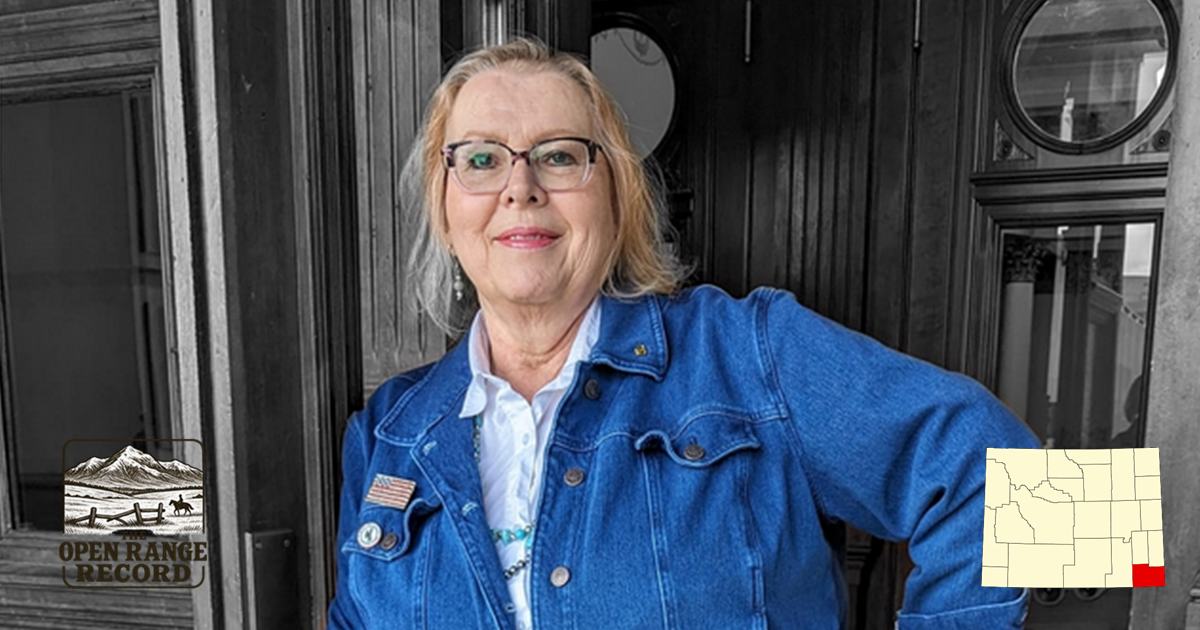
Ann Lucas serves in the Wyoming House of Representatives for District 43, representing Cheyenne and Laramie County. She focuses on transparency, accountability, and policies that support Wyoming families and communities.