NEWS
The American beef market is navigating its most volatile period in decades. A stark disconnect exists between what consumers pay at grocery counters and what independent livestock producers earn at the sale barn. While retail prices for ground beef and steaks hover near record highs, cattle inventory across the High Plains has fallen to its lowest level in seventy-five years following years of persistent drought and pasture degradation. At the center of this economic squeeze lies a highly concentrated processing bottleneck dominated by four major corporations.
Known colloquially throughout the industry as the Big Four, the corporate roster consists of JBS USA, Cargill, Tyson Foods, and National Beef Packing Company. Together, these four entities process approximately eighty-five percent of all fed cattle in the United States, up from thirty-six percent in 1980. Two of these corporations are foreign-owned or controlled by Brazilian conglomerates.
Historical market data shows that as packer concentration expanded, the rancher's share of every consumer beef dollar shrank from roughly seventy cents in 1970 to under forty cents today. Independent producers argue that this captive market structure allows packers to manipulate cash bids, restrict slaughter capacity, and artificially widen corporate profit margins.
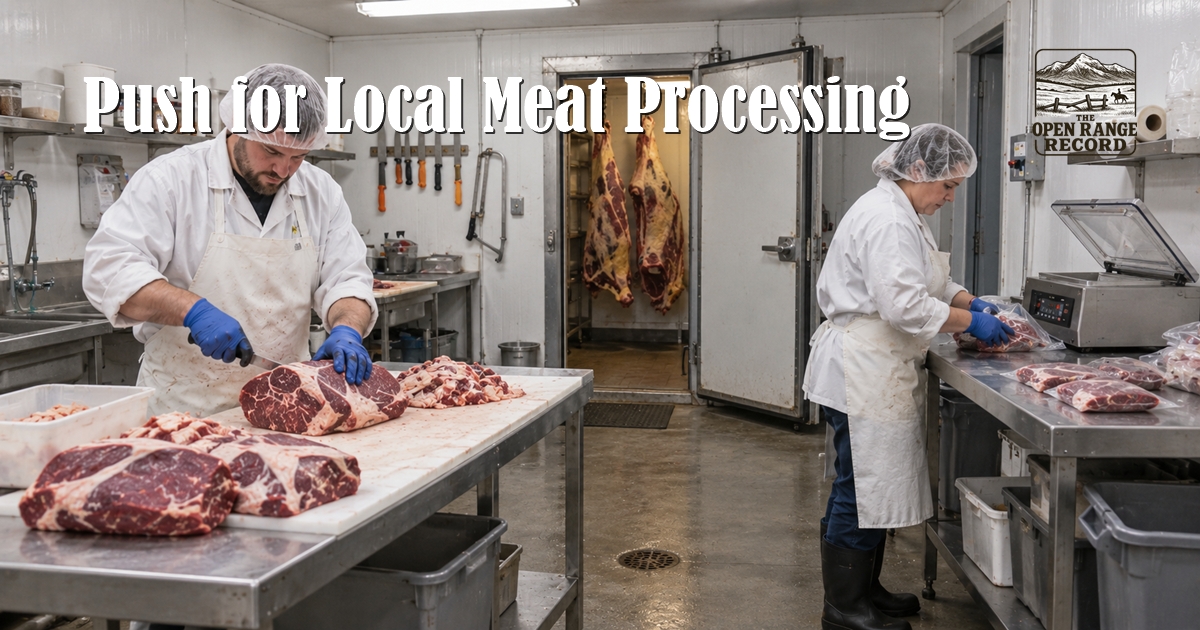
In response to mounting political pressure from cattle-state lawmakers and producer organizations, President Donald Trump signed executive orders on September 4, 2026, targeting meatpacking concentration. The directive seeks to bypass the industrial processing monopoly by expanding interstate sales authority for small and medium-sized local meat processors. Under the order, the Department of Agriculture is streamlining health and inspection regulations, making it easier for ranchers to process their own cattle locally and sell directly to consumers across state lines.
The executive action reinforces an active Department of Justice antitrust investigation led by federal prosecutors and Agriculture Secretary Brooke Rollins. Investigators are reviewing millions of corporate documents to determine whether the Big Four engaged in illegal price fixing, market division, and coordinated capacity reductions to suppress fed cattle prices while inflating retail meat prices. Federal officials contend that market concentration has reduced negotiating power for independent ranchers and compromised national food security.
Despite the administration's crackdown on the processing cartel, a separate federal policy intervention has sparked intense debate among domestic cattle producers. To combat record grocery store inflation, federal officials temporarily expanded low-tariff import quotas for foreign lean beef trimmings. While the administration frames the imports as a necessary short-term measure to stabilize retail prices while the national cattle herd rebuilds, domestic producer groups express concern that flooding the market with foreign beef will suppress domestic live cattle prices and disincentivize herd expansion in states like Wyoming.
For Wyoming's livestock industry, these intersecting policies represent a crucial turning point. Expanding state-inspected processing rules and direct-to-consumer sales channels offers local producers a long-awaited alternative to the corporate packer funnel. However, cattle organizations emphasize that real market restoration requires strict enforcement of country-of-origin labeling and structural antitrust reform. As federal agencies implement the new processing directives, Wyoming ranchers remain focused on whether local processing freedom can overcome the market dominance of the nation's meat cartel.