During the 2026 legislative session, Wyoming lawmakers will be debating House Bill10. The bill addresses sexually explicit material in school and county libraries. Predictably, opponents have labeled these proposals “book banning.” That charge may be emotionally effective, but it is not accurate. This debate is not about banning books. It is about setting age-appropriate standards in taxpayer-funded school and public libraries.
One reason this issue feels abstract in public debate is that media sources children might read cannot simply publish the images or explicit passages in question. Much of the material being discussed contains graphic sexual depictions that would be inappropriate to reproduce in a newspaper, on social media, or in a public legislative document.
In some cases, redistributing those images could even violate obscenity laws or platform standards. That reality alone underscores the heart of the debate: if the content is too explicit to share broadly in a public forum, it is reasonable to question whether it belongs on the shelves of a K–12 school library accessible to minors. The inability to publicly display the material is not an exaggeration tactic; it reflects the explicit nature of the content itself.
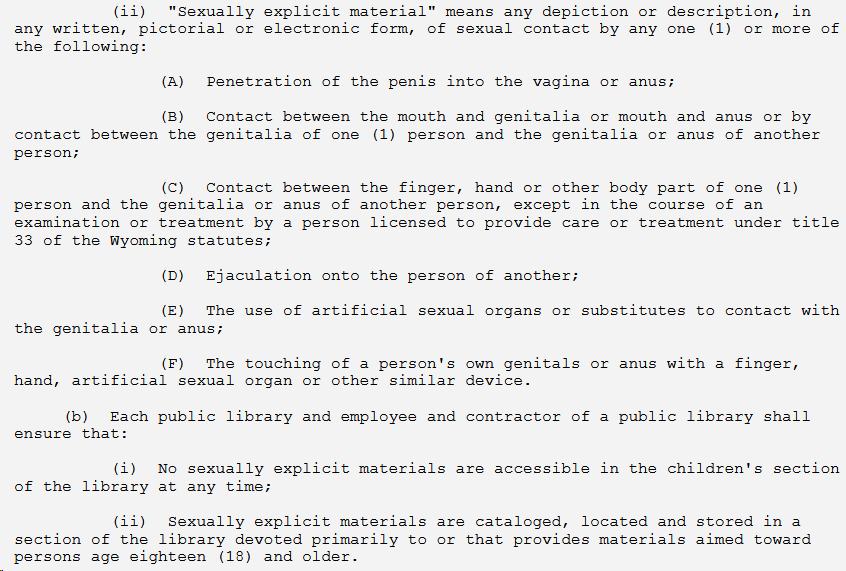
House Bill 10 requires clear policies governing minors’ access to sexually explicit materials in county and school libraries. Adults will still be free to purchase, read, and discuss any legal material they choose. Bookstores will remain free to sell them. No author is being silenced. No title is being erased from existence. And if parents want, they can still purchase that book for their own child.
The question is narrower and more practical: Should graphic depictions of sexual acts be available to minors in a K-12 school library? And should taxpayers pay for it.
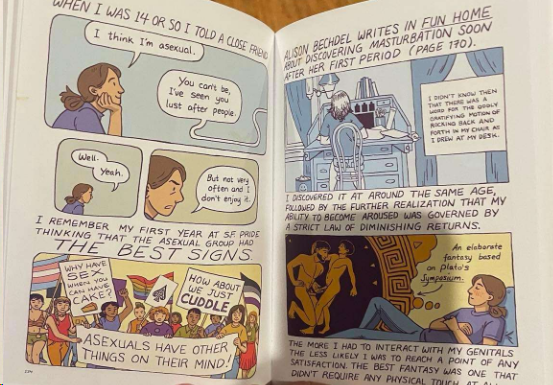
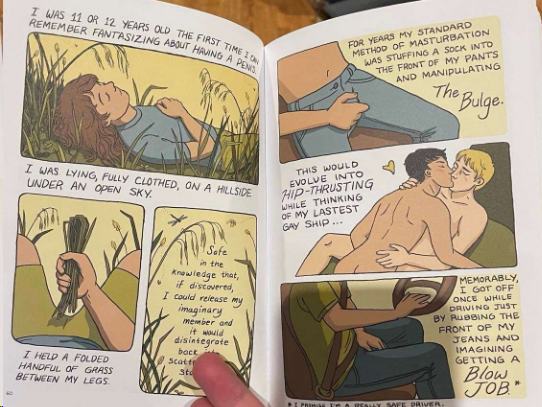
Across the country, parents have seen first-hand, and have raised concerns about, books such as Gender Queer, which contains illustrated sexual content. The definition of sexual content is not new. It's already written into our laws. Supporters defend the book’s themes declaring free speech, while critics point to graphic images that go far beyond abstract discussion of identity.
The controversy is not about whether adults may read such material. They can read what they want. The issue is whether it belongs in school libraries accessible to children.
A school library is not a public marketplace. It is not the internet. It is not an unrestricted adult collection. It is a curated educational space designed specifically for minors. Every book on those shelves represents an adult determination that the book is developmentally appropriate.
Society already recognizes age-based boundaries elsewhere. Explicit films are restricted. Alcohol and tobacco are restricted. Certain online materials are restricted. No one calls those measures “banning.” They are understood as reasonable safeguards for minors. Yet when similar standards are proposed for school libraries, critics frame it as censorship.
Another argument raised is that removing sexually explicit materials prevents children from “seeing themselves” in literature. But representation and graphic sexual content are not the same thing. A child does not need explicit depictions of sexual acts to feel understood, supported, or represented. There are many books that explore identity, belonging, and personal struggle without graphic imagery.
Supporting children and maintaining age-appropriate standards are not opposing values. They can and must coexist.
Those fighting this growing concern across our nation often blur the line between adult access and unsupervised minor access. HB10 focuses on the latter. Parents who wish to provide certain books to their own children remain free to do so through bookstores or other channels. What HB10 seeks to prevent is automatic, unsupervised access to graphic sexual content within school settings funded by taxpayers.
This is not about viewpoint discrimination. It is not about targeting identity. It is not about erasing ideas. It is about content, specifically, sexually explicit material involving detailed depictions and writings of sexual acts. How has this turned into such a heated debate on whether it belongs in environments designed for minors?
Wyoming has long valued both freedom and responsibility. These principles are not in conflict. A free society can protect adult access to lawful materials while also recognizing that children deserve and need boundaries.
One objection from librarians that has been heard in committees is that HB10 will micromanage how libraries curate their collections. HB10 does not remove books from libraries; rather it dictates where these books can be in the public library—in the children’s section or adult section for example.
The bill would remove sexually explicit materials from school libraries. Clear law protects everyone, including the librarians, by removing ambiguity and ensuring expectations are uniform across Wyoming. HB10 does not criminalize reading. It doesn't silence authors; and it does not eliminate books from the public square. It establishes standards for minors in school settings.