NEWS
Anyone who has lived in Wyoming long enough knows exactly how a boom-and-bust works. A new craze comes along, whether it is coal, uranium, or oil. Fast-talking money men from out of town show up with deep pockets and big promises. They borrow millions of dollars to buy brand new equipment, build sprawling facilities, and hire everyone in sight. They tell everybody the boom will never end.
Then reality sets in. The loans come due, the bills pile up, the customers stop paying top dollar, and all that expensive equipment is left sitting empty out in the sagebrush. That exact story is now playing out on Wall Street with artificial intelligence, and the fallout is landing right in our own backyard.
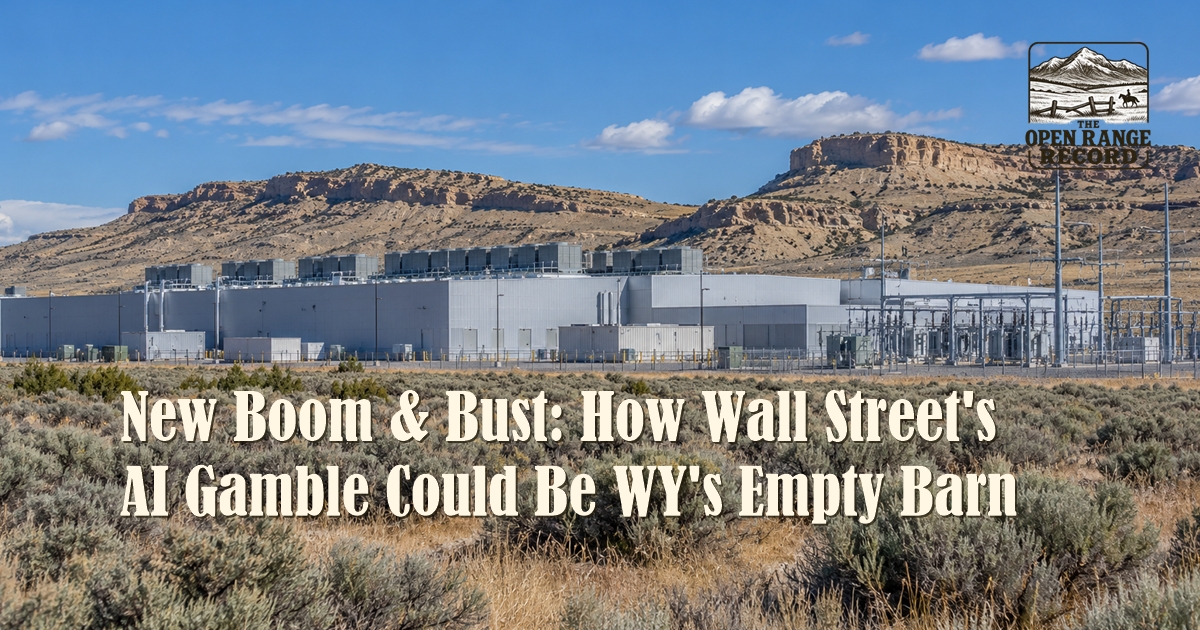
Right now, out in the Cheyenne Business Parkway, developers are building a massive $1.2 billion tech campus. It is a giant air-conditioned warehouse designed to hold super-fast computer chips for artificial intelligence. The main tenant signing a massive lease for the first 184,000-square-foot building is a Wall Street darling named CoreWeave. Local utility provider Black Hills Energy is gearing up to pump a massive amount of power into the site.
But there is a huge problem. Wall Street is starting to realize the financial math behind these companies does not work. This week, a major research company named Gartner dropped a bomb on this entire tech market. Gartner warned that more than 80 percent of these independent computer warehouse companies are going to go bust by the end of the decade. That means eight out of every ten will likely go broke, wiping out over $3.5 trillion in spending.
To understand why this is happening to companies like CoreWeave, you only have to look at how basic ranch and farm equipment work. Imagine a custom harvester who goes to the bank and takes out a massive loan to buy five brand new, top-of-the-line combines. The bank charges a sky-high 9 percent interest rate on a five-year note. But the harvester only has a two-year handshake deal to cut his neighbor's wheat.
To make matters worse, the tractor company brings out a completely new, faster combine every two years that makes his older machines worth half as much. That farmer has borrowed long-term money on high interest, but he only has short-term income. When his two-year wheat contract runs out, he still owes the bank three more years of high payments on machines nobody wants to rent anymore.
That is the exact trap sinking these tech companies. CoreWeave borrowed billions of dollars from Wall Street to buy computer chips and rent giant warehouses, just like the one being built in Cheyenne. They sign long 15-year building leases. They take out five-year, high-interest loans to pay for the computer chips. But they only get three-year rental deals from their customers.
Now, the lenders are getting nervous. When big banks loan out money, they can buy insurance from other investors in case the borrower goes broke. This insurance is called a credit default swap.
Think of it like the local feed store taking out a secret insurance policy against you, betting you will not be able to pay your feed bill this winter. Right now, the cost of that insurance on CoreWeave has shot through the roof. Big Wall Street players are paying through the nose for protection because they believe CoreWeave is going to default on its loans.
For months, corporate media outlets and global tech giants told everyday Americans that the AI boom would make everyone rich forever. But paper hype cannot beat simple math. When your loan payments are bigger than the cash coming in the front door, the clock is ticking.
Wyoming has seen this movie before in every ghost town across the West. When outside speculators build an empire on borrowed cash, it only takes one cold winter for the whole thing to come crashing down. If Wall Street is right, Cheyenne might just be left holding the keys to a very expensive, empty barn.