NEWS
While the average citizen views artificial intelligence as little more than an online chatbot for writing emails, global computing data reveals a far more dramatic reality underneath the surface. The volume of data processed through advanced AI models has experienced an unprecedented surge, transforming the technology from a novel consumer experiment into an essential engine for business automation. As this capability unlocks unprecedented leverage for individual users, major technology laboratories are rapidly expanding their political lobbying operations to influence how the technology is regulated.
To understand the sheer scale of adoption, industry analysts track computing volume using tokens, which represent the fundamental units of text, code, or image data processed by an AI model. Recent market reports show that global daily token processing surpassed 400 trillion tokens per day in 2026. This represents a 185 percent increase over late 2025 levels, and a staggering 4,250 percent explosion compared to late 2024.
According to research published by Goldman Sachs, this exponential curve is being driven by the rise of agentic AI, software systems that do not merely answer questions, but autonomously execute complex multi-step jobs. Goldman Sachs forecasts that token consumption will multiply 24-fold to reach 120 quadrillion tokens per month by 2030 as businesses and individuals deploy autonomous software agents to handle tasks that previously required entire corporate departments.
This explosive growth demonstrates why artificial intelligence has suddenly become the central political battleground of the 2026 midterm elections. Whoever controls the computing infrastructure and regulatory framework surrounding these models holds immense economic power.
As public debate intensifies over data center energy demands, job disruption, and digital safety, major AI firms are aggressively embedding themselves within established political networks. Rather than relying solely on product innovation, leading tech firms are deploying sophisticated government relations strategies to shape emerging laws before independent competitors can scale.
A clear signal of this strategy arrived in early September 2026, when OpenAI hired Jessica Schumer to lead its government outreach and public policy efforts across the Northeast. Jessica Schumer, a former senior public policy executive at Amazon and chief of staff for the White House Council of Economic Advisers under the Obama administration, is the daughter of Senate Democratic Leader Chuck Schumer.
While OpenAI noted that her focus remains on state-level policy rather than federal advocacy for her father's office, industry observers emphasize that state legislatures have become the primary battleground for AI rules. State lawmakers are currently drafting critical legislation governing data center permitting, local utility rate structures, water usage, and operational guardrails. Securing well-connected political operatives allows major tech firms to help craft state-level regulations that favor entrenched industry giants while creating steep compliance hurdles for smaller, open-source developers.
This rapid alignment between Silicon Valley giants and political dynasties highlights the core conflict facing the country. On one side, advanced AI tools offer everyday individuals, small-town entrepreneurs, and rural workers the ability to build software, analyze data, and run scalable enterprises without needing millions in corporate backing. On the other side, establishment political figures and major tech executives are calling for increased federal oversight, safety pauses, and strict licensing regimes.
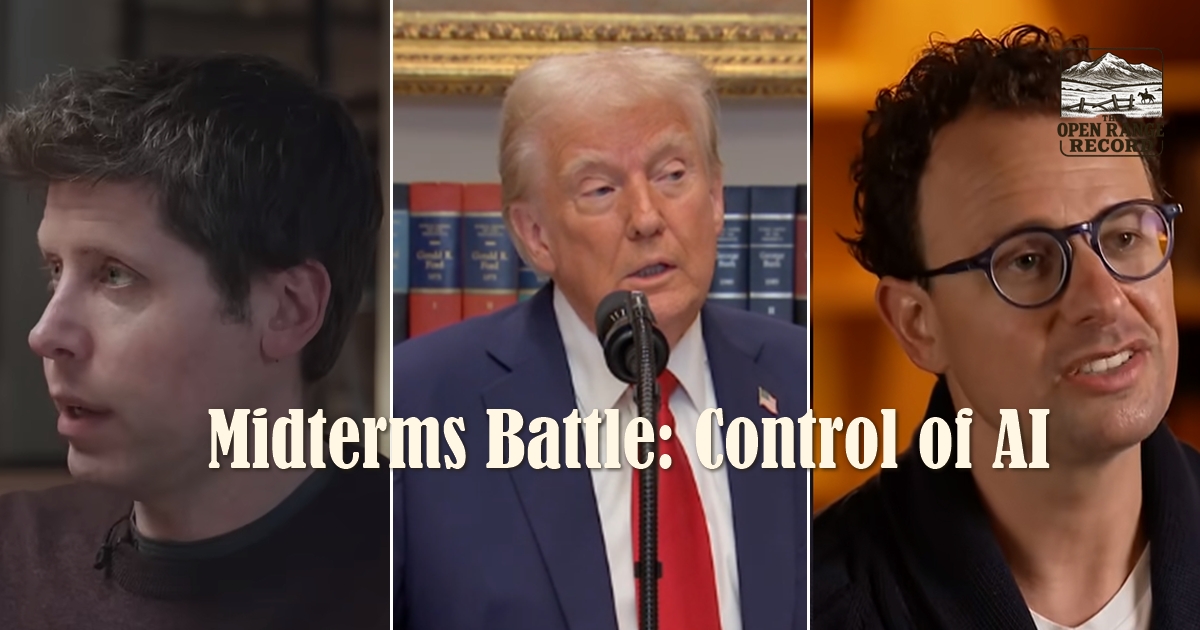
While leaders like OpenAI Chief Executive Officer Sam Altman and Anthropic Chief Executive Officer Dario Amodei warn of safety risks and advocate for government coordination, critics argue that excessive regulation acts as a fence to protect legacy corporate monopolies. President Donald Trump has pushed back against calls for mandatory development pauses, warning that restricting domestic AI progress cedes critical economic and technological advantages to foreign competitors like China, which continues to deploy open-weight models without restrictions.
Political analysts warn that as the midterm elections draw closer, public perception could be dramatically shifted by a sudden crisis. If a major election-year data breach or network vulnerability occurs, political factions from across the spectrum could leverage the incident to demand immediate federal emergency powers, locking down open-source access and placing the future of computing power firmly under centralized state control.