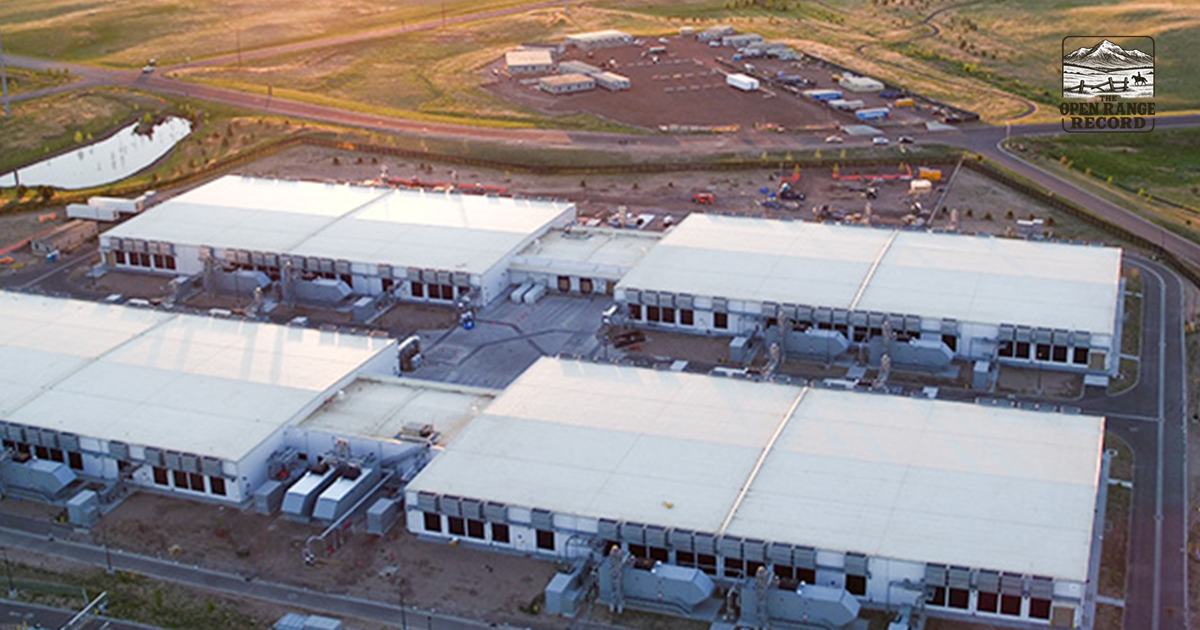
CHEYENNE — As the Wyoming Legislature has concluded its 2026 session, a sudden shift in global computing technology is raising questions about the state's long-term strategy for "hyperscale" data centers. For years, Cheyenne has utilized significant tax exemptions and infrastructure planning to attract massive server farms, operating under the assumption that Artificial Intelligence (AI) requires ever-increasing amounts of physical memory and cloud-based hardware.
However, a new development from Google Research has fundamentally challenged the necessity of that model. On March 26, 2026, Google open-sourced a new algorithm called TurboQuant. This software allows AI models to run with up to six times less memory while delivering an eightfold increase in processing speed.
The End of the "Memory Wall"
Until this month, the primary bottleneck for AI was the "Memory Wall." To process long conversations or complex data, AI required massive amounts of high-bandwidth memory (HBM) chips. This demand drove the skyrocketing costs of hardware and the urgent need for the massive data centers currently being built in Laramie and Natrona Counties.
TurboQuant utilizes two mathematical techniques, known as PolarQuant and Quantized Johnson-Lindenstrauss (QJL), to compress the data an AI must "remember" without losing accuracy. According to the official Google Research announcement, this breakthrough allows developers to reduce the number of required memory chips by over 83 percent.
The implications for local computing are immediate. In a report published on March 28, 2026, the Times of India Tech Desk noted that "This is the kind of software efficiency gain that quietly changes what is possible on existing hardware." The report detailed how developers are already using the algorithm to run powerful AI models locally on laptops and small business servers, bypassing the need for cloud-based data centers entirely.
Market Reaction and the "DeepSeek Moment"
The release has triggered a significant reaction in the global financial markets. Stocks for memory manufacturers like Micron Technology and SK Hynix saw sharp declines following the news, as investors re-evaluated the projected demand for massive server infrastructure.
Software researcher and developer Andrej Karpathy noted in a technical breakdown of the event that "When you can do six times more with the same amount of RAM, the entire 'we need more massive data centers' narrative starts to crack." Karpathy’s analysis suggests that the industry is pivoting toward "Sovereign AI," where individuals and small companies host their own intelligence locally to maintain data privacy and reduce costs.
A Parallel to the Blockchain Era
This rapid shift in technology has led some observers in Cheyenne to draw parallels to Wyoming’s previous attempts to lead in the tech sector. Beginning in 2018, the Wyoming Legislature formed the Select Committee on Blockchain, Financial Technology and Digital Innovation. The state passed dozens of laws intended to make Wyoming a global hub for Bitcoin and blockchain technology, often referred to at the time as the "Silicon Prairie."
While those efforts resulted in the creation of Special Purpose Depository Institutions (SPDIs), the promised economic "boon" for the state’s general fund has largely failed to materialize as a major revenue driver. As the initial hype of the blockchain era has faded from the legislative forefront, the state has pivoted its focus toward the data center industry.
The current strategy involves millions of dollars in sales and use tax exemptions for data center equipment. However, if the "TurboQuant" revolution continues to move AI away from the cloud and onto local devices, Wyoming may find itself holding the infrastructure for an industry that is rapidly decentralizing.
The Road Ahead for Wyoming
The 2026 budget session included several measures to further accommodate the data center industry, including power grid upgrades and land-use prioritizations. Proponents of these projects argue that they provide a stable tax base and construction jobs.
However, the "DeepSeek moment" provided by Google’s new algorithm suggests that the technical landscape is moving faster than the legislative process. If AI becomes a tool that is locally installed and privately managed, the multi-billion-dollar "hyperscale" warehouses currently being courted by the Cheyenne establishment may face a diminishing market.