What the Bill Does
House Bill 0010 would require public and school libraries in Wyoming to ensure that “sexually explicit materials,” as specifically defined in statute, are not accessible to minors. The bill establishes a formal challenge process, imposes civil penalties for failure to implement that process, and creates a private cause of action — including mandatory attorney fees — for violations.
Recent amendments narrowed the language, clarifying that restrictions apply to students younger than 18 and to sections “primarily” devoted to minors.
Supporters say the measure creates uniform statewide standards and protects children from graphic sexual depictions. Opponents, including several educators and librarians, argue existing local systems already address placement concerns and warn the bill could invite litigation and chill access to literature.
Rep. JD Williams: “Not an Issue in My Neck of the Woods”
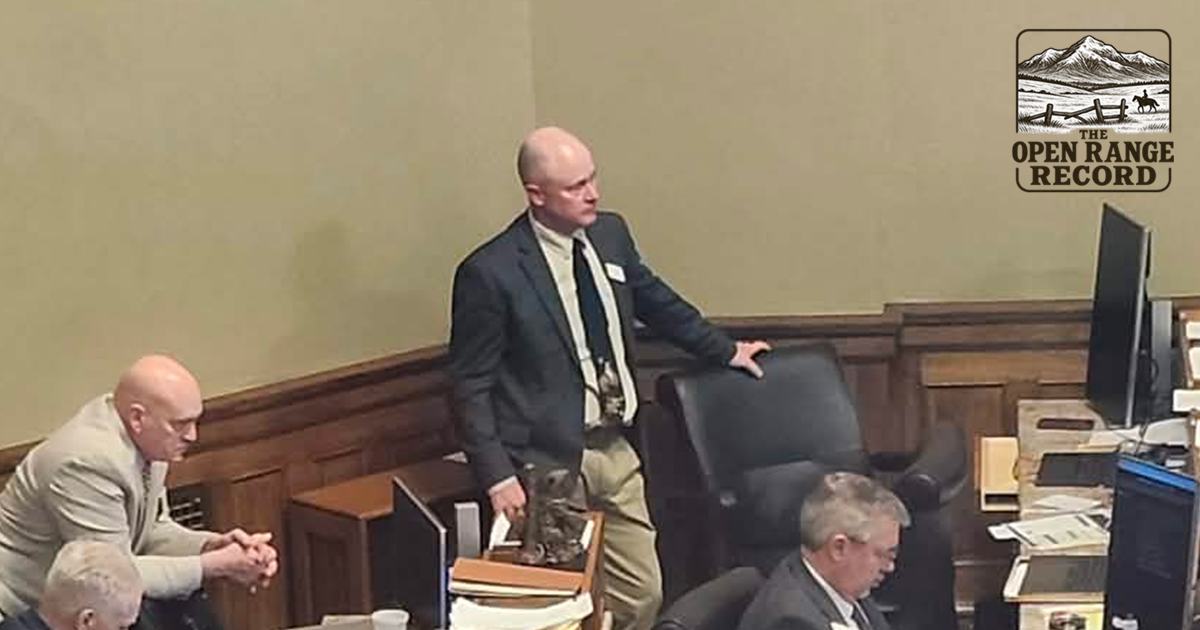
During floor debate, Rep. JD Williams said he had just returned from multiple meetings across the counties he represents, where the issue was raised repeatedly. He told colleagues that several constituents thanked him for previously voting against the bill. Williams said he has spoken directly with local librarians in his district and asked how they handle concerns about sexually explicit material.
“They all deal with it a little differently,” he explained, “but they deal with it effectively.”
Even so, Williams said he would vote yes.
“I’m going to vote yes on this bill — not for the folks at home, because they don’t think there’s a need for it — but for all of you in the state where this is an issue. It’s not an issue in my neck of the woods.”
He added that he wanted to go on the record so his constituents understood his reasoning. Williams’ vote reflected a position that statewide standards may be warranted even where local practices are already working.
Social Media Fallout
The debate has extended beyond the House floor. Chelsie Collier, a member of the Campbell County Library Board, told Open Range Record that after commenting on a Wyoming Democratic Party Facebook post about HB0010 and sharing images from prior reporting related to the book “Gender Queer,” her account was flagged for posting inappropriate content.
Collier said Facebook restricted her account for more than 24 hours and that she was unable to post or comment in certain groups. She described the experience as censorship, noting that the same images had previously appeared in public reporting on the bill.
Screenshots provided to ORR show a temporary account restriction notice and an inability to access the post. The incident highlights how the HB0010 debate — centered on access to sexually explicit material — is intersecting with broader questions about platform moderation and political messaging online.
Why This Matters
HB0010 introduces statutory definitions, civil penalties, and litigation mechanisms. As the bill advances, lawmakers must weigh child-protection concerns against local control, free speech considerations, and the practical impact on libraries across the state.