Reflections from a February 27 Press Conference
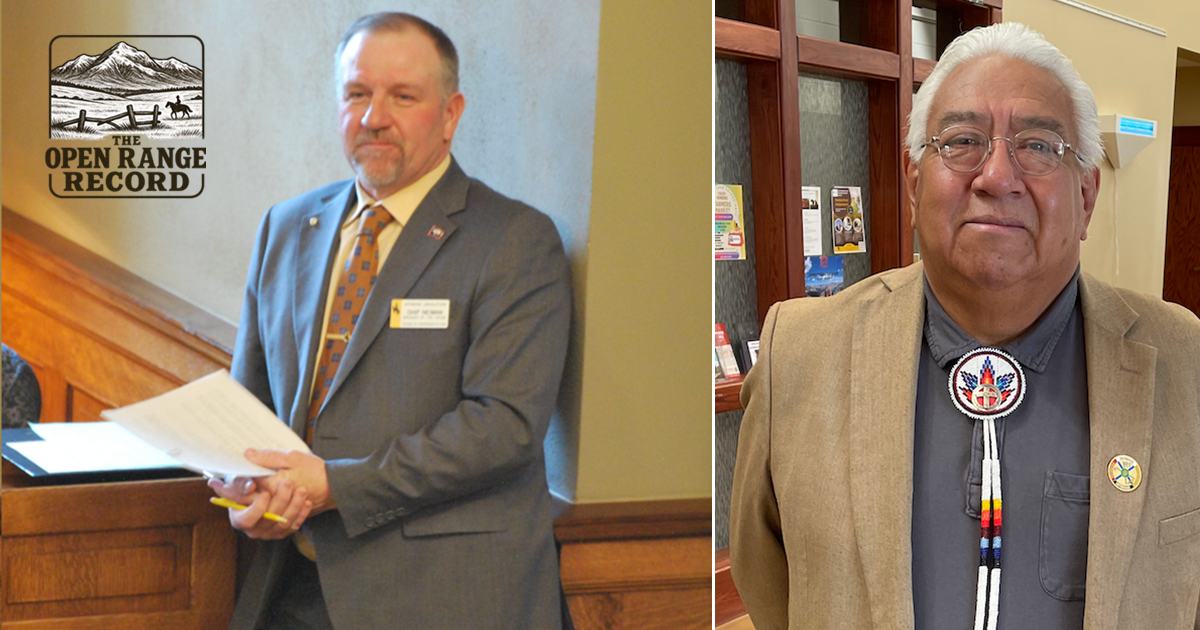
This morning, I had the opportunity to sit in Speaker Chip Neiman’s office along with a small group of reporters. It wasn’t flashy. It wasn’t theatrical. It was substantive and illuminating.
The Budget: What Is Actually Being Debated?
One of the first topics raised was the budget and what might happen as the House heads into joint conference committee negotiations with the Senate.
Speaker Neiman was confident an agreement could be reached. The primary negotiation points, he said, would likely center around funding for the University of Wyoming and the Wyoming Business Council.
But what struck me most was how clearly he broke down the numbers. The Governor proposed an 11% increase over what it costs to operate state government. The House Appropriations Committee came back at roughly 3% over baseline operational needs.
That is not “cutting the budget.” That is declining to grow government by an additional 8% beyond what is required to run the state. There’s a meaningful distinction there — one that gets lost in headlines.
This is likely the first session in state history where the budget itself has received this level of public scrutiny. Much of that coverage has framed the House — and particularly conservatives — as slashing services. But according to the Speaker’s explanation, what was trimmed was excess growth, not essential operations.
Political Friction and the Changing House
That led naturally into a broader question about the tension inside the Capitol. Speaker Neiman did not shy away from it.
Over the past three election cycles, more conservatives have been elected to the House. When control shifted last year, it disrupted longstanding power structures. Spending philosophy is at the heart of that shift.
He used a business analogy that resonated deeply — especially with me as a fellow business owner: When it’s your money, you watch every nickel. When it’s someone else’s money, discipline weakens.
That, in many ways, defines the philosophical divide driving current friction — between Democrats, more moderate Republicans, and the conservative wing often labeled the Freedom Caucus. It isn’t merely about personalities; it’s about governing philosophy.
Whether government should grow simply because revenue allows it — or whether growth should be restrained even in flush years — is a fundamental difference in worldview. And that difference is playing out in real time.
The University of Wyoming: A Structural Question
From there, discussion returned to the University of Wyoming. The Speaker spoke candidly about what he sees as a top-heavy administrative structure relative to student enrollment. Again, he framed it in business terms:
You cannot sustainably operate an organization where overhead grows faster than your customer base. His concern wasn’t about education itself — it was about structural imbalance.
He broadened that point into something many of us have quietly wondered: when government employment grows faster than private-sector job creation, imbalance follows. The private sector generates the tax base that funds government. When that relationship tilts too far, sustainability becomes fragile. That’s not anti-government. That’s basic economics.
“Check Gate” — Disappointment More Than Anger
Of course, the press asked about “Check Gate.” Speaker Neiman walked through the timeline calmly. What stood out wasn’t outrage — it was disappointment. If Representative Provenza had concerns, he said, leadership should have been notified. Leadership cannot be accused of burying a complaint that was never formally filed.
He described the public escalation as “pouring gasoline on a fire.” He emphasized the toll it took — on members and their families, and on the public trust. Once something ignites at that level, there is no putting the fire out.
I asked directly whether complaints had been filed against Representatives Provenza and Yin. He confirmed there were multiple complaints filed. When asked by another reporter who filed them, he declined to name names at this time.
I asked if he knew who referred the matter to the Laramie County Sheriff’s Office. He stated he did not know and learned of the investigation when it was announced publicly on Facebook on Saturday, Feb 14th. That detail alone speaks volumes.
The Special Investigative Committee
The Speaker was also asked whether he believed the makeup of the special investigative committee was fair, especially given that he himself had received a check.
He said yes — he believed the composition was balanced. He explained how he selected members and emphasized that there is only one Freedom Caucus member on the committee. He also spoke warmly about the lone Democrat appointed to serve: Representative Ivan Posey. He noted how well-respected and well-liked Ivan is within the body. And I want to say something personal about that.
Recalibration and Classroom Funding
We also discussed recalibration and school finance. Speaker Neiman expressed optimism that recalibration would move forward in the House. He was pleased the Senate retained siloed funding for classroom expenditures — including teacher salaries, benefits, paraprofessionals, and nursing staff.
He clarified something important: siloing teacher salary funds does not eliminate local discretion. Steps and lanes remain a district decision. The funds are protected for classroom use, but districts determine structure. That reassurance will matter to teachers watching this closely.
We also talked about block grants and how once districts receive that funding, they have broad discretion in allocation — something that can create disconnect between taxpayer assumptions and actual spending. That transparency issue deserves more daylight.
The School Foundation Account: A Hard Look Ahead
Finally, I asked about the School Foundation Program — long supported by coal revenue. That account is dwindling. With declining coal production and rising construction costs, difficult conversations are ahead.
The Speaker referenced past proposals — including one by Senator Charlie Scott — suggesting a potential return to more localized bonding for school construction. He acknowledged that ideas once laughed at may eventually become necessary.
He also shared a story from his time on a school board: contractors noting older brick and tile buildings were often easier and cheaper to maintain than modern drywall-heavy construction. There’s wisdom in durability. Long-term thinking matters.
A Personal Moment: Representative Ivan Posey
Representative Ivan Posey, the lone Democrat on the investigative committee, was mentioned during the press conference. Speaker Neiman spoke respectfully of him.
Yesterday, during my testimony, Ivan smiled at me. You don’t know how much that smile in a stressful situation meant. When you’re sitting there, heart pounding, knowing cameras are rolling and every word matters, you feel the weight of the room. In that moment, his smile reminded me I wasn’t standing there alone.
I ran into him out in the hallway during a break in the hearing, and I thanked him for that smile. He hugged me. And I cannot tell you what that meant, because that moment mattered to me. More than you know.
In a building filled with tension, cameras, and political crossfire, that moment reminded me that beneath party labels are human beings. Beneath caucuses and committees are fathers, mothers, neighbors — people trying, in their own ways, to serve something bigger than themselves. Good hearts exist on both sides of the aisle. And sometimes, in the middle of the loudest storms, it’s the quiet gestures that steady you.
Representative Posey, if you read this — I would genuinely welcome the opportunity to sit down with you for a real conversation before I leave Cheyenne next week. Not about headlines. Not about factions. Not about votes. Just about you. And about Wyoming.
Because at the end of the day, that’s what all of this is supposed to be about.
Final Thoughts
Speaker Neiman struck me as steady, thoughtful, and deeply grounded in faith and responsibility. Agree or disagree with individual policy choices, what I saw this morning was not chaos — it was conviction paired with calm. Leadership isn’t about volume; it’s about steadiness. And steadiness is something Wyoming could use more of.