OPINION
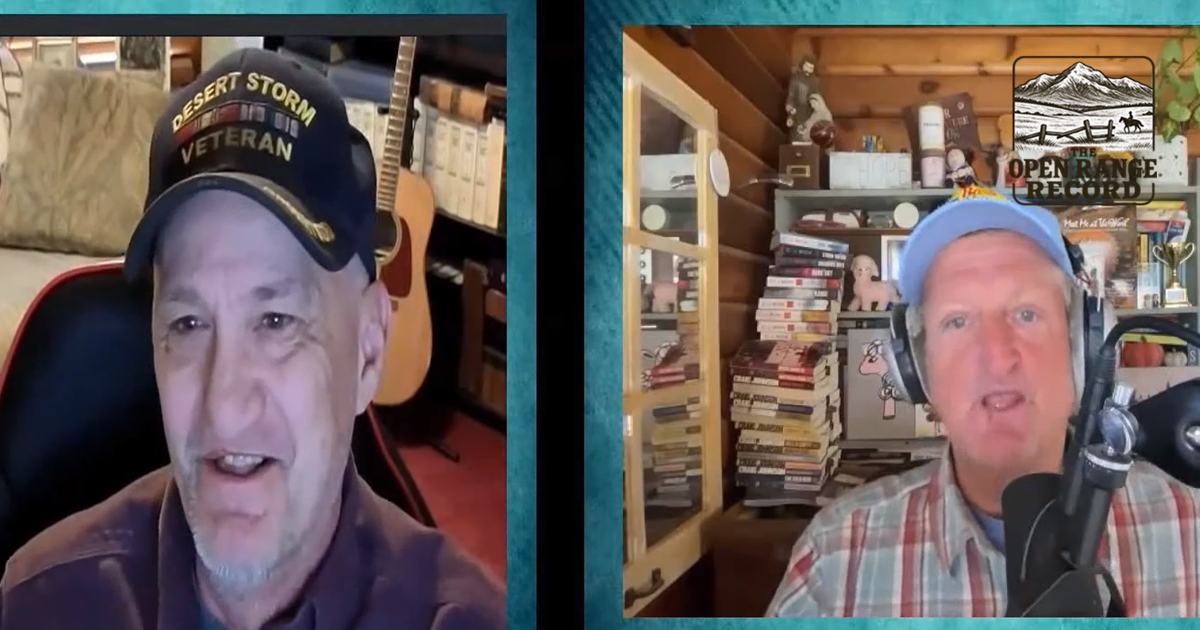
There are interviews where the host lands the punch.And then there are interviews where the host winds up handing the guest a better bat.Wednesday morning’s conversation between Cowboy State Dailyhost Jake Nichols and Representative Ken Pendergraft fell into the second category.
Jake clearly came in ready to frame the House budget as a round of “very drastic cuts,”the kind of phrase meant to make listeners picture lawmakers running loose in Cheyenne with hedge trimmers and a grievance. But Pendergraft never took the bait. He pushed back on the wording, challenged the premise, and then did something even more effective: he got Jake to concede parts of the argument along the way.
That is what made the interview worth paying attention to.
Pendergraft began by reminding listeners that for Appropriations members, this was not some tidy little three-week budget session. It was months of hearings, travel, prep work, and long days before lawmakers ever hit the House floor. He said the House came in with two big goals: pass a budget and finish education recalibration, something he noted had not been done in 15 years. He also rejected the now-familiar narrative that the House simply folded to the Senate, saying lawmakers built in bargaining room and still managed to pass a budget below the governor’s recommendation. In his view, that was not chaos. That was governing.
Then Jake went where every Capitol observer knew he would go: the cuts.Out of Appropriations, Jake said, came what looked like “very drastic cuts.” He called them “certainly eye-opening.” That was the setup. That was the cue for the guest to start apologizing for conservative ambition and assuring everyone that no institution in Wyoming would ever again be made to feel uncomfortable. But Pendergraft stopped him cold with one word: “Drastic?”
That one interruption told you where the rest of the interview was headed.When Jake raised the Wyoming Business Council, Pendergraft did concede one point, but only in a way that strengthened his case. Yes, he said, taking it from its proposed funding to zero was meant to get attention. “I think we did that.”
He then explained exactly why a smaller trim would not have accomplished the same thing. If lawmakers had merely shaved off a few million, the Business Council could have gone right back to business as usual; the same way government agencies so often survive by enduring “concern” until the public gets distracted. Instead, he argued, lawmakers shoved the debate out into the open and forced people to ask the question that should have been asked a long time ago: what, exactly, has the Business Council produced after roughly 30 years that justifies treating it like a permanent fixture?
And here is where the interview got especially interesting: Jake more or less acknowledged the point.He did not keep hammering that angle as though he had uncovered some act of legislative barbarism. He recognized that the move was attention-getting, and that was really the point. That matters, because once the host admits the strategy was to force a reckoning, the whole gotcha starts to wobble.
This was no longer a story about lawmakers wildly hacking away at government. It became a story about whether some parts of government have coasted for too long without serious scrutiny.The same thing happened when the discussion turned to the University of Wyoming.
Pendergraft said the proposed UW reduction was only about 4% of the university’s budget and then made the kind of argument that lands with ordinary people a lot better than it does with the professional hand-wringing class. Most families, he said, have lost more than 4% of their household income in recent years because of inflation and higher property taxes. So,spare him the melodrama.
If Wyoming is going to call a 4% trim drastic, what word is left when a real downturn hits and lawmakers are forced to make 10%, 12%, or 15% cuts? As Pendergraft put it, words mean things, and hyperbole does nobody any favors.
That was one of the stronger moments in the interview because it exposed something Capitol coverage often tries to avoid. For years, too many institutions in Wyoming have operated as though any reduction at all is an existential threat, while the taxpayers funding them have been expected to absorb every shock in silence. When groceries cost more, when utilities cost more, when property taxes climb, families are told to tighten their belts and figure it out. But let government hear the whisper of a budget trim and suddenly it is smelling salts and fainting couches.Pendergraft was not buying that performance, and to his credit, Jake did not fully sell it either.
In fact, Jake openly admitted he shares the broader limited-government view.He said plainly that he wants government “as small as we can make it,” that he supports right-sizing government, cutting bloat, and finding places where government does not need to be. That is important context, because this was not some clean showdown between a conservative legislator and a big-government defender.
It was more like one man trying to stress-test the House’s tactics while also agreeing with much of the underlying philosophy. And that is precisely why some of his sharper questions kept boomeranging back on him.Nowhere was that clearer than in the discussion about education funding.
Pendergraft defended the so-called silo approach, acknowledging that it upset a lot of people but arguing it became necessary after repeated examples of legislative intent being ignored. He pointed to the prior effort to fund an 8.5% teacher raise statewide, only to have all but one district use the money elsewhere.
His point was not subtle: lawmakers were told the money was needed for teachers and classrooms, they appropriated it, and then local districts dissipated it through the block grant. So yes, the Legislature finally got more heavy-handed. Because after a while, writing checks and hoping for the best starts to look less like local control and more like a shell game with better letterhead.
Jake did not exactly fight him hard on that either.Instead, the conversation flowed into the broader question of government overreach and federal dependency. Jake set up the SUN Bucks issue by noting that federal money is not free money, and Pendergraft picked it up from there. He said the request at issue was for more administration, more office structure, more people, not directly for food.
He also made the larger philosophical argument that government should not teach families to depend on programs that are politically fickle and financially unstable. He was careful to say there is a place for welfare and for helping people out of a hole, but he drew a sharp line against building yet another layer of bureaucracy and then pretending opposition to it means you hate children. That sort of emotional blackmail may still play in certain circles, but it is not holding up nearly as well as it used to.
By that point, the real shape of the interview had become obvious.Jake was trying to push Pendergraft on tone and tactics. Were these cuts too hard? Too aggressive? Too shocking? But because Jake also believes government has grown beyond its proper role in many areas, he kept conceding the deeper point: Wyoming does have a spending problem, government does overreach, federal dollars do create dependency, and some agencies do need a long look under the hood.
Once those concessions are on the table, all that is left to argue about is how hard you have to hit the brakes before Cheyenne notices the car has been drifting toward the ditch for years.And that may be the most revealing part of all.
Pendergraft did not sound like a man embarrassed by what the House tried to do. He sounded like a man who thinks serious conservatives finally showed up and acted like it. Jake, meanwhile, sounded like a host who wanted to challenge that approach but kept running into his own agreement with his principles. Sometimes a gotcha fails because the guest dodges. Sometimes it fails because the guest calmly asks you to define your terms, and before long you realize you have helped make his case.This interview was the latter.