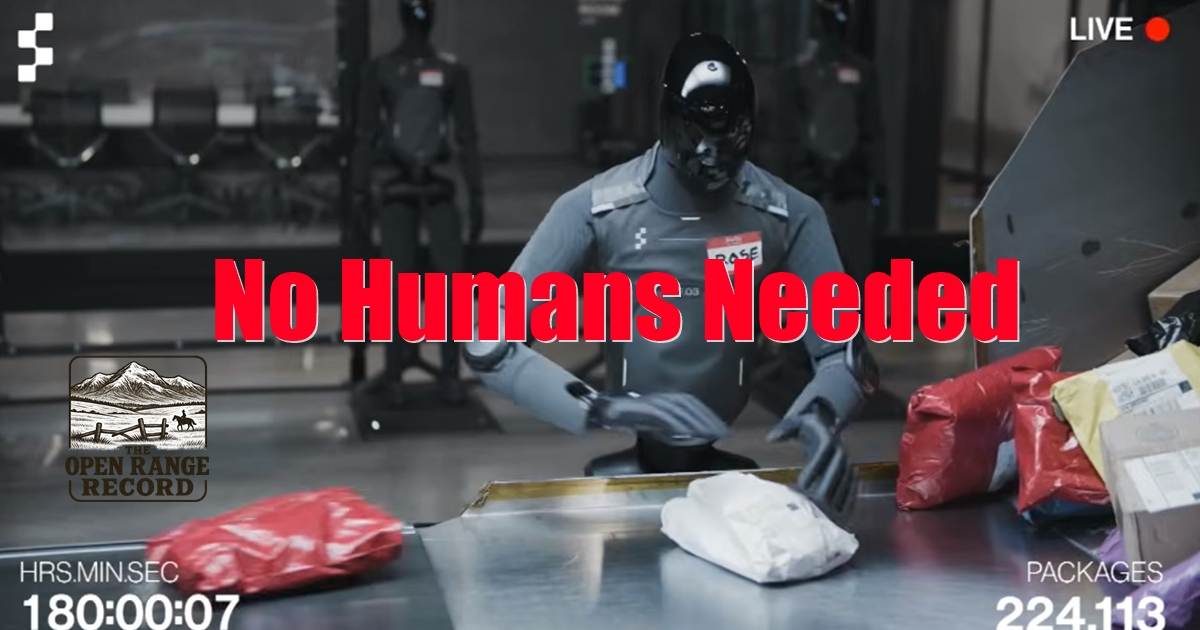
A viral YouTube live stream is currently redefining the American warehouse and the future of work. A single humanoid robot has spent one-hundred-eighty hours (as of this writing) processing thousands of industrial packages without human intervention. This demonstration takes place in a facility resembling a modern postal hub. The robot operates without breaks or fatigue while a steady audience watches in real time.
This event highlights a looming shift in the 2026 labor market. The robot is performing tasks that have traditionally required a significant human workforce. Most major news outlets have not yet covered this specific event. However, the data being broadcast is impossible to ignore for major corporations. Warehouse automation has reached a critical tipping point, and up next is other human labor tasks.
The robot is performing tasks that an entry-level worker would find monotonous and repetitive. A human employee might process fifteen hundred packages during a standard six-hour shift. In contrast; this robot has processed twenty-six thousand packages in twenty-one hours. It shows no signs of slowing down or requiring any human intervention.
A human would normally have to grab, toss, and spin each individual package. They must check the label location before placing the item appropriately. There are no traditional automated machines that can handle this specific task. It requires the dexterity and the motion of human hands to be successful.
The humanoid robot shows that robotics has reached a new level of human mimicry. It uses arms and hands to toss packages with surprising precision. Some unique clips show the robot spinning a box like a basketball. It then identifies the barcode and places the item barcode down.
This behavior is something a human might do for entertainment during a shift. However; the robot does this as part of its standard programming. This demonstration shows how quickly industrial robotics has advanced in just one year. Previously, experts believed this level of dexterity was at least ten years away.
Leaders like Elon Musk have recently accelerated their predictions for this technology. Musk has stated that widespread labor replacement could occur within the next five years. He believes humanoid robots will eventually be more valuable than the automotive industry. Mass production of these units is scheduled to begin this summer.
The company behind the current live stream has a clear goal. CEO Brett Adcock wants these robots to be available for consumer or business leases. He intends to offer them for a lease price of $600 per month. This price point represents a massive disruption to the current 2026 labor market.
A single human day shift can cost more than the entire monthly lease. A business operating twenty-four hours a day would see massive savings. A human workforce for three shifts is significantly more expensive. This creates an economic incentive that few business owners will ignore.
The transition is no longer limited to blue collar or manual labor roles. Sophisticated technology is now encroaching upon white collar professional jobs. In fact, computer programmers are now the top candidates for job replacement. Artificial intelligence can now write production-grade code with minimal human help.
This shift reminds many of previous political promises regarding the high-tech economy. Notably, former President Barack Obama encouraged coal miners to become computer programmers. He suggested that coding was the path to a secure middle-class life. This "coal to code" rhetoric was widely promoted during his administration.

However; those retraining programs often failed to deliver on their promises. Many miners who learned to code now face displacement again by AI. The career advice of the past has been rendered obsolete by rapid progress. The "learn to code" mantra did not account for this robotic rise.
The humanoid robot in the stream handles various shapes without needing resets. Older models required every package to be in the same position, but these new models can adapt to the chaotic environment of a dock. They use vision systems to "see" and orient each package correctly.
As the live stream continues; we are witnessing a new economic era. The twenty-six thousand packages already processed represent a massive volume. If one robot can handle this volume, a fleet could manage a city. The logistics industry is moving toward a future with minimal human touch.
Wyoming serves as a major hub for regional shipping and distribution centers. Our state relies on entry-level labor to keep these facilities moving. The arrival of affordable warehouse automation will impact local operations very soon. We must prepare our citizens for this fundamental change in labor.
The question is no longer if these machines will take over tasks. The question is how quickly the transition will occur. With a six-hundred-dollar lease price; the answer is, "fast." The American warehouse is changing forever, and we must be ready.