NEWS
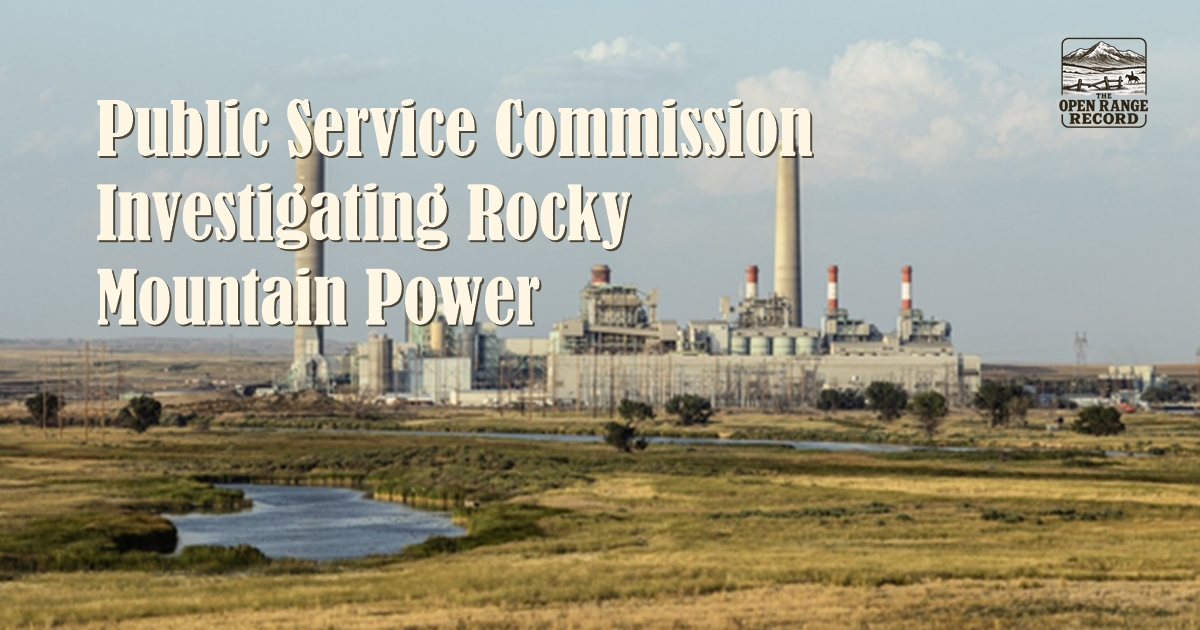
CHEYENNE — The Wyoming Public Service Commission voted unanimously Oct. 29 to open an investigation into Rocky Mountain Power. The probe will examine claims that the utility is slow or unwilling to serve large new electricity users. Commissioners will review the company's handling of such requests back to January 2022.
The utility says state and federal rules protect existing customers from paying for speculative projects. Industry groups say waits of up to seven years amount to a refusal.
The commission has three members, appointed by the governor with Senate consent. Gov. Mark Gordon appointed Chairman Mike Robinson in 2019 and Deputy Chairman Chris Petrie in 2021. Chris Boswell, a former House minority leader, joined in October 2025, replacing Democrat Mary Throne, who resigned in August. State law limits any one party to 75% of the panel, or two of its three seats.
A Probe Without a Complaint
The vote followed a pointed exchange at the commission's meeting. Rocky Mountain Power President Dick Garlish noted that no customer has filed a formal complaint. "I don't see the reasonable, probable cause, or even a reasonable suspicion," he told commissioners.
Deputy Chairman Chris Petrie said the investigation is not a condemnation of the company. He cited "persistent complaints in the public" about how the utility handles large requests. Chairman Mike Robinson called it "not necessarily an accusatory situation."
Austin Jensen, representing the Wyoming Industrial Energy Consumers, supported the probe. He said large customers hesitate to challenge their only power provider on the record. "The lack of a formal complaint doesn't mean everything is fine," Jensen said.
Garlish said the company would cooperate fully once an investigation opened. "Growth needs to pay for growth," he said. Petrie said significant progress could come by the end of February, though the work may run longer.
Demand Far Above Supply
Rocky Mountain Power says it studied 83 requests for more power over the past decade. It served 24 of them, totaling 258 megawatts. Since February 2025, it has received 35 "very large load" inquiries totaling 9,000 megawatts. Garlish said most are speculative, with developers weighing sites in several states.
For scale, Wyoming's existing generating capacity is about 11,800 megawatts. Data center proposals from just two developers would need more than twice that, WyoFile reported.
Trona industry spokeswoman Jody Levin raised the issue with lawmakers in May. She said the utility put a significant power increase for southwest Wyoming's trona producers seven years out. "Seven years is a de facto no," Levin said.
Costs the Public Rarely Sees
Several less visible issues sit behind the dispute, according to public filings and legislative testimony.
The first is jobs. Sen. Stacy Jones, R-Rock Springs, said Sweetwater County has no spare power for new industry. "I don't think we're even aware of the businesses we've lost out on."
CarbonCapture Inc. dropped its Project Bison plans in 2024, citing competition from data centers for electricity. Rocky Mountain Power said its role is to support economic development, not drive it. The company said its prices remain almost one-quarter below the national average.
Who pays for new lines and plants is a second question. The utility says large customers pay the costs of connecting to its system. Sen. Cale Case, R-Lander, warned of "sunk costs" if big industrial users leave the grid. He said remaining ratepayers could end up carrying those costs.
Case put the industrial share of Wyoming's electricity use at 56.8%, citing federal data. Attorney Thor Nelson spoke for the Wyoming Industrial Energy Consumers. He said its members use about half the power the utility sells in Wyoming.
Rate cases are a third track. In May, the utility asked to raise Wyoming rates $70.5 million a year, or 8.8%. Its October rebuttal filing lowered the request to $52.2 million, or 6.5%.
The request includes a return on equity, the profit rate regulators authorize on shareholder investment. The company seeks 9.70%, up from the 9.5% now authorized.9 The Office of Consumer Advocate and the industrial group both recommend reducing current rates, company testimony says.
Consumer Advocate administrator Anthony Ornelas said in September the office might seek "potentially an elimination" of the increase. A public hearing on the case begins Dec. 1 in Cheyenne.
Wildfire risk is a fourth cost few customers see. The utility's commercial wildfire liability coverage in Wyoming expired in February 2026, and it did not replace it. It now proposes a customer-funded $100 million self-insurance reserve, built over 10 years.
A Consumer Advocate analyst calculated customers will have prepaid nearly 25% of that target through existing rates. The company then cut its yearly request from $10 million to $8.5 million. Parent company PacifiCorp has recorded about $2.85 billion in estimated losses from Oregon and California wildfires through 2025.
Long-range planning is a fifth. The commission scheduled deliberations for Nov. 3 on the utility's 2025 Integrated Resource Plan, its blueprint for future generation.
Costs are also split among PacifiCorp's six states under an allocation agreement. A proposed stipulation would extend the current agreement through 2028. Nelson told lawmakers PacifiCorp's plans center on replacing coal power for western states such as Oregon. He said that leaves little new generation aimed at Wyoming growth.
Legislature Weighs Alternatives
Lawmakers have debated letting third-party generators serve large users directly. The Joint Minerals Committee narrowly killed one such bill in August. A legislative committee on blockchain took up a broader version in late September.
Rocky Mountain Power has opposed third-party power. Thom Carter, its vice president of government affairs, warned against "workaround strategies." He said they do not address the underlying need for transmission and generation.
Wyoming's rural electric cooperatives proposed principles that keep service territories intact. Under them, large loads would "pay their own way," with study and service costs not shifted to existing customers.
The commission has not said what steps it could take if the investigation finds shortcomings.