NEWS
Wyoming is becoming a major destination for artificial intelligence and data-center development, and the latest announcements out of Cheyenne show how much electricity these operations will require. Two energy companies have announced a combined $5.8 billion in planned power investments connected to Google’s growing operations, with agreements that could influence Wyoming’s energy infrastructure for decades.
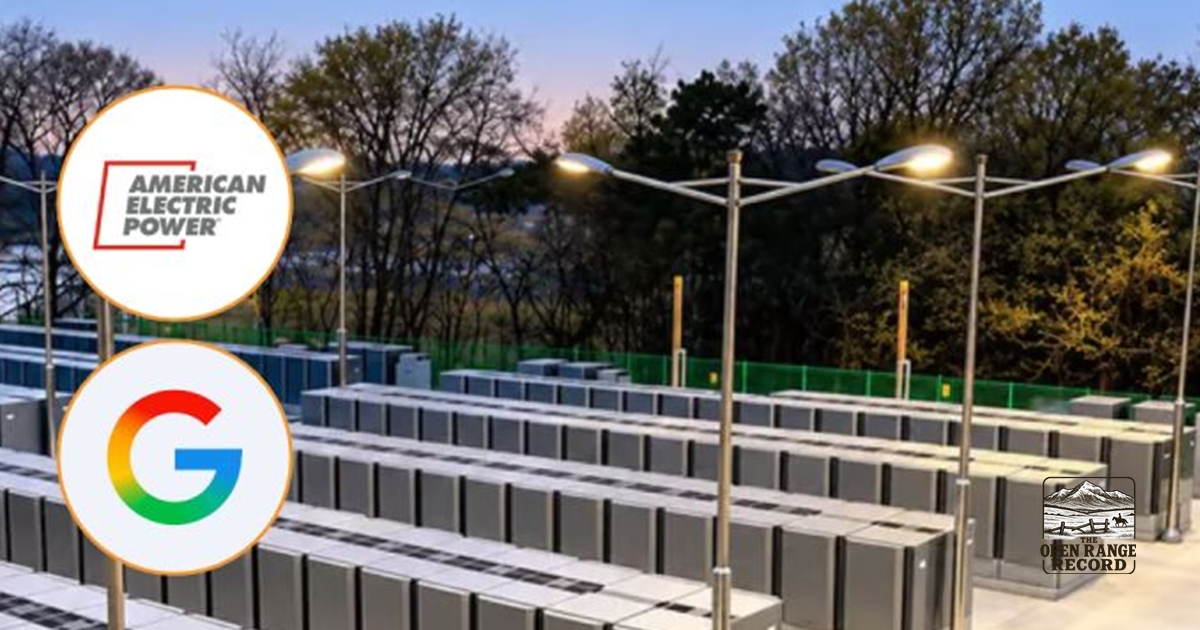
On October 14, American Electric Power (AEP) announced plans to invest approximately $4 billion in a 702-megawatt fuel-cell generation facility near Cheyenne. Google will purchase the electricity under a 20-year power purchase agreement. Eight days earlier, Black Hills Corporation announced a separate $1.8 billion investment in natural gas generation to serve Google’s planned Cheyenne data center.
The $5.8 billion figure combines two separate planned investments and excludes additional transmission expansion costs. It does not mean the full amount has already been spent. The announcements bring construction opportunities but raise questions about ownership, long-term electricity costs, and protections for existing utility customers.
Google’s $4 Billion Fuel-Cell Project
AEP’s planned facility will generate 702 megawatts using technology developed by Bloom Energy. The fuel cells produce electricity through an electrochemical process rather than conventional combustion. The project includes plans to integrate carbon-capture technology, but the proposed system is not yet an independently verified operating capability.
The facility will operate through Cheyenne Fuel Cell LLC. AEP reports that it owns and controls approximately 92%, while funds advised by Basalt Infrastructure Partners hold nearly 8%. Bloom Energy supplies the technology, and Google purchases the power. The announcement does not name the individual Basalt-advised funds or disclose the complete financial terms of Google’s agreement. Construction was expected to begin in 2026, with full operation targeted by the end of 2028.
Black Hills announced two agreements effective September 30, 2026: a Large Power Contract Services Agreement and a Generation Facilities Agreement. Both run through 2048. The company plans to invest approximately $1.8 billion from 2027 through 2029 in 564 megawatts of new company-owned natural gas generation at its existing Cheyenne Prairie Generating Station.
The company anticipates managing approximately 2.7 gigawatts of electricity resources, including reserve margins. Up to 590 megawatts would come through grid-connected service, while approximately 2.1 gigawatts would be supplied by third-party contracted resources through a private microgrid. Service is expected to begin in late 2027 and increase toward peak demand in 2030.
The figures should not automatically be added to AEP’s 702 megawatts. The public announcements do not establish whether the AEP facility is included in Black Hills’ third-party resource portfolio.
Black Hills Projects $2.4 Billion in Cash Flow
Black Hills projects approximately $150 million in net income in 2030 and approximately $2.4 billion in unlevered free cash flow through 2048, net of its planned $1.8 billion generation capital investment. These are company forecasts, not realized earnings. Unlevered free cash flow is also not the same as accounting profit or cash available to shareholders after debt costs.
The company expects to receive returns on its generation investment and management fees for coordinating electricity resources. It also disclosed $399 million in refundable advances from Google for equipment procurement, which Black Hills expects to reimburse by June 30, 2027.
Black Hills says the agreements contain cost-pass-through mechanisms, early-termination protections, provisions to recover generation investments, and collateral requirements designed to prevent costs associated with Google’s project from shifting to existing customers. The complete signed contracts were not included in the publicly reviewed announcement, so the precise formulas and collateral amounts remain unverified.
Transmission Costs and Regulatory Oversight
Black Hills states that its $1.8 billion generation investment excludes additional transmission-system expansion investments. The company identified a Robinson substation approved in May 2026, a South Cheyenne transmission expansion application filed in September, and another Wyoming transmission application expected in the fourth quarter of 2026.
The company also filed a proposed Large Customer Transmission Cost Adjustment Mechanism in June 2026. The Wyoming Public Service Commission proceeding, docket 20003-273-EM-26, concerns proposed tariff arrangements for recovering transmission costs from large customers.
Black Hills says its contracts and regulatory mechanisms are designed so Google bears the costs of its development. The final effect depends on the approved tariffs and actual implementation. The public announcements do not establish that residential customers are paying for Google’s new power infrastructure.
Federal energy tax provisions may be relevant to fuel-cell or carbon-capture technologies, depending on eligibility rules, emissions performance and project timing. The reviewed announcements do not establish which federal tax credits, if any, Cheyenne Fuel Cell LLC will claim, or their value. It would be misleading to apply a general credit percentage to the entire $4 billion announced project cost.
Likewise, the specific Basalt-advised funds holding the minority ownership interest have not been publicly identified in AEP’s announcement. Naming investors in unrelated Basalt funds would not prove they own any part of the Wyoming facility.
What Wyoming Should Watch
The projects could bring substantial construction activity and energy infrastructure investment. But the financial arrangements will last much longer than construction. AEP’s power purchase agreement runs 20 years, while Black Hills’ agreements extend through 2048.
The companies have disclosed significant investment plans, projected financial returns, and contractual protections for existing customers. The complete signed contracts, final regulatory orders, and any future project-specific tax disclosures will offer a fuller picture.
For now, the record supports the announced investments and financial forecasts, not claims that residential ratepayers are already subsidizing Google’s infrastructure. Wyoming residents have reason to follow how the promised protections work as these projects move forward.
Sources
American Electric Power, October 14, 2026: 702-MW Bloom fuel-cell project
Black Hills Corporation, October 6, 2026: definitive Google agreements and financial projections
Black Hills SEC filing and exhibits
Wyoming Public Service Commission: public notices and proceedings