ANALYSIS
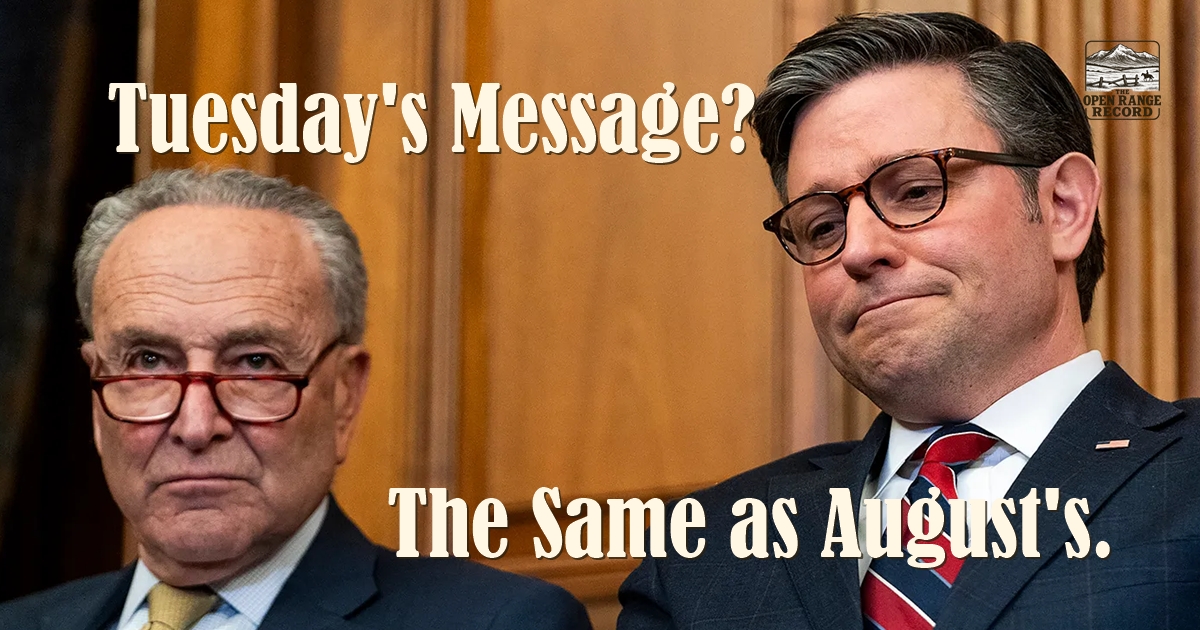
Election night 2026 began with an ominous echo of 20 years earlier. The 2006 midterms brought with it what Goerge W. Bush called a walloping for Republicans. Democrats decisively captured the Senate and also took the House. Republicans again faced losing Congress midway through a president’s second term.
Harriet Hageman and Chuck Gray, both strong conservatives, will take their seats in a Congress that is anything but that. Their victories preserve Wyoming’s voice. Alone, they could not preserve the Republican majority that would have made advancing its priorities easier.
Consider Wyoming’s ongoing fight for a West Coast coal export port. The Trump administration announced up to $75 million for Oakland’s West Gateway Terminal in June. But federal support has not eliminated California opposition. Now, any additional legislation or funding will require navigating a Congress controlled by Democrats.
That makes the argument beyond crucial for Wyoming. Export infrastructure can mean construction work, railroad traffic, port employment, and trade with American allies. Most importantly, it would mean getting Wyoming resources to market. Those are potential shared interests, not assurances of Democratic support. That support will now have to come from Democrats ideologically opposed to the coal that drives Wyoming’s economy. Hageman and Gray will need to find lawmakers whose constituents benefit, even if those lawmakers would never campaign on saving Wyoming coal.
That is also Trump’s larger assignment. National Republicans seemed to forget why some states are called battlegrounds. Their voters still have to be persuaded. When a party concentrates on its perceived base, even a superficial willingness by the opposition to reach across the aisle can become an advantage. Voters who feel ignored by one party do not have to embrace the other party’s entire platform to give it a chance.
That message can be no clearer than with the demise of the SAVE America Act. For months, polling indicated that this was the number one issue across the country, and surprisingly, across parties. After easily passing the House of Representatives, month after month came and went without the bill being brought to the Senate floor. It became clear that even though the SAVE Act was a priority for voters, it was not for Senate Leadership. Independent and some Democrat voters who agreed on the importance of voter ID and handed their support to Republicans in the 2024 election, overwhelmingly withdrew it in the 2026 midterms.
Wyoming conservatives received a similar message in August. After gains across three election cycles culminated in control of the state House in 2024, the primary swept much of their leadership aside. Two years in charge ended in a sweeping reversal. Nationally, power changed parties. Wyoming's House essentially did the same thing this year.
Both Nationally and in Wyoming's Primary, Democrats liberal Republicans were better funded and more organized. After a resounding defeat the cycle before, their organizing and fundraising started almost immediately after they lost power. In Wyoming it was the Wyoming Donor Alliance, the Western Futures Fund and the Way Back PAC who buried voters in largely misleading mail; nationally it was ActBlue, labor unions and the Democrats' funding apparatus. Nationally, Democrat candidates out-raised their Republican counterparts.
The causes need not be identical for the lesson to be clear: the coalition that wins power still has to be persuaded to keep its leaders there. History also offers a lesson about what comes next.
Ronald Reagan’s setback came in 1986, when Republicans lost the Senate and Democrats retained the House. His 49-state presidential victory just two years earlier had not made congressional control permanent.
Bill Clinton lost both chambers in 1994. He subsequently moved toward the political center and negotiated with the Republican Congress. The budget agreement with congressional leaders, including Speaker Newt Gingrich, came in 1997; the first federal surplus followed in fiscal 1998. Economic growth and earlier fiscal decisions also contributed. Neither party could honestly claim the result entirely for itself.
After Republicans lost Congress in 2006, Bush still found room for agreements. His administration negotiated the 2008 economic stimulus package with Democratic Speaker Nancy Pelosi and Republican leader John Boehner. Whether conservatives approved of that policy is a separate question. Its passage demonstrated that bitter political opponents could still assemble a legislative majority.
Barack Obama lost the House of Representatives in 2010. After the “Affordable Care” Act, Democrats surrendered 63 seats in the House and 6 in the Senate, the largest single gain since 1938. Though Democrats retained control of the Senate, the first-term President was forced to work with a Republican House to pass 2012’s JOBS Act and the Payroll-tax relief bill.
The useful lesson is more precise than a demand that every defeated president “move to the center.” The political center is not a single destination. Lawmakers who disagree profoundly on one issue may have overlapping interests on another. Trump’s task is to find that overlap in the Venn diagram of American politics.
He retains the presidency and the veto. Democrats will control what advances through Congress. Each side can frustrate the other; neither can enact a broad legislative program alone. That creates an incentive for confrontation, but also a reason to negotiate. As is often said, divided government is a good thing because it forces both sides to work together.
For an agreement to survive, Democrats must be able to explain to their base what they would gain. Trump must be able to show that it advances something he promised. A deal presented as the other side’s humiliation is harder for its members to support, however attractive its provisions might otherwise be.
There are limits. The Democrat majority now includes multiple members who very likely already have articles of impeachment drafted and devout DSA members ready to exercise their newly acquired outsized influence. It will be a delicate balance for even the Democrats to manage. The distance between the presumptive House and Senate leadership and DSA Congressional members is not all that dissimilar from that of Republicans to mainstream Democrats. That presents an opportunity.
Avoiding the lesson Republicans were given by battleground states and independent voters means addressing the concerns they campaigned on. To do that, Democrats will have be able to move their policy agenda in a divided government.
Democrats may prefer denying Trump a victory, and some disagreements cannot be reconciled. But identifying specific proposals with benefits across party lines tests that willingness. It also gives swing voters something more substantial to judge than competing accusations of obstruction.
Hageman and Gray will have to take a page out of longtime Wyoming Senator Alan Simpson’s playbook.
In 1990, like now, Democrats controlled both chambers of Congress. Simpson worked alongside Montana Democrat Max Baucus on the Clean Air Act—not exactly a proposal that would resonate with Republicans. Simpson helped correct sulfur-reduction requirements that disadvantaged Wyoming’s naturally low-sulfur coal. He and Baucus then partnered in securing concessions for Western industries and utilities. Simpson helped shape legislation Democrats wanted into something that also served Wyoming’s interests. As Simpson told the Los Angelos Times in 1999, “your enemy one day could be your ally the next.”
That is providing, of course, that any Democrats in Washington are interested in working on substantive issues. Almost immediately after control of the House and Senate became clear, Democrats announced investigations and their intention to frustrate Trump with the courts. The incoming House Oversight Committee Chairman said on X, “Lawyer Up.”
Trump does not have to abandon his agenda. He has to distinguish the portions that require a Republican majority from those capable of attracting a different majority.
For Wyoming, Hageman and Gray no longer have a forum to pursue purely conservative legislation to push through both chambers. Rather, they’ll have to find the opportunities to work with Democrats in areas where both Wyoming and they can benefit. Republicans may have surrendered the gavels. They did not surrender any possibility of getting work done for Wyoming.