OPINION
The Wyoming primary election is over. The general election campaign has begun. But for thousands of Republican Wyoming voters, the question of who they will vote for in November is currently unanswered.
In the Republican gubernatorial primary, Eric Barlow received 58,820 votes, according to unofficial results from the Wyoming Secretary of State. Megan Degenfelder received 38,739. Brent Bien received 30,843. Curt Blake received 2,161. That means Degenfelder and Bien received a combined total of 69,582 votes — 10,762 more votes than Barlow.
Of course, elections do not work by simply adding together the supporters of losing candidates. A Degenfelder voter is not automatically a Bien voter, a Bien voter is not automatically a Bextel voter, and neither group can be treated as a single political bloc.
But those numbers prompt an important question about the general election ahead: what will the voters who supported unsuccessful candidates decide to do next? Right now, some Wyoming conservatives are talking about write-in campaigns. And that deserves a very serious conversation.
What Does a Write-In Actually Accomplish?
Writing someone’s name on a ballot can feel like the purest expression of political conviction. A voter does not have to choose among the names printed in front of them. They can write down the person they actually want and feel convicted to vote for.
But there is another side to that decision. That being, elections are ultimately decided by arithmetic. Meaning that if voters who broadly agree with one another divide themselves among multiple candidates, those votes remain separate when they are counted.
Imagine, purely hypothetically, that 100 voters oppose Candidate A. Forty vote for Candidate B, 35 write in Candidate C and 25 write in Candidate D. Candidate A can win with fewer votes than the combined number of people who wanted someone else. That is the basic problem people mean when they talk about “splitting the vote.”
Wyoming Now Has a Real-World Test
This year’s governor’s race makes that question particularly interesting. Barlow emerged from a four-way Republican primary with 58,820 votes. Degenfelder and Bien together received 69,582.
Now consider what happens when those voters enter November. Some will undoubtedly support the Republican nominee. Others may support Constitution Party candidate Rebecca Bextel. Some may vote for Democratic candidate Kenneth Casner. Some may write in another name. Others may leave the race blank. Nobody can simply assume where those votes will go. That uncertainty is precisely what makes the next several months worth watching and talking about.
The primary answered the question of who would be each party’s nomination, but it did not answer the question of what the tens of thousands of Wyomingites who voted for unsuccessful candidates will do when presented with a different ballot in November.
A Primary Is a Choice. A General Election Is Another Choice.
There is an understandable emotional response when your candidate loses. People spend months dedicating an insane amount of time to campaigns. This is seen in different ways, whether that is knocking doors, donating money, putting up signs or publicly defending candidates they genuinely believe in. When election night arrives and the candidate they dedicated all of that time to loses, voters do not suddenly stop believing everything they believed the day before.
But November presents a new electoral calculation. Every voter has to decide what matters most: party, ideology, a particular candidate, electability, or simply voting for the person they believe is best qualified. There is no mathematical rule saying supporters of one candidate automatically transfer to another. That is why campaigns spend months trying to build coalitions. And it is why Wyoming’s gubernatorial election may become an unusually interesting case study in what happens after a divided primary.
The Numbers to Watch
The most fascinating number coming out of Tuesday night may not be 58,820. It may be the combined 69,582. That is how many Republican primary votes went to Degenfelder and Bien combined. Those voters are now politically homeless, at least temporarily, in the governor’s race. Their preferred candidates will not appear as the Republican nominee in November. Where they go next could tell us a great deal about Wyoming politics.
Do they consolidate behind Barlow? Do significant numbers move toward Bextel? Do write-in movements develop? Do some stay home? And how many voters who did not participate in the Republican primary enter the electorate in November? Those questions cannot be answered by Tuesday’s results. They have to be answered by the voters in November.
November Will Be About Coalition Building
Primary elections encourage factions. General elections test whether those factions can become coalitions. Wyoming has just finished an intensely divided primary, and there has undoubtedly been a lot of frustration, celebration and anger in many different corners of the state.
The temptation after losing is to continue fighting the primary long after it has ended. But the ballot has changed. And so has the political question. Between now and November 3rd, every campaign will have to convince voters who did not originally choose them that they deserve their vote.
The primary may be over. The more interesting election may have just begun. And every Wyoming voter who backed a losing candidate now faces a decision that is simultaneously personal and mathematical: What do you want your vote to accomplish?
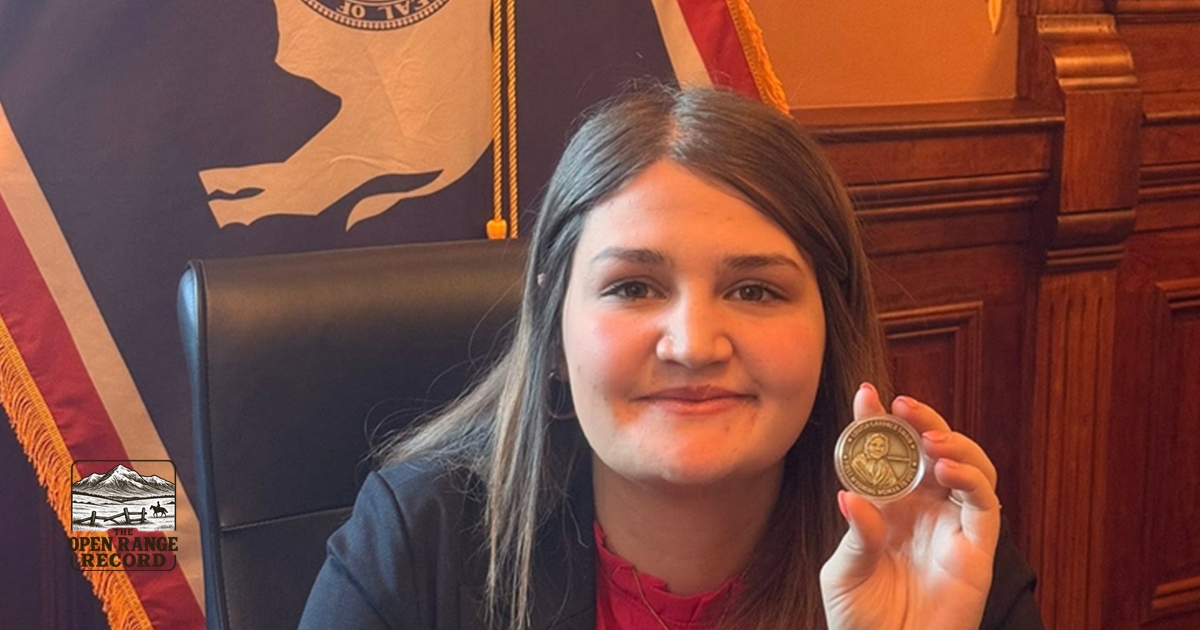
Kylie Wall recently graduated from Natrona County High School. She is the founder of the Natrona County High School Club America chapter affiliated with Turning Point USA