NEWS
Unofficial results show that Wyoming’s conservative movement suffered a stunning reversal Tuesday night as voters removed at least 14 lawmakers associated with the Wyoming Freedom Caucus.
This represents a dramatic change from 2024, when conservative candidates defeated several members of the Republican establishment and captured control of the Wyoming House. Two years later, much of that conservative majority has been dismantled.
According to preliminary results compiled by the Associated Press, Conservative lawmakers and most of the Wyoming Freedom Caucus, John Bear, Steve Johnson, Tony Locke, Ocean Andrew, Ken Pendergraft, Marlene Brady, Jayme Lien, Nina Webber, Gary Brown, Daniel Singh, Ann Lucas, Robert Wharff, Darin McCann and Sen. Bob Ide were defeated.
The losses were not confined to a particular corner of Wyoming. Conservatives were beaten in communities stretching across the state, suggesting something much larger than a handful of local disputes.
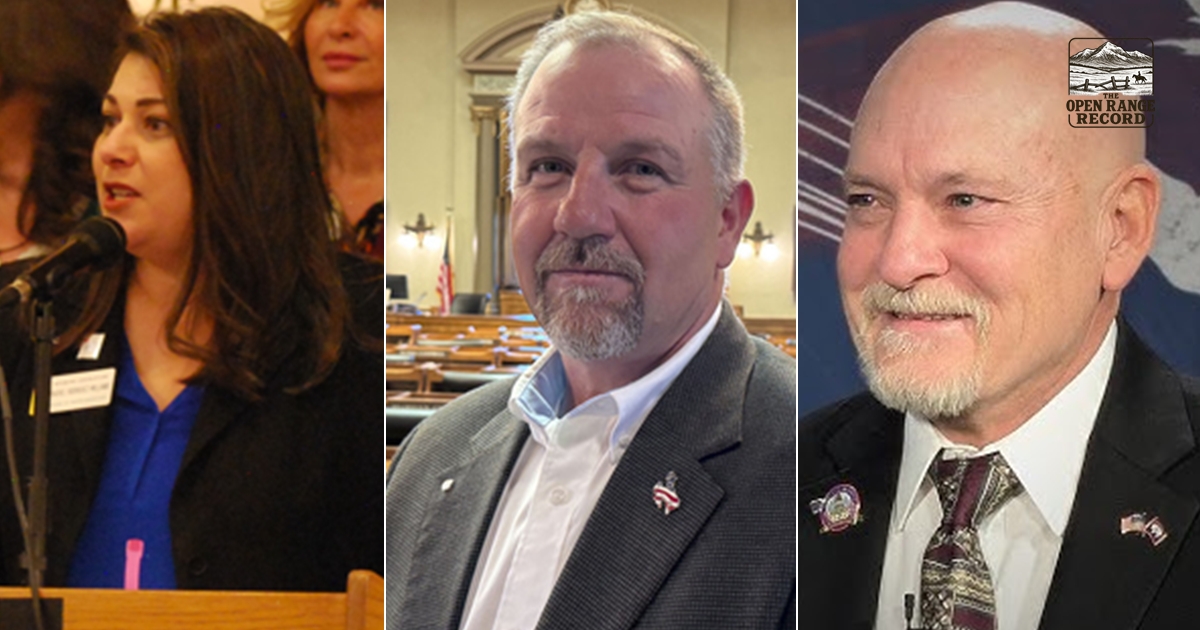
House Speaker Chip Neiman fell short in his effort to unseat Senate President Ogden Driskill. Rachel Rodriguez-Williams, the chairwoman of the Freedom Caucus, also lost her campaign for secretary of state to Robert Short. The defeat removed another of the movement’s most visible leaders from elected office.
The magnitude of the losses cannot be overstated. Conservatives entered the election hoping to build a House supermajority and expand their influence in the Senate. Instead, it was virtually wiped out—assuming the preliminary results hold. The conservative wave of 2024 was effectively met by a much more purple one in 2026.
A Few Conservatives Survived
The night was not a complete defeat for conservatives. Rep. Bill Allemand narrowly retained his House District 58 seat against Bar Nunn Mayor Peter Boyer. Unofficial Natrona County results showed Allemand receiving 800 votes to Boyer’s 773—a difference of just 27 votes. Allemand survived, but the razor-thin margin illustrated the hostility facing even established conservative incumbents. Converse County Rep. Tomi Strock also successfully defended her seat as did Rep. Christopher Knapp in Gillette.
Two of the few conservative victories came in Campbell County, where Rep. Abby Angelos won the Republican nomination for Senate District 23. Angelos defeated Dwayne Dillinger by 2,054 votes to 1,657. Earl Collier won the House District 3 race in Campbell County by 199 votes.
Angelos’ win gives conservatives something they desperately needed: another reliable voice in a chamber that repeatedly blocked or diluted conservative legislation coming from the House. But those victories were exceptions to the broader result.
The House Will Be Very Different
The 2025/2026 Legislature marked the first time a state Freedom Caucus had controlled a legislative chamber anywhere in the country. Its members pushed through major property-tax relief, restrictions on diversity programs, election-integrity legislation and other measures long demanded by Wyoming Republican voters.
The caucus nevertheless argued that it needed reinforcements. Although it controlled the House, many of its bills died in the Senate or encountered opposition from the executive branch. Instead of reinforcements, the caucus received a political bloodletting.
Many of its most consistent votes will not return. The losses will alter House leadership, committee assignments and the fate of conservative legislation during the next two years. The results also expose an uncomfortable reality about Wyoming politics: calling the state overwhelmingly Republican does not necessarily mean its politics is overwhelmingly conservative.
Republicans dominate voter registration and nearly every level of state government. Yet Tuesday’s voters repeatedly selected candidates positioned against the Legislature’s most organized conservative bloc. Wyoming will remain a Republican state, but the Republican Party emerging from this primary will look considerably different from the one elected in 2024.
What Happened?
The causes will be debated for months. The Freedom Caucus accumulated powerful enemies during its brief control of the House. Its members challenged established leadership, disrupted the traditional budget process and attempted to force the Legislature to follow the promises contained in the Republican Party platform.
That produced an organized response from business interests, political action committees, establishment Republicans and groups that regarded the conservative majority as an obstacle.
Money also poured into Wyoming legislative races. Outside organizations spent hundreds of thousands of dollars attempting to shape small House and Senate contests in which a relatively modest advertising campaign can have an enormous effect.
Some conservative lawmakers faced controversies unique to their districts. Others were running for different offices or challenging entrenched incumbents. No single explanation accounts for every defeat. But the statewide pattern is unmistakable: conservative candidates were targeted, and many were successfully removed.
The question now is whether the primary represents a lasting rejection of conservatives or merely another swing in Wyoming’s continuing Republican civil war. The establishment appeared finished after the 2024 election. Two years later, it has demonstrated that it was neither defeated nor disorganized.
For Wyoming conservatives, Tuesday night was not simply a disappointing election. It was the loss of much of the legislative majority they spent years building. Bill Allemand survived by 27 votes. Abby Angelos advanced to the Senate. Tomi Strock and Christopher Knapp held their seats. A few other conservative voices will remain.
But the message from the overall results is impossible to ignore: the conservative revolution that swept into Cheyenne in 2024 has been abruptly, perhaps only temporarily, reversed.