As Wyoming approaches the May filing period, the race for the state’s lone seat in the United States House of Representatives is already drawing a notable number of candidates—despite the fact that, officially, no one is on the ballot yet.
In Wyoming, candidates cannot formally file for office until the statutory window opens in May. That means every name currently circulating in the race is, at this stage, an announced or prospective candidate—not an official one. Still, the early activity signals what is shaping up to be one of the more competitive Republican primaries in recent memory.
A Growing Field
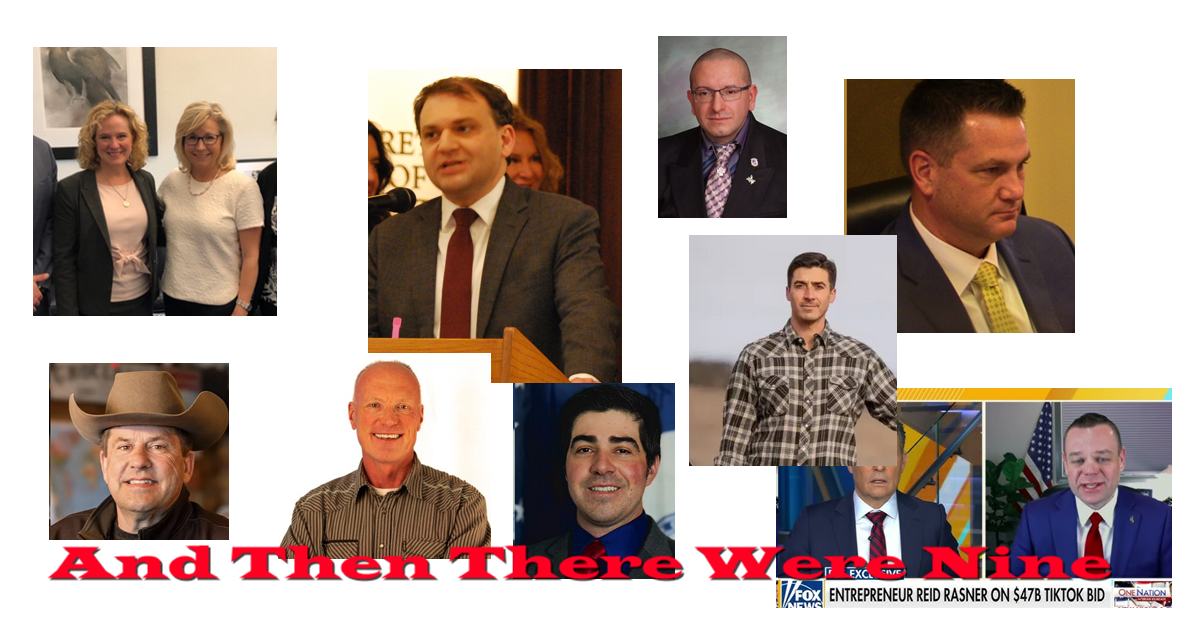
At least nine Republicans have publicly declared or are actively campaigning for the seat:
- Chuck Gray, Wyoming Secretary of State
- Jillian Balow, former State Superintendent of Public Instruction
- Kevin Christensen, a military veteran
- David Giralt, a policy advisor and Army veteran
- Reid Rasner, a businessman and previous statewide candidate
- Dennis “Bo” Biteman, president of the Wyoming Senate
- Frank Chapman, Ranch Owner, attorney
- Matt McGinnis, Pinedale
- John Romero-Martinez, Cheyenne, former WY House Rep
Additional names may emerge before filing opens, and it’s equally possible that some current contenders will opt not to follow through. For now, the field remains an undeniably crowded corral.
In a state as reliably Republican as Wyoming, the GOP primary will almost certainly determine who ultimately serves in Congress. Historically, the general election is little more than a formality in Wyoming.
That reality helps explain the early surge of candidates. With no incumbent in the race, the seat represents a rare open opportunity—one that has drawn interest from across the party’s political spectrum, at least in terms of background and experience.
Different Backgrounds, Similar Messages
Yet for all the variation in résumés, the candidates’ messaging has shown far less diversity.
Nearly every campaign has coalesced around a familiar set of themes:
- Strong alignment with Donald Trump
- “America First” policy framing
- Expansion of domestic energy production
- Opposition to federal regulation
- Border security and immigration enforcement
Those positions are not unexpected in a Wyoming Republican primary. But the degree of overlap has made it difficult to distinguish one candidate from another in any meaningful way.
What differences do exist tend to be stylistic—tone, emphasis, or political history—rather than substantive policy divides.
There are big differences between the candidates’ backgrounds. Jillian Balow was the State Superintendent of Public Instruction before she resigned her seat to take a similar position in Virginia. Her campaign announcement was four years to the day from her resignation.
Chuck Gray is the current Wyoming Secretary of State, after having served three terms in the Wyoming House. In Wyoming’s lower chamber, and as Secretary of State, Gray has been successful in several election integrity measures and has consistently fought against government largess.
Biteman served one term in the Wyoming House before moving to the Senate, where he served two terms. Though his voting record in his first two terms of office was largely conservative, as Senate President he has presided over a dramatic shift to the political left in the Senate.
Rasner ran a spectacularly failed campaign for the U.S. Senate in 2024 in which he didn’t win a single county. Last year, he launched a bid to buy the social media company TikTok before abandoning it amid his filing of a civil lawsuit against a former state senator. In what can only be described as a unique campaign strategy, he has filed four other similar lawsuits.
A Narrowing Conversation
The early contours of the race show a campaign defined less by competing ideas than by competition within a shared lane. Candidates are largely appealing to the same bloc of voters, using the same language, and prioritizing the same national issues.
That dynamic has left relatively little room for deeper discussion on topics that uniquely affect Wyoming, such as detailed, state-focused energy strategies; federal lands management; business and personal tax policy; federal regulations.
Those issues may emerge later in the campaign, particularly as the field narrows. For now, however, they are taking a back seat to broader ideological messaging.
What Comes Next
The May filing period will bring the first real clarity to the race. It will determine who is officially in, who is out, and whether any late entrants alter the trajectory of the campaign.
More importantly, it will mark the point at which candidates are forced to sharpen their arguments. Right now, the only argument coming from most of the candidates is they all like President Trump. Whether that’s true or not remains to be seen.