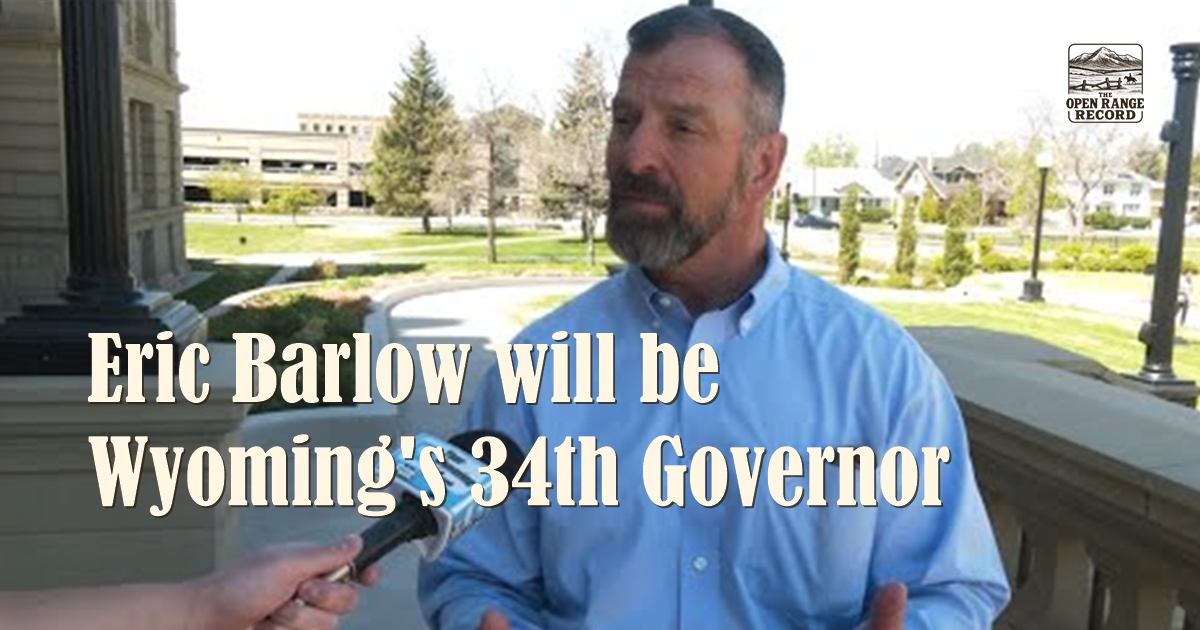
Wyoming’s general election delivered few surprises at the top of the ticket, but it marked another setback for the conservative movement that lost ground in August’s Republican primaries.
Republicans swept Wyoming’s five statewide executive offices: Eric Barlow won the governor's race, Robert Short was elected Secretary of State, and Steve Harshman will be the next Superintendent of Public Instruction. Incumbents Kristi Racines and Curt Meier, both unopposed, retained the auditor’s and treasurer’s offices. The Republican sweep was predictable; the direction those officials take Wyoming is now the larger question.
The speed of the media calls also deserves explanation. The AP declared Barlow the winner as polls closed at 7 p.m., and calling the race for Harriet Hageman for the U.S. Senate came with 0% of votes reported.
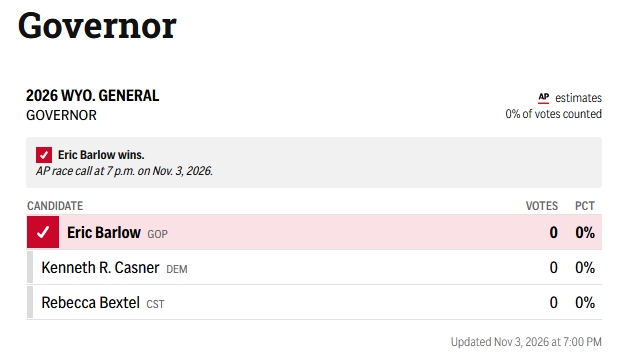
For voters waiting to see actual returns, winner announcements arriving before the numbers were in can be jarring. The AP says it can call certain races at poll closing using voter research and other election data. Those announcements are media projections, however, not certified results.
Constitution Party Candidate Rebecca Bextel told The Open Range Record,
"Thank you to everyone who cast their vote for me yesterday. Nine weeks ago, I entered this race to fulfill a promise I made to the people of Wyoming: to give them a choice in this gubernatorial election. While the results were not what I had hoped for, I have always respected the will of the people of Wyoming, and I always will. Unfortunately, it seems Charlie Kirk’s prediction just came true. We have a Democrat elected now as a Republican for Governor. Wyoming is a special place, but sadly it will be chipped away at for the next four years. Hopefully we will survive it in tact."
Multiple attempts were made to reach the Barlow Campaign for comment but were unsuccessful.
One significant change came in Cheyenne’s House District 11. Democrat Britney Tennant flipped the Republican-held seat, receiving 1,080 votes to Republican Dan McIntosh’s 1,026, with Libertarian Ryan Shollenberger receiving 152, according to unofficial results. That gave Tennant a 54-vote margin.
Meanwhile, voters rejected Proposition 1, the proposed 50% exemption on qualifying primary residences. Its defeat followed a well-funded opposition campaign involving education organizations, business and professional associations, and prominent Republicans.
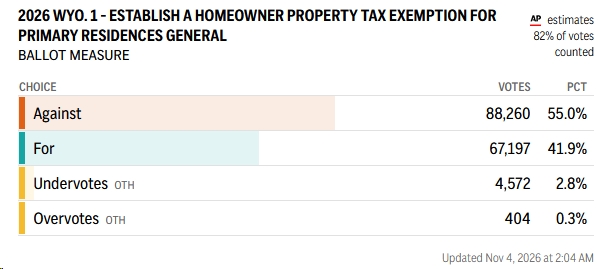
There was recognizable overlap between opponents of the Freedom Caucus and opponents of Proposition 1. Sen. Ogden Driskill, a prominent Freedom Caucus critic, opposed the measure. The Wyoming Education Association participated in the primary through its political endorsements and joined the opposition coalition. Its president, Kim Amen, chaired the Vote No campaign. These connections support the description of overlapping political interests, although they do not establish that every primary campaign and the ballot-measure campaign shared one operation.
For conservatives who campaigned for stronger property tax relief, the political takeaway is clear: winning offices under the Republican label did not translate into a victory for their policy priorities. The general election reinforced the setbacks of the primary, while organized opposition helped defeat the homeowner tax reduction they had worked to put before voters.
*Editor's note: Rebecca Bextel is a partner in The Open Range Record