NEWS
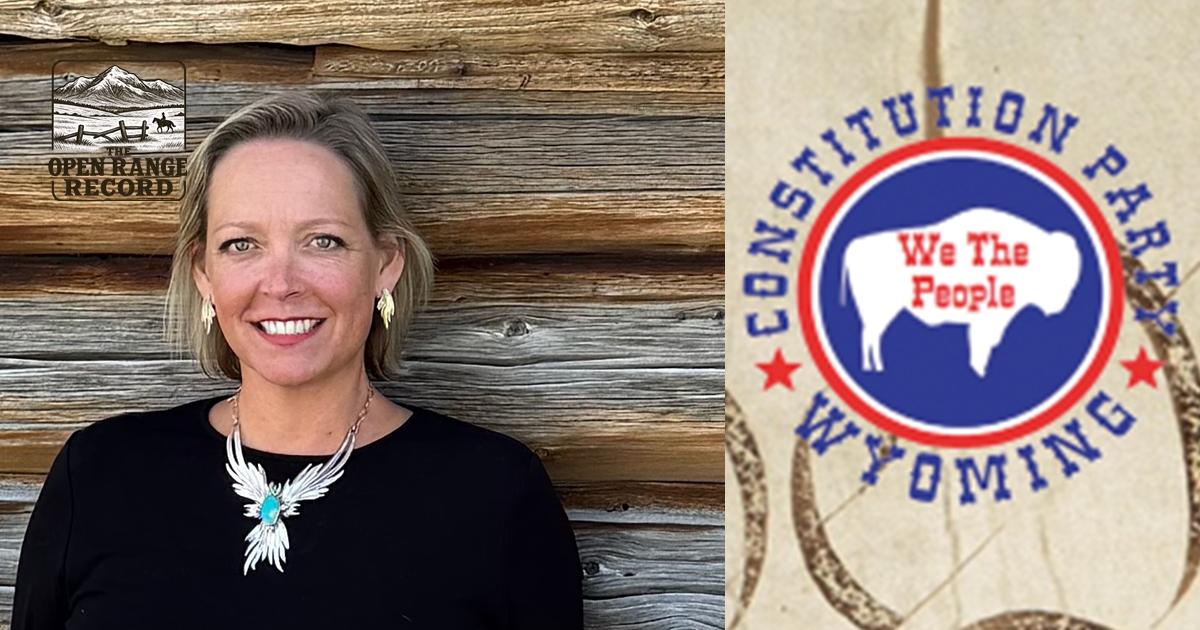
Rebecca Bextel has secured the Wyoming Constitution Party’s nomination for governor, adding a third-party candidate to a race that is expected to be dominated by the Republican primary.The Constitution Party remains a minor political party in Wyoming, meaning Bextel will bypass the Republican primary process and appear as the party’s nominee on the general election ballot.
The party is hoping her campaign can do more than simply provide another choice for voters — it is also seeking to build enough statewide support to eventually achieve major-party status.Under Wyoming election law, a minor party can become a major party if its statewide candidate reaches the required vote threshold. A strong showing by Bextel could therefore have implications beyond the 2026 election.
Bextel’s rise from local activist to statewide candidate
Bextel became a familiar name in Wyoming political circles during the 2024 election where she emerged as one of the main fundraisers for Republican conservative candidates.
But she did not become a near-household name until the controversy surrounding what became known by critics as “Checkgate.” The incident involved campaign contribution checks provided to lawmakers during the legislative session. The Wyoming House of Representatives determined that no laws or rules had been broken in the incident.
The controversy sparked a larger debate over political influence, transparency, and the relationship between elected officials and those seeking to shape public policy. Supporters of campaign contributions argue they are a constitutionally protected form of political expression, while critics continue to debate transparency and influence in Wyoming politics.
Bextel has positioned her campaign as an alternative to the existing political structure, arguing that Wyoming voters deserve another option beyond the traditional Republican and Democratic parties.The Constitution Party nomination gives her a platform to appeal to voters who believe the state’s Republican leadership has moved too far away from conservative principles.
Bextel’s entry creates the possibility of a different kind of general election conversation in Wyoming. For decades, the Republican primary has effectively determined many statewide races. But a Constitution Party candidate with enough support could influence the debate by forcing Republican candidates to address concerns from voters who feel the party has not gone far enough on issues such as government transparency, energy policy, spending, and constitutional principles.
Despite Bextel entering the race, Wyoming’s contest for governor will still largely revolve around the Republican primary. Wyoming has been one of the nation’s most Republican states for decades, and the GOP nominee is typically favored in statewide elections.The Republican field includes State Sen. Eric Barlow, Wyoming Superintendent of Public Instruction Megan Degenfelder, and Brent Bien, a retired Marine Corps colonel and former gubernatorial candidate.
Barlow brings experience — but faces conservative criticism
One of the major Republican candidates is State Sen. Eric Barlow of Gillette.Barlow brings significant legislative experience to the race. He served in the Wyoming House of Representatives beginning in 2013, eventually becoming Speaker of the House, before moving to the Wyoming Senate. His campaign has emphasized his experience in state government and his ability to work through difficult issues.
Barlow has argued that governing requires more than campaign promises, pointing to his legislative background as preparation for leading the state.However, he has faced criticism from some conservative voters who argue his voting record does not always align with the Republican Party’s more conservative wing.
Critics have pointed to Barlow’s own campaign-produced “Wyoming Republican Platform Scorecard,” arguing that the document highlights votes where Barlow aligned with Republican platform positions but does not tell the full story of his legislative record. The scorecard identifies 83 bills where Barlow voted with the Republican platform, but critics note that thousands of bills have crossed his desk during his legislative career.
Barlow’s critics have also questioned his past involvement with environmental issues and his views on energy development, arguing those positions differ from many Wyoming conservatives who prioritize expanding the state’s fossil fuel industries. His supporters counter that his experience, willingness to work across the aisle, and legislative knowledge are exactly what Wyoming needs in its next governor.
Brent Bien campaigns as the conservative alternative
While Barlow emphasizes experience, Brent Bien has positioned himself as the conservative alternative in the Republican race.Bien, a Wyoming native, is a retired U.S. Marine Corps colonel, Naval aviator, and combat veteran. His campaign highlights his military leadership experience, including combat missions and large-scale organizational management, as preparation for the governor’s office.
Having run for governor in 2022, Bien has remained active in Wyoming politics. His campaign says he is focused on issues including lowering taxes, election security, education, agriculture, and expanding energy production.He isrepeatedly described as the “only conservative candidate” in the Republican field, drawing a sharp contrast with other Republicans in the race.
His supporters argue that Wyoming voters are looking for a candidate who will challenge government expansion and push a stronger conservative agenda.His opponents, however, argue that the Republican field includes multiple candidates with conservative credentials and that the primary election will ultimately decide which vision of conservatism Wyoming Republicans prefer.
Megan Degenfelder, Wyoming’s Superintendent of Public Instruction, is also competing for the Republican nomination.Degenfelder has built a statewide profile through her education policy work and has focused her campaign on issues including parental rights, education, and conservative governance.Her candidacy gives Republican voters another option between the experience-focused approach of Barlow and the more ideological conservative message promoted by Bien.
A three-way general election?
The 2026 governor’s race is shaping up as a debate over the future direction of Wyoming conservatism.Will voters choose experience and governing history? Will they choose a candidate promising a sharper conservative shift? Or will a third-party candidate successfully attract voters who believe neither major-party optionrepresents them?
Bextel’s nomination ensures Wyoming voters will have another choice — and the Republican primary will determine which vision heads into the November election.
Editor's Note: Rebecca Bextel is co-owner of The Open Range Record along with David Iverson