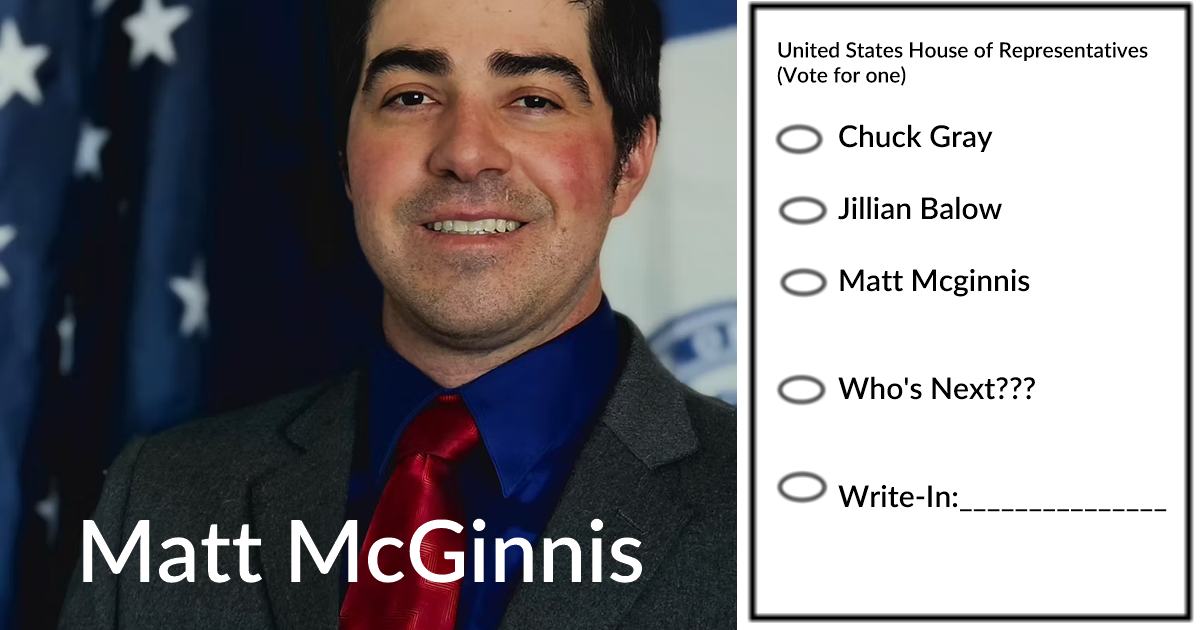
In a growing Republican field for Wyoming’s at-large seat in the U.S. House of Representatives, one of the newest names on the ballot is Matt McGinnis of Pinedale. According to his website, he is a fifth-generation Wyomingite who is running on a message of deep roots, energy-industry experience, and a vision of restoring state control over land, wildlife, and economic destiny.
McGinnis is not a career politician; his background is in the drilling industry. His campaign story centers on growing up in Wyoming’s working landscape in the energy field, the mountains, and the culture that comes with both. In his announcement and on the campaign trail, he has emphasized that Wyoming’s economy and identity are inseparable from the people who work the land and produce the energy that has long powered the state. That personal history is not incidental to his campaign; it is the foundation of it.
McGinnis has repeatedly described himself as a “true Wyomingite,” pointing to his family’s five-generation history in the state and contrasting that with what he sees as more transient political résumés among some of his opponents. In comments reported by Buckrail, he has drawn distinctions between candidates who grew up elsewhere, moved away, or had previously run for office in other states before returning to Wyoming.
While he avoids naming names directly, the message is clear: McGinnis is running as someone who never left. That theme, continuity, not convenience, runs throughout his campaign.
Energy, Work, and Wyoming’s Economy
McGinnis’s work in drilling shapes much of how he talks about policy. His campaign frames Wyoming’s oil, gas, and coal industries not just as economic drivers, but as the backbone of rural communities and family livelihoods across the state. On his campaign website, McGinnis argues that federal policies restricting fossil fuel development threaten both Wyoming’s economy and its way of life. He positions himself as someone who would push back against what he views as Washington-driven energy mandates that ignore Wyoming’s role as a national energy producer.
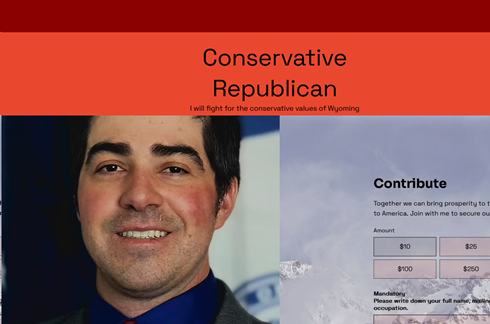
This is not a theoretical issue for him. His campaign presents energy work as lived experience, not just policy. That perspective is meant to distinguish him from candidates whose backgrounds are more political or administrative.
Public Lands and State Control
One of the most prominent policy positions McGinnis has put forward is his call for Wyoming to gain greater control over lands currently managed by the Bureau of Land Management (BLM). He has said he would support efforts to transfer federal lands into state control, arguing that Wyoming could manage those lands more effectively and generate additional revenue from them. In his view, land management decisions should be made closer to the communities that depend on them, not by federal agencies headquartered hundreds or thousands of miles away.
This position aligns with a long-running debate in Western states over who should control public lands and how those lands should be used. Supporters of state control argue it would allow for more responsive management, increased revenue, and better alignment with local priorities. Critics argue it could expose lands to privatization or over-development. McGinnis places himself firmly on the side of local and state authority.
He also supports state-led wildlife management, another area where many Wyoming residents feel federal agencies exert too much control over animals that directly affect ranchers, hunters, and rural communities.
Second Amendment and Social Policy
McGinnis describes himself as a lifelong hunter and outdoorsman, and he makes strong support for the Second Amendment a core part of his campaign. He opposes federal gun restrictions and frames gun ownership as part of Wyoming’s heritage and a practical reality in rural areas.
He also takes a pro-life position on abortion and aligns himself with traditional conservative values on social issues. He emphasizes local control over education and resistance to federal mandates related to gender and curriculum.
Why He’s Running
At its core, McGinnis’s campaign is built on a simple idea: that Wyoming deserves a representative who reflects the state, not just in voting record but in life experience. His messaging consistently returns to identity, culture, and place—to the idea that Wyoming is not interchangeable with any other state, and that it should not be governed or represented as if it were.
Whether voters respond more to that narrative than to policy details remains to be seen. But McGinnis has clearly staked out his lane in this race: energy-state conservative, rooted in Wyoming, skeptical of federal control, and focused on keeping decision-making close to home.