For weeks, Wyoming politics has been consumed by what has come to be known around the Capitol as “Check‑Gate.” Investigations were launched, accusations were traded, and headlines followed.
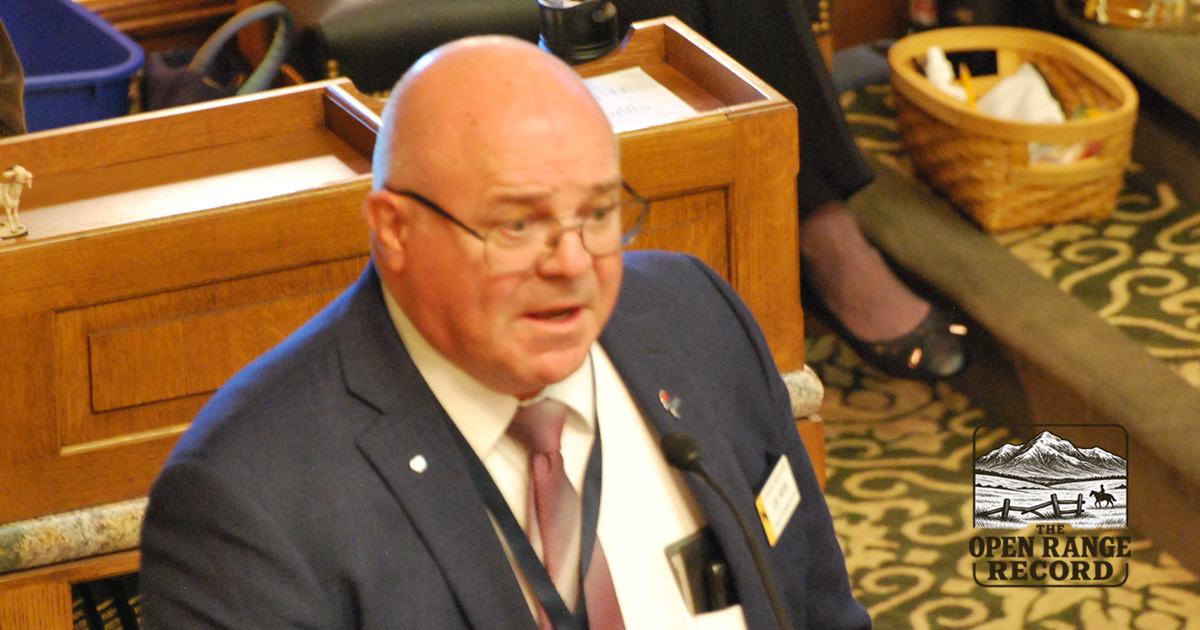
But on the House floor, Representative Joe Webb spoke not about rules or investigations — but about family.
Before beginning his remarks, Webb made clear his comments were not directed at any one person.
“I need to preface this by saying my words are not directed toward any individual here at home or throughout the state,” he said. “It’s a collective statement.”
What followed was an unusually personal moment in a legislative chamber more accustomed to policy debates than emotional testimony. Webb spoke about the unseen consequences of the controversy surrounding the February 9 campaign check exchange that triggered the investigation.
“You haven’t seen my wife in tears,” Webb said. “She was
here this whole session but could only muster up the courage to come into the
gallery twice.”
The scrutiny surrounding the controversy, he said, did not remain confined to the Capitol. Back home, his children and grandchildren have had to face questions and comments from others in their communities.
“People look. People stare. And at times even make comments,” Webb said. Webb noted that some of the harshest criticism has come from people connected to schools his grandchildren attend. “What kind of an effect does that have on my grandkids?” he asked.
The Wyoming House Special Investigative Committee ultimately determined that several legislators, including Webb, did not violate House rules in connection with the February 9 exchange of campaign checks on the House floor.
But Webb’s remarks made clear that the damage from the public controversy had already reached far beyond the Capitol walls. Rather than respond with anger, Webb told colleagues he and his family had chosen a different path. “I can choose to be bitter or I can choose to be better,” Webb said. “My family and myself have chosen to be better.”
Webb closed with a message that surprised some in the chamber, offering well wishes even to those who had condemned him. “As we return home, I want to wish every person throughout the state that has condemned me or anybody else the very best in life.”
That kind of grace is rare in politics Webb chose forgiveness.
Now the question is whether anyone else involved in the controversy will choose accountability. Representative Karlee Provenza has repeatedly defended her actions and insisted she was justified in bringing the incident forward.
The findings of the committee show that the politicalization of a photograph came at a real cost for families who had done nothing wrong. At some point, accountability requires more than doubling down. It may simply require the humility to say two words that are often hardest in politics, “ I’m Sorry.”
But that would show the kind of leadership that politics too often lacks.