ANALYSIS
With Wyoming’s Republican gubernatorial primary approaching, perhaps the most interesting question is not simply which candidate is ahead. It is where the votes are coming from. Watching this race unfold, I see three very different voter pools.
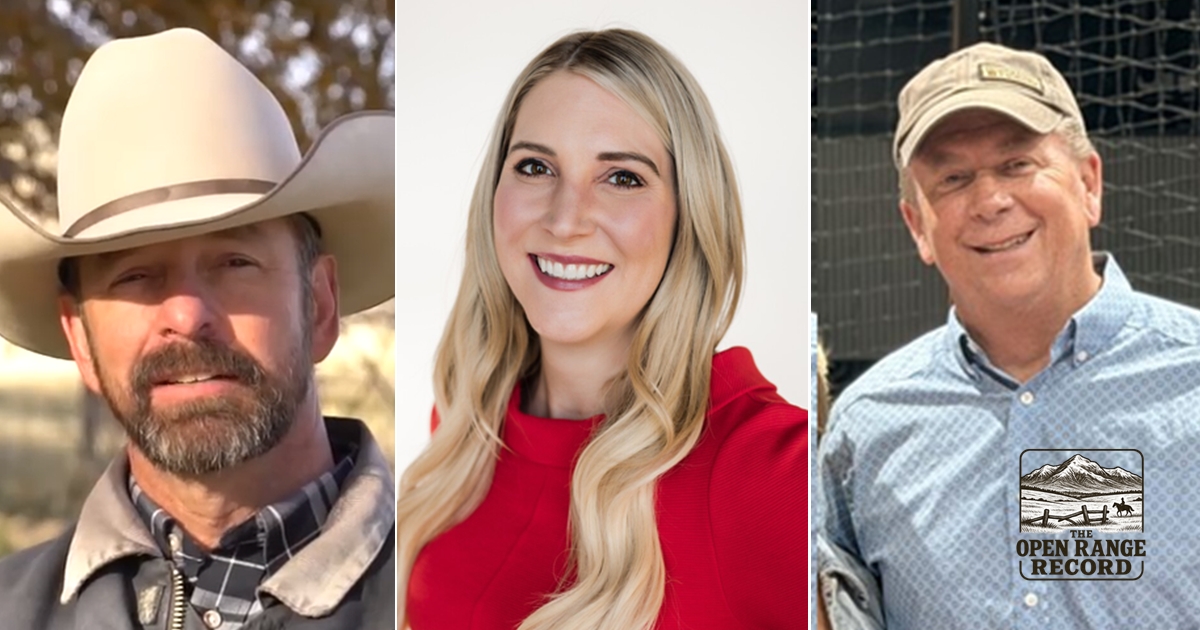
Brent Bien appears to have the strongest lane among Wyoming’s grassroots conservatives. Eric Barlow appears to occupy the more left-leaning Republican lane — with the potential to benefit from Democrats and Independents who registered Republican to participate in a primary that will likely determine Wyoming’s next governor.
And Megan Degenfelder? She appears to be standing somewhere between the two, dipping her toes into both pools and trying to pull enough voters from each to build a winning plurality. Once you look at the race that way, a lot of the campaign messaging begins to make sense.
Bien’s Pool May Be Deeper Than It Looks
Bien did not suddenly appear in 2026 and start introducing himself to Wyoming conservatives. He ran for governor in 2022. Then, beginning in 2023, he became one of the leading faces of the citizen initiative to cut residential property taxes by 50%.
This wasn’t simply a politician issuing a press release promising to cut taxes if elected. Hundreds of volunteers went into communities across Wyoming and gathered tens of thousands of signatures. After a lengthy petition drive, enough valid signatures were collected to place the proposal before Wyoming voters in the November 2026 general election.
Not everyone who signed that petition is a Brent Bien voter. But it would be foolish to assume that a multi-year grassroots campaign surrounding one of Wyoming homeowners’ biggest concerns created no name recognition, political goodwill, or voter loyalty for one of the men leading it.
Bien may have been building a voter pool long before anyone started polling the 2026 governor’s race. That makes me wonder whether his support is deeper than some conventional polling suggests.
Then There’s Barlow
Barlow appears to have the clearest lane among Republicans looking for something less conservative than Bien. But there is another group worth watching: voters who ordinarily do not participate as Republicans but registered Republican this year to have a voice in the GOP primary. We don’t know how those voters will vote, and we shouldn’t pretend that we do.
Encouraging participation in the Republican primary was not exactly a secret. I attended an April 28 legislative briefing in Teton County where Democratic Rep. Liz Storer discussed Wyoming’s unaffiliated voters and the importance of choosing a party before the May 13 deadline. “If you want your vote to count in Wyoming,” Storer told the audience, “you need to register for one of the parties before the primary.”
She then pointed directly to the political reality: the Republican primary decides the overwhelming majority of Wyoming elections. Speaking about the crowded Republican ballot, Storer told attendees she would “actually encourage folks to do that.” That doesn’t make those voters Barlow voters. It does mean there is another pool in this Republican primary, and somebody is going to get those votes.
Follow the Donors
Campaign-finance records provide another interesting clue about where these pools overlap. My comparison of Degenfelder’s 2022 contributors with Barlow’s more recent contributors (2025) identified 39 contributors who appear in both groups. Again, that doesn’t mean 39 people abandoned Degenfelder for Barlow. People can donate to different candidates in different election cycles for all sorts of reasons.
But it does demonstrate something important: Degenfelder and Barlow are fishing in some of the same political waters. And if some of the coalition that helped elect Degenfelder superintendent in 2022 is now financially supporting Barlow, Degenfelder has a reason to go fishing in that pool again.
On the other side sits Bien and his conservative base. That may help explain why Donald Trump’s endorsement has become such a prominent part of Degenfelder’s campaign. Trump endorsed Degenfelder—not just once but three separate times.
An endorsement is not a punch card. What we have seen since are repeated public reaffirmations of that endorsement. Cowboy State Daily recently described Trump as endorsing Degenfelder “for the fourth time.” Technically, he did not need to keep endorsing someone he had already endorsed. What is noteworthy is how many times that endorsement has been reintroduced and amplified during this campaign.
Which brings us to last week. Trump participated in a telephone rally for Degenfelder. Maybe I’ve watched too many game shows over the years, but I couldn’t help thinking of Who Wants to Be a Millionaire?
Phone-a-Friend
A little political humor aside, there is a serious question underneath it: Is Trump’s endorsement actually peeling conservative voters away from Bien? That appears to be where Degenfelder needs it most.
Barlow has established himself in the more left-leaning lane, while Bien already has years of exposure among the conservative grassroots. That puts Degenfelder in the position of trying to expand in two directions at once--reach right for Bien’s conservatives while remaining attractive to voters in Barlow’s left lane.
Trump’s endorsement gives her a powerful credential for reaching right. Her broader campaign messaging leaves her room to compete for the middle. And there is another interesting contrast. In 2022, when Trump wanted Harriet Hageman elected and Liz Cheney defeated, he came to Casper and stood before thousands of Wyoming voters at an in-person rally.
This time, despite repeatedly reaffirming his support for Degenfelder, his rally was by telephone. There could be any number of reasons for that difference. Nobody outside Trump’s political operation can responsibly claim to know why. But it is fair to ask how much political movement the endorsement is producing.
The Math Gets Interesting
That brings us back to the voter pools, but not quite where we started. Now the question is less about who these voters are, and more about how many of them show up on Election Day.
Bien has a grassroots network that has been developing for years, including a statewide property-tax petition effort that put hundreds of volunteers in the field and reached tens of thousands of Wyoming residents. Barlow has his own lane, along with the possibility of voters who registered Republican specifically because they want a voice in the primary.
Degenfelder’s path is different. She doesn’t necessarily have to take over either candidate’s pool. She needs to take enough from each. That is why the final days of this race may tell us more than any campaign poll.
Watch the advertising. Watch which candidate is being attacked. Watch which issues suddenly become prominent. And watch which voters those messages appear designed to persuade. In a crowded primary, nobody necessarily needs 50%. They simply need to assemble the largest coalition by Election Day.
Maybe Bien’s years of grassroots work translate into more votes than conventional polling recognizes. Maybe Barlow’s left lane is as large as his campaign believes. And maybe Trump’s endorsement gives Degenfelder enough leverage with conservatives while she continues competing for voters in the middle.
We will know soon enough. Megan Degenfelder appears to be trying to build her winning pool one scoop from the right and one scoop from the left. And that leaves the questions: Are there enough voters in the middle, and enough she can peel from both sides to win? Or are there enough votes on either side for Bien or Barlow to pull it off?