NEWS
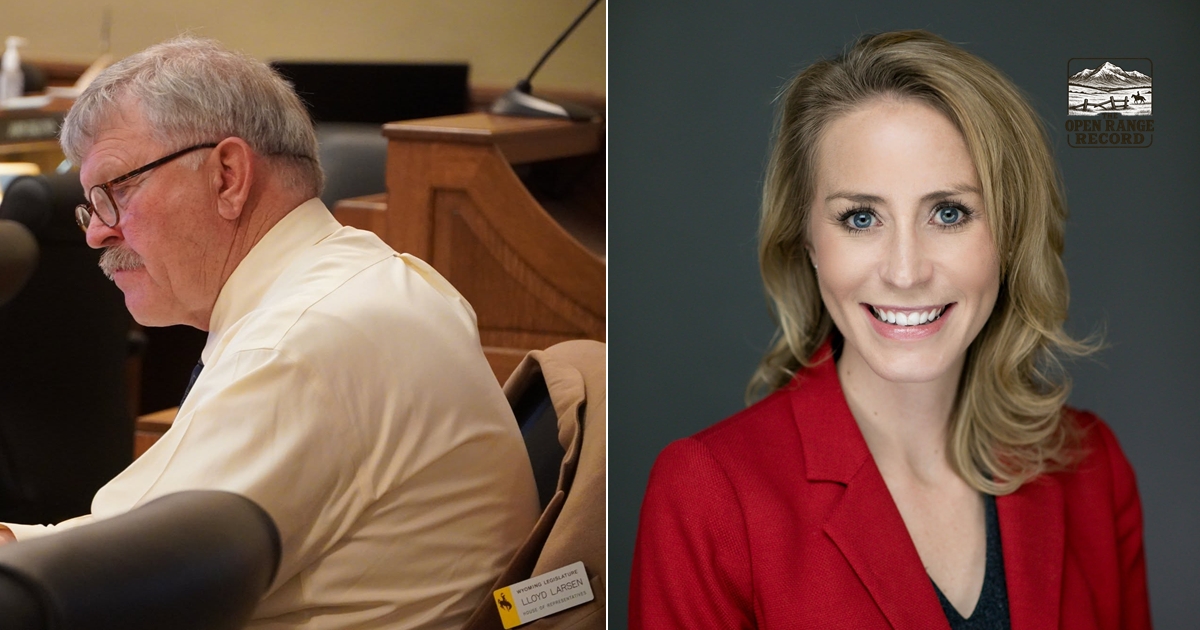
The Senate and House Republican Caucuses have chosen Rep. Lloyd Larsen for House Speaker and Sen. Tara Nethercott as Senate President. The full chambers must confirm those choices when the Legislature convenes, but that vote is largely a formality as there will be only 7 Democrats in the House and 2 in the Senate.
The Wyoming media has consistently referred to legislators who won in the 2026 Wyoming primary as “conservative Republicans.” In one instance, a statewide newspaper published:
“The makeup of the 69th Wyoming Legislature will be dramatically different from what it has been during the last two general sessions, as the far-right Wyoming Freedom Caucus is no longer in control of the House, with many losing their primary elections to more traditional conservative Republicans.”
However, in its 2024 comparison, Evidence Based Wyoming found that Larsen voted with the House Democratic majority 82.28% of the time, and Nethercott voted with the Senate Democratic majority 86.70% of the time. Evidence Based Wyoming has charted how often Wyoming legislators vote with either party since 2009.
Three bills help put Larsen's and Nethercott’s legislative record in context.
In 2019, Larsen voted for HB220, the National Retail Fairness Act, which would have imposed a state corporate income tax. Nethercott was a Senate co-sponsor. The bill passed the House but died in the Senate before members could vote on it. It is a direct example of both being associated with a proposal to create a Wyoming business income tax.
In 2020, both supported HB200, the Reliable and Dispatchable Low-Carbon Energy Standards Act. It directed the Public Service Commission to establish energy standards for utilities operating coal-fired plants to implement carbon capture technology. The bill was promoted as a way to keep coal plants operating with lower emissions. A University of Wyoming study in 2022 found that HB200 would likely increase the cost of electricity by 237%. Both Nethercott and Larsen voted for it.
The third example points in a different direction. Nethercott voted against final passage of Sen. Wendy Schuler’s 2022 Fairness in Women’s Sports bill, SF51. A similar measure preventing men from playing in women’s high school sports, SF133, passed the Wyoming Legislature the following year with Nethercott and Larsen voting for it. Governor Gordon called the bill “draconian” in his letter explaining why he didn’t sign it.

The original measure passed the Senate with Nethercott’s “no” vote, but the House rejected a procedural motion to introduce it. Eric Barlow, who was Speaker of the House at the time, refused to introduce the measure on the floor.
House conservatives attempted to override that decision and bring the bill up for debate. Barlow himself spoke against the motion. The vote on the floor was not a vote on the bill; rather, it was a vote on whether to talk about the bill. Barlow and Larsen voted no, and the motion failed.
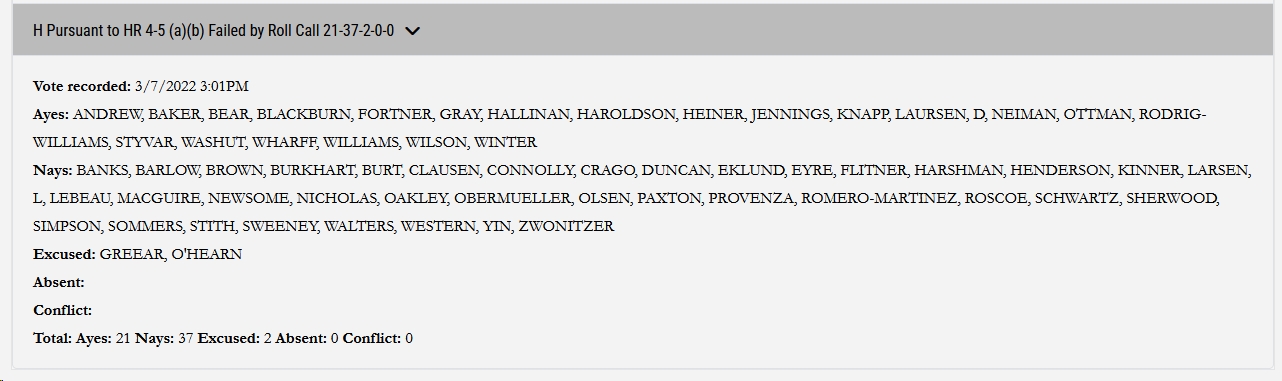
The following year, SF133 did pass; but, that was after it became obvious public sentiment more strongly favored the proposal. A few months after the legislative session, Gallup released a poll showing 7 in 10 Americans were opposed to men playing in women’s sports.
Taken together, these votes offer a clearer picture than labels like “traditional conservative.” Larsen and Nethercott backed a corporate income tax proposal and a state mandate tied to carbon capture, while both opposed the women’s sports bill—Larsen voted against talking about it. Those decisions do not tell voters everything about either lawmaker, but they do show where their records diverge from the conservative label that has been so often applied to the incoming Legislature.
The Speaker and Senate President help shape what gets debated, what advances, and what never reaches a vote. The caucuses have chosen leaders whose voting records repeatedly tracked with Democrats, even as Wyoming media describes the Legislature’s incoming members as conservative Republicans.
The full chambers still have to confirm those selections, but with Democrats holding only seven House seats and two Senate seats, the outcome is all but settled. Wyoming voters were told the 2026 primary would bring a conservative shift. The caucuses’ leadership choices, and the records behind them, suggest the direction of the Legislature may be more complicated than that description lets on.