Recent letters have implied that the Wyoming Republican Party Platform is a “religious manifesto” and is a product of an “extreme agenda.” Inherent in that assertion is the notion that Republican legislators supporting the platform with their votes are somehow by extension “extremists.”
What is omitted from such hyperbolic screeds is the fact that this party platform is the product of elected grassroots precinct committee representatives across Wyoming and duly passed with significant majorities at the county and state levels.
A rebuttal to the original LTE was assailed as having failed to address specific legislative issues. Time and space prohibit me from addressing all these issues, but I would like to focus primarily on one (HB64) as it deals with a seminally important social issue of our day – abortion. The writer implies that supporting pro-life legislation contributes to restricting “women’s health care.”
How often we have seen regimes throughout history cloaking pernicious activities in glowing terms as the far left often does today. Calling the killing of a baby in his/her mother’s womb “health care” is reminiscent of the Nazis calling genocidal eugenics “social hygiene!”
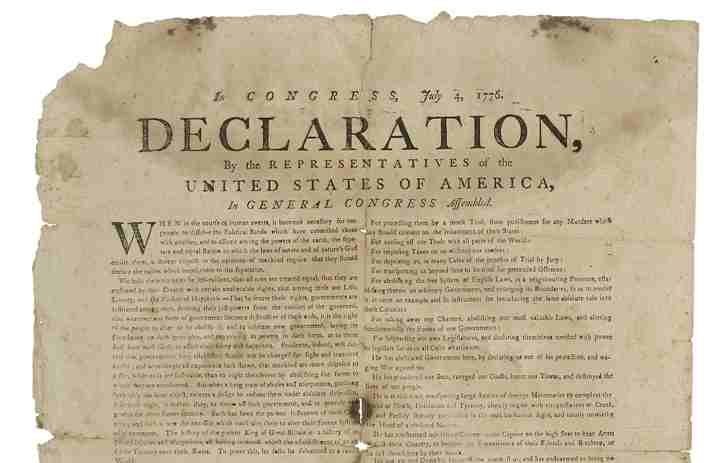
The very first plank of the Wyoming Republican Party Platform clearly states the principled belief that all individuals are endowed by their Creator with the right to life. It defines that right as existing “from the moment of conception to the moment of natural death,” adding that it is the duty of government to protect that right. Perhaps the Declaration of Independence launching the founding of our country was also a “religious manifesto” since it too refers to our rights emanating from a Creator.
Wyoming’s Supreme Court is expected to rule on two laws passed by the legislature designed to protect preborn children. Every technological advance, from 4D ultrasounds and fetal surgery to prematurity survival rates, all point to the humanity of the preborn. Rather than being a purely religious issue, this is a moral issue – one dealing with basic human rights.
Pro-abortion advocates should be required to explain in court what qualifier (in addition to being a live human being) will need to be added for the state of Wyoming to protect human rights. After all, Wyoming already treats the intentional killing of a preborn child as homicide with the sole, lamentable exception of abortion. As has been noted elsewhere, this compromises Wyoming’s stance on every other child-protection law in the state.
Viewed purely from the scientific aspect, a very large percentage of biologists are now convinced that human life begins at conception. This means that what we’re dealing with is no longer an issue of science, but one of morality. This clearly moral issue has become clouded with "nuances," confirming what President John Adams feared might happen when he predicted long ago that our constitutional republic was intended for a moral people and that it would function for none other.
Perhaps we could take an example from North Dakota whose supreme court recently upheld a total ban on abortion with exceptions only for saving the endangered life of a mother or in cases of rape or incest. Performing any other form of abortion in North Dakota is now a felony punishable by up to five years in prison and a $10,000 fine.
Rather than part of a “religious manifesto,” another plank of the Wyoming Republican Party platform states that the First Amendment does not require the expulsion of religion from public life. Unfortunately, this area of American jurisprudence was seriously damaged by a 1947 U.S. Supreme Court case (Everson v. Board of Education) which established a hypothesized “wall of separation” between church and state.
The Court misused a quote from a letter written by Thomas Jefferson who meant by those words that the church needs to be protected from the state, not the other way around. The Court’s ruling turned the original meaning of the First Amendment on its head by ignoring direct wording forbidding the government from prohibiting the free exercise of religion. To smear the Republican platform as a “religious manifesto” implies total disregard for the free exercise of religious freedom by the people and their elected representatives.
I find it quite ironic that those who oppose Americans practicing their faith in the public square are likely unaware of the fact that in 1918 separation of church and state was declared to be the law of the land in Soviet Russia, leading to unspeakable societal horrors.
Perhaps we need to praise those Wyoming legislators who courageously vote in consonance with the party platform on which they ran for office, rather than denigrating them for doing so by labeling them as members of a “cabal conflating religious ideology with conservative values.” A true conservative is one who stands up for the principles s/he espouses as a candidate for public office.