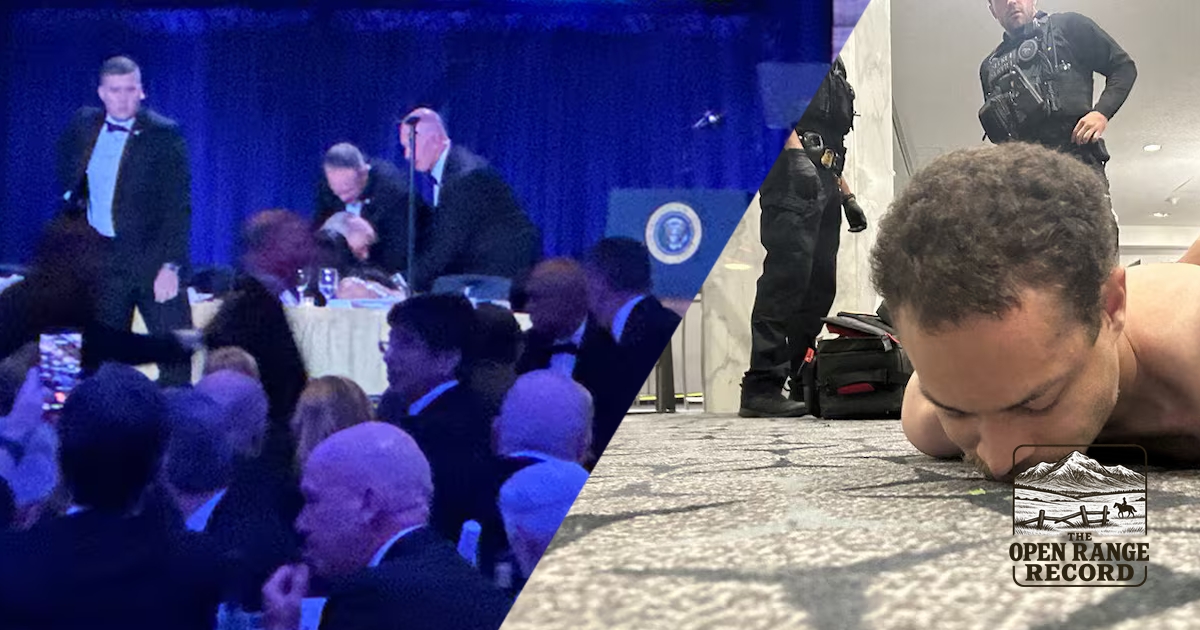
WASHINGTON, D.C.: For the third time in less than two years, the nation is reeling from an attempted assassination of President Donald Trump. On the evening of April 25, 2026, gunshots disrupted the high-profile White House Correspondents’ Dinner at the Washington Hilton, sending the President, the First Lady, and the Vice President into an emergency evacuation as guests dived under tables for cover.
The suspect, identified as 32-year-old Cole Tomas Allen, was apprehended near the security screening area after allegedly attempting to shoot his way past a main magnetometer. Federal authorities have since charged Allen with the attempted assassination of the President, a count that carries a potential life sentence.
Perhaps the most troubling aspect of the D.C. attempt is the profile of the assailant. Unlike the social outcasts often associated with such crimes, Cole Tomas Allen appears on paper to be a successful, educated professional. A graduate of the California Institute of Technology (Caltech) with a Master’s degree from California State University, Allen had interned at a NASA laboratory and was employed as a school teacher.
However, his "normal" exterior masked a deeply radicalized interior. According to an FBI affidavit and written manifestos found in his hotel room, Allen referred to himself as the "Friendly Federal Assassin" and explicitly stated his intent to target administration officials to "fix the issues with today's world." Family members told investigators that Allen had become increasingly vocal about his plans, participating in radicalized groups like "The Wide Awakes" and attending "No Kings" protests.
The shooting occurred against a backdrop of what many describe as dangerously overheated political rhetoric. Just two days before the assassination attempt, ABC late-night host Jimmy Kimmel delivered a monologue featuring a "mock" speech for the Correspondents’ Dinner. During the skit, Kimmel described First Lady Melania Trump as "glowing like an expectant widow."
The joke, which First Lady Melania Trump labeled "hateful and violent," has become a flashpoint in the debate over media responsibility. Critics argue that such commentary, while framed as "comedy," serves to dehumanize political targets and signals that their demise is a desirable outcome. Kimmel defended the joke as a "light roast" about the couple’s age difference, refusing to apologize even after the Saturday shooting.
Psychologists and media experts suggest that the "overabundance and oversaturation" of polarized media is fundamentally altering how Americans perceive reality. Research from the American Psychological Association (APA) and other institutions highlights how the amplification of online narratives can push individuals past a "tipping point" toward violence.
- The Informational Echo Chamber: Social media has become the primary source for both partisan outrage and the spread of conspiracy theories, often bypassing factual reporting.
- Priming the Public: Communication experts note that "media do not tell audiences what to think, but they do tell them what to think about." By constantly framing political figures as existential threats, media outlets prime vulnerable individuals to view violence as a rational response to perceived "societal collapse."
- The Disconnect from Reality: Data shows that 80% of Americans now believe Republican and Democratic voters cannot even agree on basic facts, creating a "grim political mood" where compromise is viewed as betrayal.
The disconnect between the "normal" life of a Caltech graduate and the actions of a would-be assassin points to a deeper systemic rot. When public television figures joke about the widowhood of the First Lady just 48 hours before an actual attempt on the President’s life, the line between discourse and incitement becomes dangerously blurred.
As President Trump composedly noted in the White House briefing room an hour after his evacuation, "it is a dangerous profession... but we are here to do a job." However, the task of cooling the political rhetoric may be a job that the media establishment is currently unwilling to perform. For the American people, the question remains: how much longer can the republic withstand a media environment that prioritizes "rocket fuel" engagement over the preservation of civil order?