I am confused about a letter that was written to the editor on June 3rd, 2026 in the Douglas Budget. You see, I have exchanged a couple of emails in the last few weeks with this citizen, and not once did he have anything like this to say, nor did he attempt to share these feelings with me before he “took it to the newspaper.” I heard he wrote an editorial, but I didn’t see it until June 16th.
This citizen has attended one (1) Converse County Republican Party meeting since his loss for the Chairmanship of the Wyoming State Republican Party more than 3 years ago. He did not attend the State Convention that was held right here at the fairgrounds, yet he feels he can speak against the work the party has been doing at the county, state, and national level. While it’s possible he may not remember the specifics of our county and state party procedures, the inaccuracies in his letter are difficult to overlook.
As Chairman and District Representative, I remain actively informed about national, state, and county party matters. I send out informational emails and updates to the Precinct members and any community members who are interested in our county and state party activities. This citizen has been in this group of interested community members for less than a month.
Based on his editorial, it seems that this citizen disagrees with the new bylaw that was ratified in April 2026 that allows county and state parties to vet and support candidates before the primary election. He would prefer the party not support any candidate until after the primary, a practice that was proven unconstitutional in 1989. California had passed laws that restricted what political parties could do during primary elections. The laws stated that parties were not allowed to endorse candidates, and they were limited on how they could communicate with voters. The law also attempted to regulate the internal structure of party committees and wanted to control party leadership terms.
This was a violation of their First and Fourteenth Amendment rights, including the right to endorse, support, or oppose candidates – which is the legal foundation behind parties being allowed to vet candidates and choose their own standard bearers.
Many people will tell you that Wyoming’s elections happen in the primary. Our legislature is overwhelmingly Republican, and in most counties you cannot get elected with a D (Democrat) behind your name. How many times do we hear "I'm running as a Republican!" Why do they say that? Can they define a Republican? an American? a Woman? Why don't they just say they are a Republican?
This citizen uses quotations but doesn't identify the person who made the statement. He admits he has done a little online research, but I would encourage him to dig a little deeper before sending material to the newspaper.
This citizen says that the Wyoming Republican Party Central Committee has independently determined that they speak for all Republicans, but he seems to have overlooked how the Party is structured and how the caucus‑convention process works. It is a grassroots system from the start, and thousands of registered Republicans participate in the process every two years.
Any registered Republican who wants to participate can attend their Precinct Caucus. The bylaws this citizen refers to as a “secret policy” are in no way secret. In fact, they were initially developed at a County Caucus in Wyoming by neighborhood level participants — some elected or appointed Precinct Committeemen and Committeewomen (by the way, there are currently over 1,300 committee members across Wyoming), but most are not.
From each caucus, ideas, rules changes, platform planks and resolutions are proposed, and individuals are chosen and voted on to attend the county convention, where the bylaws, resolutions, and platform planks are reviewed and voted on again. Another election then determines who goes on to the State Convention. This same process takes place in every county in Wyoming. In Converse County, some committee members were not Precinct members simply because that’s how the votes turned out.
The County Central Committee can be comprised of six local Precinct Committeemen and Committeewomen and non-precinct committeemen and women who are elected/appointed as leadership at the county level. Three of the leadership roles, the Chairman, the State Committeeman, and the State Committeewoman, will then represent the county party at the State Central Committee.
The three people elected to represent the county party at the state level are also part of the delegation for the State Convention. We took a total of 13 delegates and 13 alternates to the State Convention. These bylaws were discussed in a marathon meeting lasting more than 17 hours on Thursday and Friday of the convention, where they amended, discussed, and eventually voted to accept the new bylaws – no policy was written.
Then and only then were the final bylaws taken to the body of the convention where 300+ delegates voted to pass the new bylaws. That's how the new bylaws came into effect. For those who have not heard, the Wyoming Republican Party Central Committee has not determined that they speak for all Republicans.
It's true... July 11th each county will send their representatives to a special State Central Committee Meeting to vet the candidates running for the top five offices in the state and the two offices in D.C. We will follow the bylaws written at the convention.
The process I’ve described above is what truly happens, and it stands in clear contrast to the following claims from this citizen: “The Candidate Endorsement policy [again, no policy] is going to disenfranchise a large percentage of Wyoming Republicans.” HOW, by not endorsing those who “identify” as Republicans simply because there are not enough Democrats to get them elected?
“The Wyoming Republican Party Central Committee has determined they speak for all Republicans” – DEBUNKED in earlier text.
“And they intend to endorse their preferred candidates for some/all races ahead of the primary election.” Yes the U.S. Supreme Court has determined that the Party gets to determine who best represents them as their standard bearer in a Primary.
“This may include financial support and other resources for those preferred candidates” LIKE WHAT? Do you mean volunteer help, public promotion, or logistical support? All candidates get this.
“This is counter to traditional practice of remaining neutral as a party until after the primary.” NEUTRAL only because unconstitutional State Law has demanded it under penalty of fine or imprisonment. The unanimous decision in 1989 of the Supreme Court in Eu vs. San Fran. . . clearly states a political party has the right to determine which candidates are on a primary ballot, not the state. In addition, the Wyoming Republican Party has for nearly a decade now, adopted in the bylaws that candidates should sign a pledge regarding the Party Platform and support at least 80% of the planks.
“The brand-new policy [it's not a policy, it's a bylaw], has not been shared with the general public, nor even registered Republican voters.” Yes, it has been addressed by media across the state and provided to the Secretary of State’s Office for the public record within 30 days of the convention as stipulated by Wyoming Statute. I have also shared every zoom meeting I have attended with our Precinct members and others, and so has every other county in the state. Our county sent out letters to the candidates explaining the process. The Bylaws are posted on the State of Wyoming website. The following link will take you to the Wyoming Republican Party Platform and Bylaws. Wyoming Republican Party
This citizen readily admits that he was “not on the floor when all of this was debated at the State Convention, but he has heard numerous explanations for the change. Color [him] skeptical.” Well, butter my biscuit and call me Verified Vickie, because I’m sticking with the facts.
This citizen says he vets his candidates with his vote in the primary and that their issues and beliefs are already on full display. I would expect a man as intelligent and politically sophisticated as this citizen to know the basics about the candidates he supports before the primary. I must also note that many who are upset by this change in the process are thrilled that the State limits the ability of the Major Parties (Republican and Democratic only) to publish or promote anything regarding candidates before the Primary. WHY? Because that gives all the power and influence to every Political Action Committee (PAC) and organization like the League of Women Voters or Chambers of Commerce who are not restricted from doing so. The bigger question is . . . just why the Party these candidates supposedly represent, is not allowed to participate in the selection process the State of Wyoming mandates for us but not the minor parties? Again, Eu vs San Fran. . . says this is not okay.
This citizen also says we don’t want our candidates to be selected with a minority vote, and that part is true. If ten people are running for the same office, it is statistically unlikely that any one candidate will reach 50 percent. But the winner of that primary is still the person who received the most votes. Unfortunately, in a crowded field, that “majority” might only be 27 percent. How does that build unity in a Party? It does not; it creates state-sponsored division within the Major Parties. It seems that’s what someone wants, and we all know why. Division brings clicks and drives story lines. Unity barely gets recognized.
An official GOP endorsement of one candidate is a significant advantage. That’s true, but someone simply “running as a Republican” is different from being a Republican in principle or practice, and the party has every right to endorse candidates who actually reflect its values.
This citizen also raises the idea of “other resources.” Every candidate has access to the same opportunities — including campaign booths — and an endorsement does not change that. I don’t believe this influences the integrity of our elections; the real concern is money. Financial support often carries strings and expectations, and we see that become a problem for some candidates. Party support simply carries a commitment to the 210,000 registered Republicans who define the Party through the processes described earlier and who put them in office. It does not create a commitment to an individual or outside entity.
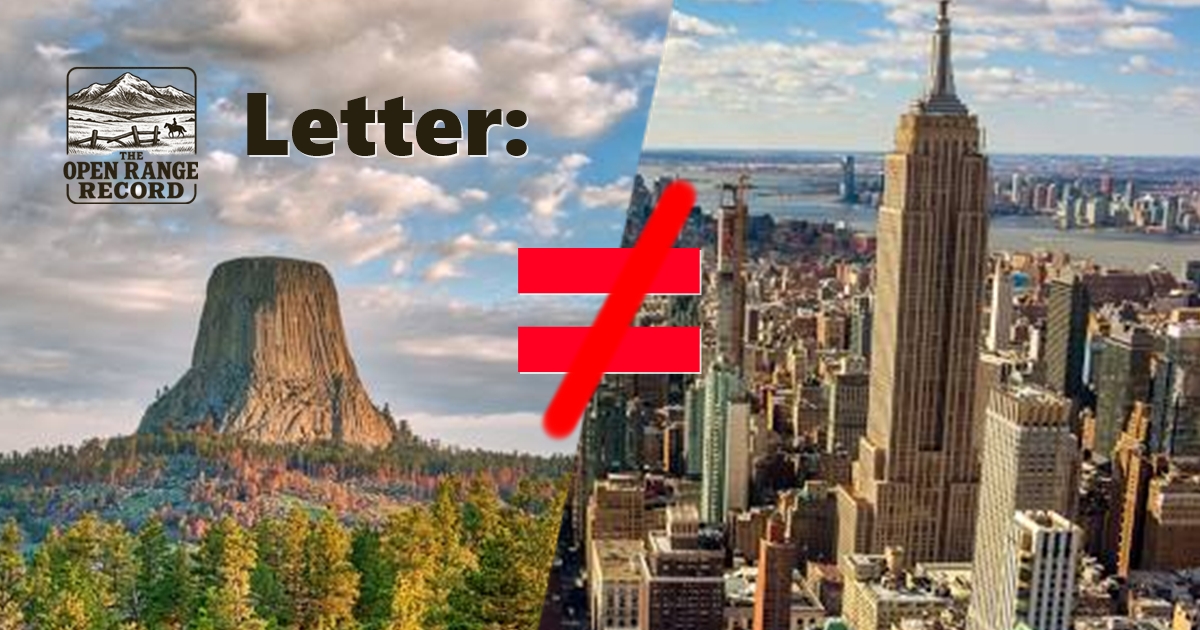
This citizen says that forty-eight other states already have an endorsement policy. That part is partially true. But suggesting that Wyoming is anything like New York is not only false — it’s downright insulting. It feels to me less like a comparison and more like rage bait. We are nowhere close to the way New York chooses candidates. New York has a long history of political shenanigans going back as far as elections, power, and money have existed. The line between party bosses and gangsters has been so thin at times that people openly joke about it.
Yes, there are likely states where insiders run the primaries, decide who gets to run for office, and where caucuses, conventions, and party structures are tightly controlled. There are even states with a history of election monkey business. Wyoming is not one of them.
We don’t operate like New York, we don’t coronate candidates, and we don’t shut people out of the process. Our system is grassroots, open, and decided by the people who show up — not by political gatekeepers. The Wyoming State Party in concert with County Parties are the ones responsible for executing the will of the thousands of registered voters who participate every two years in developing our policy, bylaws and platform. They do not set the stage or control the outcome; our voters do.
I was given a great analogy the other day. A Precinct committee member in another county described vetting candidates like this: “What we’re doing with this endorsement committee is the same as giving out the Good Housekeeping Seal of Approval for deodorant. We can tell you which deodorants stink and which ones don’t.”
It’s a clever analogy, but I didn’t think the chairman should be the one telling a candidate they’re deodorant — or that they stink. I said we are looking for the deodorants that work. We are not picking the best scent and we're definitely not determining who's most likely to stay fresh in August, that's the voters job. All we do is look at the basics: the questionnaire, the public record, and participation. We want to read the label, shake the deodorant container, and see if it does what it claims, and which ones will melt when the race heats up. The ones that melt - well, we cannot pretend they will last long.
If every deodorant passes the freshness test, every deodorant gets the seal of approval. If none of the deodorants pass the freshness test, then no one gets it. We are not the fragrance nazis, we are just checking to see if the product works as advertised. No drama, no secret favorites - just a straightforward check, so voters know what's reliable when things heat up.