
Some men arrive in politics polished. Chip Neiman did not. He came carrying stories.
Stories about a father born in 1921, with only a tenth-grade education, who went straight to work and then into the Navy after Pearl Harbor. Stories about a family shaped by the Depression, where children helped run a logging camp, where a five-cent box of .22 shells was still too much, and where catching a rabbit meant there would finally be meat on the table.
Neiman recalled his father telling him how he and his brother would dig through waist-deep snow and unstack piles of timber by hand to corner cottontail rabbits hiding inside.
Speaker Neiman: “And he said us little kids would pluck those things and we’d unstack that whole pile of trees to get down to that rabbit because we never had meat. He said you had to be very careful that he couldn’t get away and take that thing down and keep him all in there and go in and catch that rabbit and take meat home. And he said, and we were kings. He said we had meat. Can you imagine being in a situation where just the fact that you could have meat, rabbit meat, you said you felt rich. And you compare that to what we have right now, the excess that people just expect, that’s the heritage I come from. That’s the people that raised me.”
That story says almost everything you need to know about the man. If you want to understand Chip Neiman's politics, you have to start there, not with the gavel, not with the title, not even with the floor fights of the 68th Wyoming Legislature. You start with the roots.
ORR: What’s the story about the rocks?
What followed was not a rehearsed answer. It was Scripture, memory, and meaning. Speaker Neiman took me back to the Book of Joshua, to the moment after the Israelites crossed the Jordan River on dry ground. Before they were all the way through, Joshua instructed one man from each of the twelve tribes to go back into the middle of the riverbed,
not the easy edge, but the center of the place God had just made passable and lift out a stone to carry back.
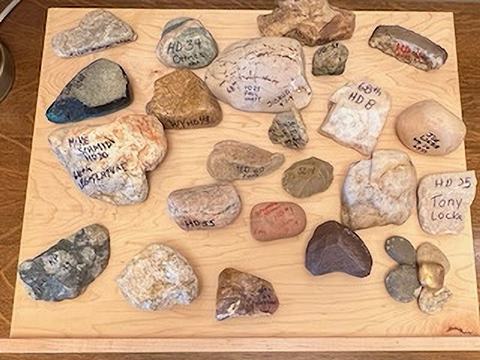
Speaker Neiman: “And so it’s just recognition, Ms.Marquardt, of what God’s done and that we recognize that it is by him that we have had this opportunity to act on the behalf of the people, and we recognize his authority in this. And we want to make sure that we remember what God did so we can tell others what he did. That’s the story of the Stones.”
Those stones were not gathered as souvenirs. They were meant to become a memorial, an altar of remembrance, so that when children and grandchildren later asked what those stones meant, the people could tell them what God had done there. Neiman said that same idea was on his heart when the 68th Legislature began. He asked the conservative legislators to bring a stone they had found and bring it with them to session. Each one wrote his or her name and House district on it, and Neiman arranged them on a display board in the shape of where they came from around the state. To him, it was more than decoration. It was a visible reminder of calling, place, and providence, a way to remember that they had been brought here for a purpose, and that what God had done should not be forgotten.
That is not the language or symbolism of a man who sees politics as self-advancement. It is the language of a man who sees service as stewardship.
ORR: Tell me about your entrepreneurial roots.
Speaker Neiman told me he was raised by older parents, people who had lived through years when there was no waste because there was nothing to waste. His family understood how to stretch what little they had. He remembered stories of children running barefoot through summer and making one pair of shoes last through winter.
Speaker Neiman: “She said you, you made what you had work and you were conservative and you, you bought things that were tangible, that mattered, that lasted, and that were valuable.
And you were very, very, she called it, you’re being really scotch with your money, you know, really tight, and stuff like that, because she said it. There was nothing to have. But you know what? We were happy. She said, we didn’t have anything, but we were happy.
Mom said, we ran barefooted all summer. Mom would catch us in the fall, they’d buy us one pair of shoes, and we’d wear them shoes for the winter to school. And then by spring, when we’d run them a little while and they were done, we kicked those shoes off and run barefoot.”
He also told a story about his mother growing up in an old chicken house that had been cleaned out, lined, and made livable with sheer effort. The family made a floor out of hard-packed dirt, laid blankets down, and made a home where many people would have seen only hardship.
As children, they would catch big grasshoppers, stick oak leaves on them like tiny dump trucks, and load them with pebbles. But if they put too much weight on them, he said, the insects would sit down and stop moving. That memory stayed with him. In his mind, it became a picture of taxpayers: people who will carry and carry until government loads them down so heavily they cannot move anymore.
That is where his politics comes from. Not from white papers. Not from consultant slogans. From a dirt-floor understanding that burden is real. That same perspective followed him into business.
ORR: What types of business do you or have you owned?
He spoke about owning a gas station in Hulett, about times when fuel brought in only a nickel or a dime a gallon, and about how the real money came from what people bought after they stepped inside. He talked about his ranching business and how he is at the whim of the market on whether he makes money or loses money. He believes in adding value to his product to make it more attractive to the buyer.
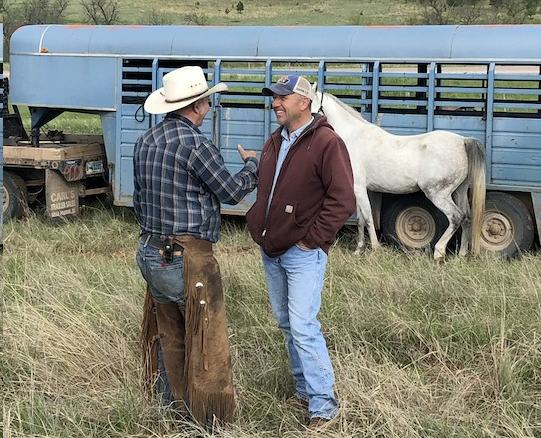
Speaker Neiman: “I’m ranching and I’m at the whim of the market. I can’t demand a certain price for what I sell. I have to try to value-add. I have to try to figure out how I can make my product attractive to you. I’ve got to do it at the least cost I possibly can and get the highest quality I can possibly create.”
He is a man who has had to make payroll, negotiate inventory, and hope the checks clear. Neiman knows what it means to live on margins so thin that one mistake matters. He said everyone on the House floor ought to own a business and make a payroll before deciding how to spend the taxpayer's money.
People who have never had to cover wages, float inventory, or absorb losses do not always understand the pressure of private life. That practical understanding is part of what makes him interesting, but it is not the whole picture.
A Man Who Doesn't Need a Script
Chip Neiman does not speak like a man trying to remember what someone told him to say. He speaks off the cuff. Plainly. Sometimes imperfectly. But honestly. There is a difference between polished and genuine, and Neiman is genuine. He sounds like someone drawing from conviction, not from a script.
That came through in his closing remarks at the end of the 68th session. He spoke with gratitude, humility, and the unmistakable sense that he still sees public office as an honor rather than a possession.
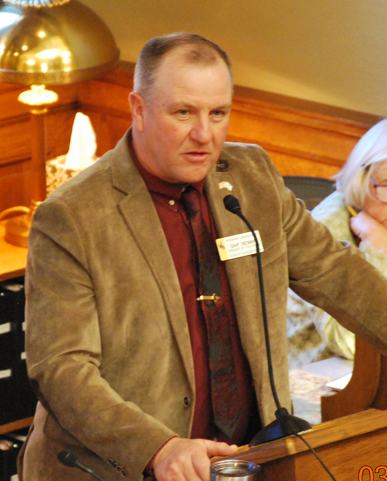
Speaker Neiman: “It has been an honor to serve as your speaker. If you'd asked me six years ago, five years ago, if this is where I would be standing right now, I'd have said you was crazy. And I would
never have believed in this shorter period of time in my legislative career that I would have the opportunity, the honor of, to be able to stand before this house and this body and to be able to address you and thank all of you for being here and for being a part of something far greater than yourselves. “
He does not come across like a man manufactured by politics. He comes across like a man formed by life first, by family, work, faith, scarcity, and responsibility, and then sent into politics carrying those things with him.
Roots Still Showing
In an age when so much of politics feels scripted, Chip Neiman comes across as a man who was formed long before he ever held the gavel.
He was formed by rocks taken from the middle of the river. By stories of snow, rabbits, and hunger. By a chicken house made into a home. By payrolls, fuel margins, the cattle market and the hard math of keeping a business alive. By faith that remembers where blessings come from. And by enough humility to know that public office is not something a man possesses, but something he is allowed to hold for a while.
This year, Neiman is running for the Wyoming Senate in District 1.
You can debate Chip Neiman's policies. That is fair. But if you ask who he is, the answer is not complicated. He is a man whose roots still show. And maybe that is exactly why people respect him.