NEWS
When a private landowner negotiates with the State of Wyoming over public land, that is one thing. When a sitting Wyoming state senator’s family business negotiates with the State of Wyoming over public land at the gateway to Devils Tower, that is something else entirely. It does not automatically mean corruption or prove criminal wrongdoing, but it does mean the public has every right to ask questions, and the public did.
According to the Wyoming Office of State Lands and Investments records, the deal that ultimately transferred 80 acres of Wyoming State Trust Land near Devils Tower into Bear Lodge ownership did not begin as a small, tidy land swap. It began as something much larger.
The Original Ask
In October 2011, Bear Lodge Cattle Company, listing Ogden Driskill as its company contact, formally nominated a land exchange with the Wyoming Office of State Lands and Investments. At the time, Driskill had already been sworn into the Wyoming Senate earlier that year. Throughout this entire process, Ogden Driskill was not simply a private rancher; he was a sitting state senator.
State exchange records show Bear Lodge Cattle Company initially proposed exchanging approximately 520 acres of private land in the Moskee area in return for roughly 240 acres of Wyoming State Trust Land. That included the now well-known 80-acre parcel directly south of Devils Tower National Monument at the intersection of Wyoming Highways 24 and 110, plus another 160-acre state parcel.
By the time the deal was finalized years later, the structure had dramatically changed. The State’s 240 acres became 80 acres; Bear Lodge’s 520 Moskee acres became 100 acres. Somewhere in the years between, the deal changed.
Why the State Wanted Moskee
The State of Wyoming had good reason to pursue the exchange. The Moskee area had long been viewed as strategically valuable for public access, wildlife habitat, grazing, timber potential, and connectivity with surrounding public lands in the Bear Lodge Mountains corridor. Public reporting shows the State and conservation interests had long eyed portions of that landscape. Ogden Driskill himself had publicly spoken years earlier about preserving parts of the broader Moskee area from subdivision and development.
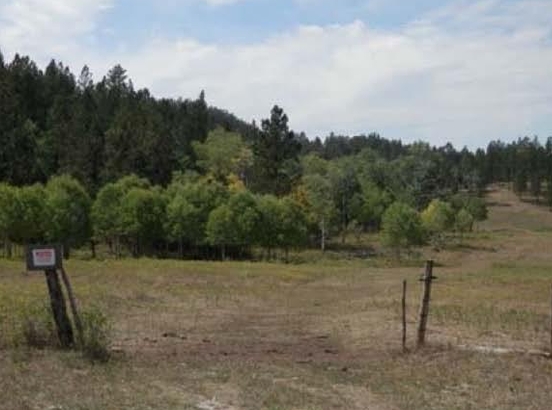
The idea that the State wanted Moskee land is not controversial. The controversy was whether what the State ultimately got was actually worth what it gave up, because not everyone in Crook County believed it was. Locals who followed the exchange argued the Moskee acreage the State received was little more than scrub ground; land with limited grazing potential, questionable timber value, and nowhere near the strategic visibility or commercial potential of the Devils Tower parcel. That criticism became part of the public record.
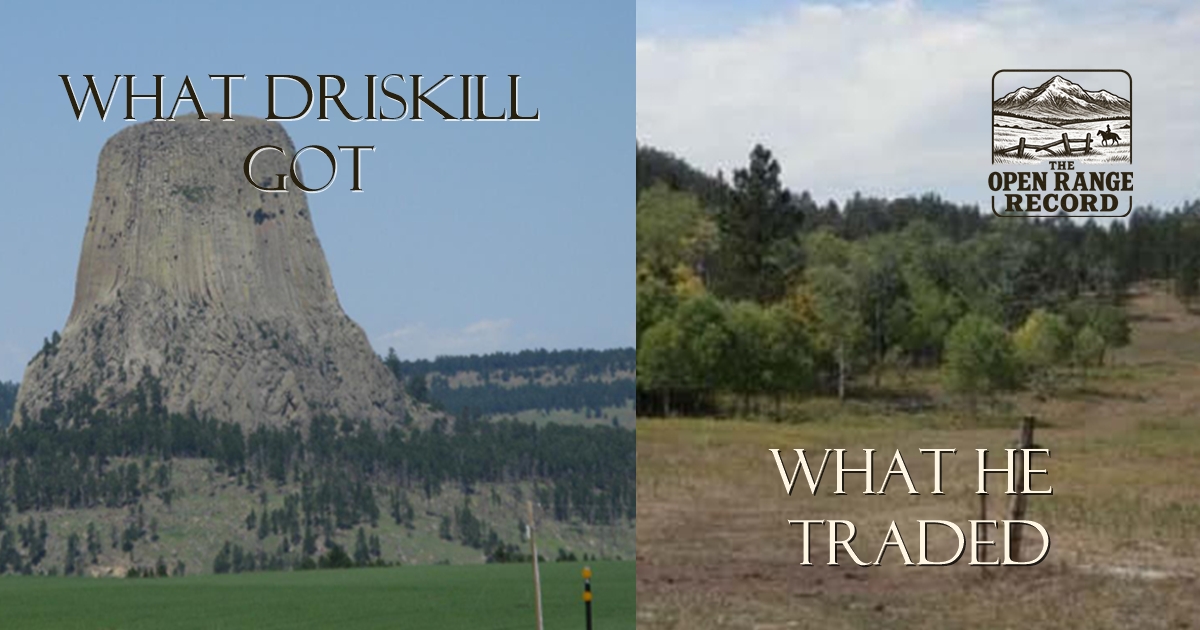
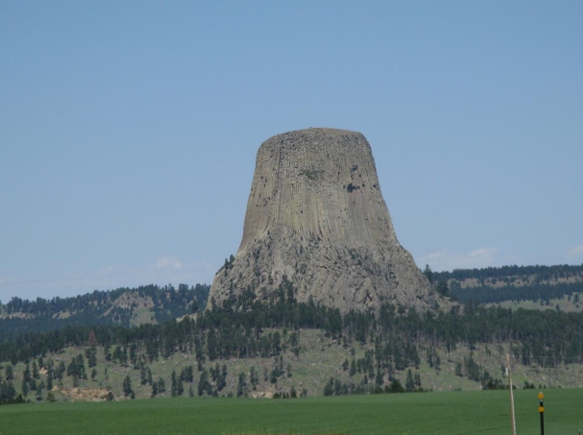
The Devils Tower parcel was no ordinary grazing tract. It sat at one of the most visible tourism gateways in northeastern Wyoming. Anyone who has driven toward Devils Tower knows exactly the location.
High visibility, high traffic, high strategic value, and Bear Lodge already had its boots on the ground. State records show Bear Lodge already held the grazing lease on the property. Ogden Driskill personally held a temporary use permit for signboards there.
So, Bear Lodge was not trying to gain access to unfamiliar land. It already occupied the footprint. The exchange would simply change that arrangement from temporary, state-controlled use to private ownership, and all of this was happening while Ogden Driskill was a sitting Wyoming State Senator.
The Long Road
The Devils Tower parcel was placed on the State’s disposal list in late 2011. From there, the trail becomes harder to follow. The final state decision later says the Board addressed the exchange in June 2013 as “Walk-In Board Matter #3” and requested a second appraisal. Yet publicly available June 6, 2013 SLIB meeting minutes do not clearly reflect public discussion of the Bear Lodge exchange. The only place in the recorded minutes of that meeting where it could be discussed is during an executive session.
For members of the public trying to reconstruct what happened, it leaves a big gap. Years passed, 2013-2017, and when the exchange reemerged publicly, it looked very different than the original proposal.
Why did it take so long? Why did the acreage change so dramatically? What negotiations happened in between? The records do not answer every question, but the timeline is telling, because this entire process unfolded while Ogden Driskill remained a sitting state senator.
When the State finally opened public comment in 2017, not everyone was impressed. Public comments in the state file questioned whether Wyoming was giving away premium Devils Tower corridor land in exchange for acreage some locals viewed as far less valuable. Some argued the Devils Tower parcel had obvious tourism, visibility, and long-term commercial potential far beyond what a grazing appraisal would reflect.
Others questioned whether the State would have been better off auctioning the parcel or pursuing other revenue opportunities rather than transferring it. To critics, this did not look like Wyoming getting the better end of the deal, it looked like a sweetheart deal, and the fact that the beneficiary was the family business of Senator Ogden Driskill only heightened those concerns.
The Final Deal
Ultimately, the exchange was approved in a much narrower form. Bear Lodge acquired 80 acres of Wyoming State Trust Land near Devils Tower. The State received 100 acres of Bear Lodge land in Moskee. The SLIB also imposed a condition: Bear Lodge had to place a conservation easement west of Highway 110 and Highway 24 on the 80 acres within four years.
This means Driskill could not simply acquire the parcel and immediately pursue unrestricted commercial development. The land came with restrictions, but that conservation requirement opens an entirely separate chapter in this story. It is a chapter worth examining.
The Real Question
This article does not allege a crime. It is not claiming public corruption. It is asking a simple question: Should the public scrutinize land deals in which a sitting Wyoming state senator’s family business acquires State Trust Land at one of Wyoming’s most visible landmarks?
The answer should be obvious, because maybe this was sound land management. Maybe it was prudent conservation; maybe it was both. But Wyoming State Trust Land belongs to the people of Wyoming, and when politically connected insiders benefit from deals involving that land, scrutiny is not optional; it is the job of the public. Especially in the shadow of Devils Tower.
To Download the original records from the Wyoming Office of State Lands and Investments Click Here.