NEWS
Erin Taylor wears several hats in Wyoming politics. Two of them place her at the intersection of Eric Barlow’s campaign for governor and the organized effort to defeat Proposition 1.
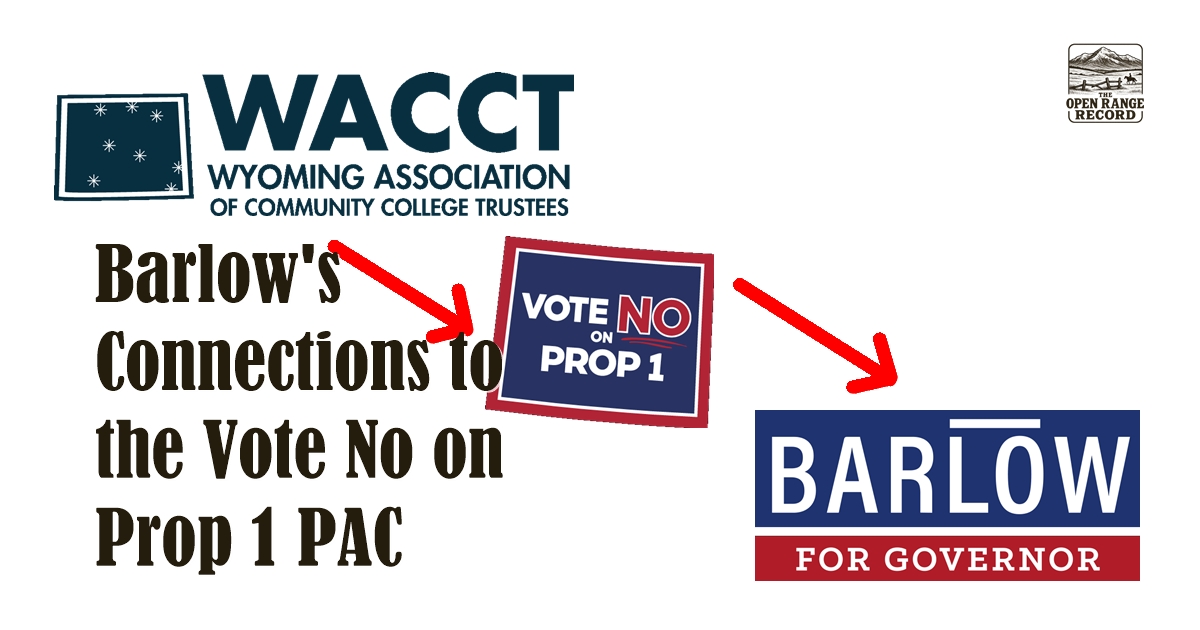
Taylor is executive director of the Wyoming Association of Community College Trustees, or WACCT. She is also named on Barlow’s statewide campaign leadership team. Joining her on that campaign list are Brad Cundy, a WACCT board member representing Casper College, and Larry Smith, WACCT’s treasurer representing Gillette College. Three people helping lead the same association also appear on the same candidate’s leadership roster.
Their association has taken an active role in opposing the residential property tax reduction. WACCT’s website declares unanimous opposition to Proposition 1 and provides sample opinion pieces, talking points, social media materials and yard-sign requests. It encourages colleges to organize Vote No meetings with community leaders and directs them to notify Taylor so the coalition can coordinate support. WACCT argues that the measure threatens community college funding and services.
There is money behind that advocacy, too. According to the Wyoming Campaign Finance Information System, WACCT contributed $24,000 to the Vote No on Prop 1 PAC. The Wyoming Heritage Foundation contributed another $25,000.
The Wyoming Business Alliance’s published roster identifies her as vice chairwoman of the Wyoming Heritage Foundation and a member of the Alliance’s steering committee. That puts a Barlow campaign leader in leadership positions at two organizations reported to have contributed a combined $49,000 to the same ballot measure opposition campaign.
Her institutional connections stretch further. WACCT’s biography lists Taylor as a Leadership Wyoming graduate from 2006, former Wyoming Business Alliance president, and former gubernatorial appointee to the Wyoming Lottery Corporation and Wyoming Arts Council.
These overlapping roles do not establish wrongdoing or prove that Barlow’s campaign directed the association’s spending. They do identify people and organizations whose political interests converge—and whose decisions deserve public scrutiny.
Who authorized WACCT’s contribution? What revenue paid for it? What role did Taylor, Cundy, and Smith play in that decision? Homeowners being urged to reject tax relief deserve clear answers about who is organizing that message and who is paying to deliver it.