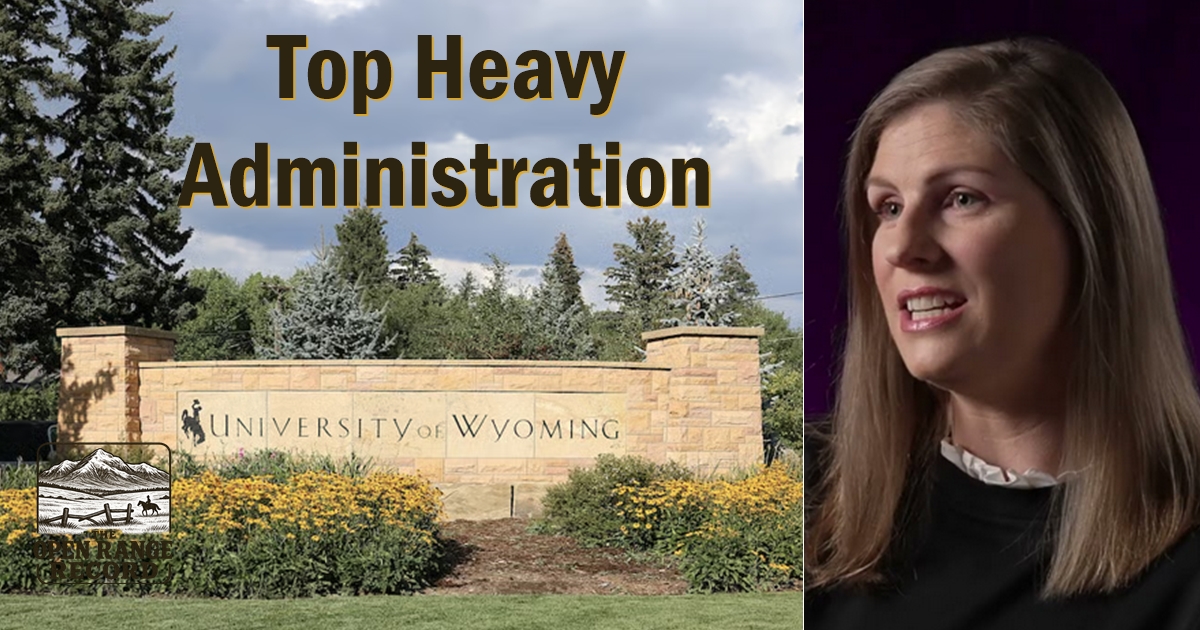
Public confidence in higher education has eroded significantly in the past decade. Across the country, Americans say that colleges and universities are too political, too unaccountable, and provide too little return on investment. Wyoming can reverse that trend through practical reforms that improve transparency, protect viewpoint diversity, and focus the University of Wyoming on its core educational mission of teaching and research.
Public trust is essential for public universities. Because they rely on taxpayer funding, legislative support, and public goodwill, they must be responsible stewards of public trust. Institutions will suffer if citizens believe they are wasting money or advancing political agendas instead of educating students. Public trust is a key component to sustaining taxpayer investments.
Fortunately, Wyoming is well-positioned to address these challenges. A new report from the James G. Martin Center for Academic Renewal, Blueprint for Reform: Wyoming, creates a roadmap for practical policy change. In it, the authors argue that demographic changes and workforce pressures make now the right time for significant reform.
One of the Blueprint’s key proposals is to review all academic programs with an eye to return on investment for students. Until recently, the conventional wisdom was that college graduates could expect to “earn $1 million more than high school graduates.” But the reality on the ground is very different. As the Martin Center Blueprint highlights, some degrees, such as engineering, nursing, and accounting, do give students a high return on their investment. But others, including Zoology, Psychology, and International/Global Studies, make students worse off financially.
As a complement, Wyoming should reimagine its general education curriculum. Students deserve a coherent education in history, civics, literature, economics, and science. Today’s collection of disconnected distribution requirements is insufficient. A stronger core curriculum would better prepare to flourish in their careers, embrace responsible citizenship, and grow as seekers of wisdom.
At the same time, the University of Wyoming should carefully examine its administrative spending. Enrollment at UW has fallen from 13,717 in 2015 to 10,800 in 2024, a decrease of 21 percent. Without concomitant reductions in administrative staff, the University of Wyoming’s per-student spending has increased significantly. This administrative bloat, endemic at universities around the country, contributes to low public confidence in colleges and universities.
Wyoming taxpayers should take notice. Roughly 8.6 percent of Wyoming’s budget goes to higher education expenditures each year. Its per-capita support for higher education is among the highest in the nation.
But focusing on fiscal issues alone won’t restore public trust. Public confidence also depends on whether universities are seen as places of open inquiry rather than ideological conformity. Universities must also protect open inquiry and viewpoint diversity. Like other universities across the country, Wyoming’s faculty lean far left; 97 percent of 2025 UW faculty political donations went to Democratic candidates and causes. In a deep red state like Wyoming, that puts UW faculty far out of step with state priorities and taxpayers.
The Cowboy State now has an opportunity to make smart, evidence-based reforms to ensure that its higher education policies align with the needs of students, parents, and taxpayers across the state. Public universities enjoy extraordinary privileges, including significant taxpayer funding and a central role in preparing the next generation of citizens and workers. Wyoming should take this opportunity to recommit to public accountability, excellence, and openness to diverse viewpoints.
Jenna Robinson is president of the James G. Martin Center for Academic Renewal.