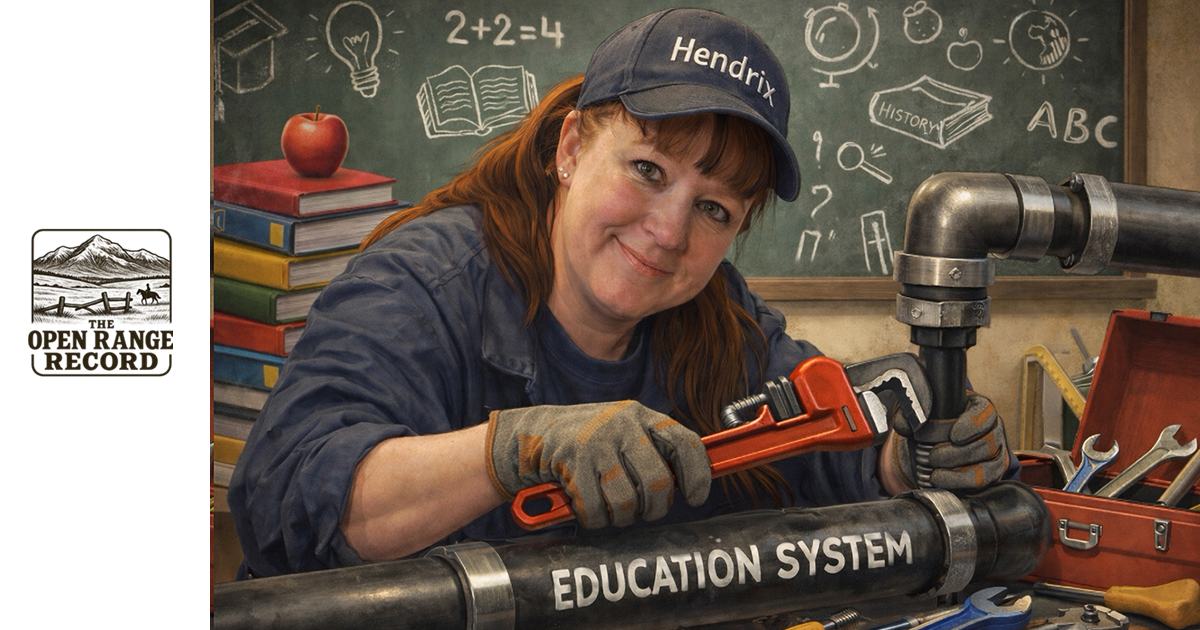
School funding. Test scores. Reading proficiency. Brain drain.
Each of these phrases has been on a continuous loop for so long that they seem to have lost their meaning. The only subject more polarizing in Wyoming politics is property taxes.
The amount of money that Wyoming spends on education per child is one of the highest in the nation, costing around $22,000 per student per year based on the spending bill working its way through the legislature in this budget session. This is an increase of over $1800 per student over 2025, when Wyoming was listed twelfth in the nation for per pupil spending by World Population Review, at a cost of $20,159 per student.
Enrollment numbers listed at reporting.edu.wyo.gov show total enrollment has gone down every year since 2015, with the exceptions of the 2018/19 and 2019/20 school years.
Why is it that school funding always increases when enrollment has been decreasing?
School districts, the Wyoming Education Association (WEA), and some teachers are telling everyone who will listen that the Freedom Caucus is trying to cut school funding even though the House recalibration bill (HB110) would have increased funding, as does the Senate’s version (SF81), which is progressing through the legislature.
The House version of the recalibration bill, HB110, was killed without any debate.
In 2025, the legislature included an 8.3% raise for teachers, but many teachers never saw the money because of the block grant.
The block grant form of funding allows districts to spend the money as they see fit, rather than creating a line-item budget for them to follow. This funding mechanism is supposed to help districts spend in a way that best meets the needs of their students, but it offers no oversight to make sure the money is going where it is needed, rather than where administrators or school board trustees want it to go.
In an attempt to address the issue of teacher raises, HB110 would have included a siloed raise for teachers, listed as classroom funding. Siloing is putting a specific amount of money aside for a specific purpose within the block grant. In this case, money for pay increases would have been approved for use on classroom costs only, including teacher raises or new hires, but school districts still could have chosen not to pass along the raises, as has been done in the past.
That’s as specific as the spending directive is allowed to go, if it even goes that far, because of “local control.” No one wants the government to tell them how to spend their money. But it seems like “local control” only applies to local governments dealing with state or federal governments, not to the local people who want a say in how their schools function.
When school boards or administrators choose to increase the size of administration in their districts instead of spending the money in the classroom or in hiring new teachers or support staff, they are robbing our children and are guilty of misuse of funds, at the very least.
Is there a better way to guide school spending that benefits students, doesn’t waste taxpayer money, and still allows for local control?
School boards, often at the direction of administrators, are the ones who choose the curriculum used by teachers. The top three publishers of public school textbooks used in this country have embedded woke, anti-American ideals into every subject, including math. Even history is rarely taught as it was, but as it is viewed today through the lenses of social justice and racism.
There is also the practice of “teaching to the test,” where teachers spend so much time instructing kids on how to pass standardized tests that general learning is pushed to the back burner. I’ve talked with several teachers in various states who hate that they have to do this, but because school funding is often tied to test results, they are pushed to focus on testing attendance and test scores. Students are instructed to memorize and regurgitate information instead of learning how to learn.
Regarding test scores, a look at the Wyoming Department of Education’s website shows that the scores for math, reading (ELA), and science for 4th, 8th, and 10th grade students are a point of concern for many counties.
Another important metric is reading proficiency, which the DOE lists as improved 1-3% from 54.6% in 2024 to 56.9% in 2025 for all 3-8 grade students. The 2025 score is touted as being above the pre-pandemic score of 56.7%, an increase of .2%.
While getting back to or better than 2019 scores is a good thing, considering the learning loss seen across the country, just over half of all grades 3-8 students in Wyoming are considered proficient in reading. The national average is right around 30%. When education officials say we’re doing great compared to the national average, remember how low that bar is.
Mississippi has risen from near last place in the nation in literacy to the top in just 10 years. This was accomplished by focusing on evidence-based reading instruction, including phonics and phonetic awareness. They also now hold back children who cannot read at grade level rather than pass them and let the next teacher deal with it. Other states use contextual clues to have kids guess what the word might be rather than teaching them to read the word.
Is it possible for Wyoming to do what Mississippi has done and teach kids to read with proficiency and THEN test, rather than test them as they fail?
While I want to acknowledge that there are MANY amazing teachers who do the best they can to ensure that children are being educated, not indoctrinated, I also have to talk about what happens when some teachers bring their socialist-style ideals into the classroom.
There have been several student anti-ICE walkouts around the state, most notably in the Capital over the President’s Day weekend. Two legislators were seen participating from the Capitol steps. A sidewalk chalk message reading “my students are not illegal” indicates at least one teacher was also present. Interestingly, the posters carried by students had a lot of the same language seen at protests in places like Minnesota and Portland, including profanities.
Where do children learn to disrespect law enforcement and despise their own country? Often, they learn it from teachers who picked up this mindset from their time in universities.
For years future teachers going through university have been taught to teach social justice ideals, feelings-based thought processes (Social Emotional Learning), and culturally responsive teaching (identity politics). These things have nothing to do with the education required to be a successful member of society and everything to do with raising up “social justice warriors.” All of it takes away from actual learning.
The University of Wyoming was mandated by the legislature in 2024 to stop DEI programs. The school said that it had closed its Office of Diversity, Equity, and Inclusion and halted related initiatives, but the school’s website still appeared to offer classes and degrees in subjects like ecofeminism as well as retain staff who push these ideals.
When I typed “ecofeminism” into UW’s search bar I found it listed a professor named Jeff Lockwood. His bio page contains a list of books he has written, including one titled Behind the Carbon Curtain: the Energy Industry, Political Censorship, and Free Speech.
Google describes the book this way:
“a 2017 book that investigates how the fossil fuel industry uses its economic power to suppress speech and research that conflicts with its interests, using Wyoming as a case study.”
Are his students being exposed to all sides of the argument regarding fossil fuels? I honestly don’t know, but based on his writing, I’d guess that they’re not.
How many professors at UW are attempting to influence students’ beliefs towards those that conflict with the values of Wyoming?
Wyoming Liberty Group conducted a poll of 266 University of Wyoming students, where a third of those surveyed said they planned to leave Wyoming for better job opportunities: 25% because of cost of living concerns and 13% because of quality of life issues – they wanted places to hang out with friends.
Their article said that by the age of 30, 60% of Wyoming young people will leave and not return. This exodus of college students is called brain drain.
While rural life, ranching, and farming are not for everyone, there are other industries that require skilled workers, such as the medical field, education, energy production, and technical specialties. We need to ask ourselves why these fields are facing staff shortages while young adults are worried about finding a job.
Are students across Wyoming being prepared for life in Wyoming? Are they being taught the necessary skills, or are they being encouraged to seek a life elsewhere?
These are questions worth asking. The answers are crucial for the future of Wyoming.