NEWS
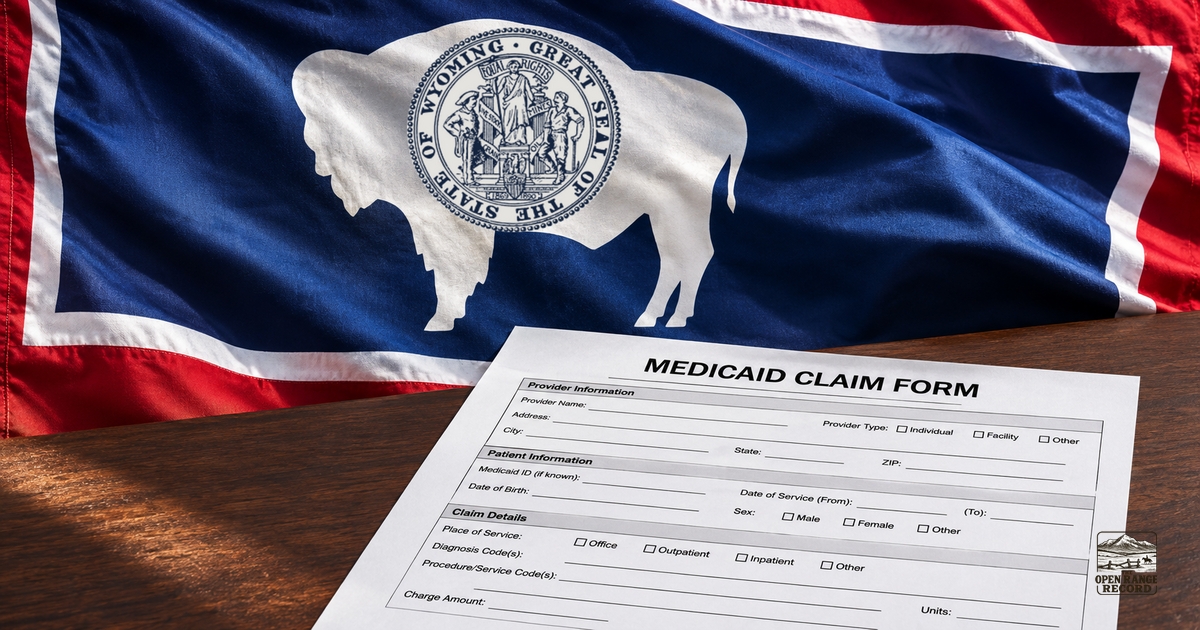
A renewed push by Democrats to expand Medicaid in holdout states is running into steep federal financial and administrative barriers, raising critical questions in Cheyenne about whether left-wing Wyoming lawmakers will revisit the issue in 2027 and what a shift in policy would cost state taxpayers.
According to reporting from Politico and Becker's Hospital Review, newly elected Democratic governors and legislative majorities in states such as Georgia, Kansas, Texas, and Wisconsin have signaled plans to pursue Medicaid expansion following the November 2026 midterm elections. However, federal policy changes enacted under the 2025 budget reconciliation law, H.R. 1, and implemented by the Trump administration have substantially altered the financial equation for states that have not yet expanded their programs.
Starting January 1, 2027, H.R. 1 requires expansion states to verify that nondisabled adult enrollees ages 19 to 64 complete at least 80 hours of work or qualifying activities each month. The law also mandates eligibility re-determinations every six months rather than annually, and places new caps on hospital funding. Those rules, combined with the expiration of temporary federal bonus incentives, have prompted Wisconsin Democratic Governor-elect David Crowley to acknowledge that federal changes have rendered full expansion no longer viable.
In Wyoming, those national headwinds intersect with a major political realignment following the 2026 election cycle. On November 3, Republican State Senator and left-wing former House Speaker Eric Barlow won the open governor's race with roughly 68 percent of the vote, defeating conservative Rebecca Bextel and Democratic candidate Kenneth Casner. Barlow will succeed term-limited Governor Mark Gordon in January 2027. At the same time, left-wing Republicans regained majority control of the Wyoming House from the conservative Wyoming Freedom Caucus during the August 2026 primary.
That shift in leadership leaves Wyoming voters and taxpayers facing three central questions ahead of the January 2027 legislative session: whether left-wing Republicans will attempt another push for Medicaid expansion, whether enough conservatives remain in the legislature to block it, and what the ultimate financial impact would be on the state.
On the first question, Barlow's public posture has evolved since his years leading the House. During legislative debates in 2021 and 2022, Barlow supported Medicaid expansion proposals as a way to cover low-income working adults and offset uncompensated hospital care. During his 2026 gubernatorial campaign, however, Barlow told Cowboy State Daily that he no longer considers Medicaid expansion the right option for Wyoming.
He points instead to a Trump-backed rural health transformation fund expected to send hundreds of millions of dollars into the state on an annual approval basis. Even so, left-wing lawmakers and healthcare lobbyists have repeatedly revived expansion bills over the past decade, leaving open the possibility that a new proposal could surface during the upcoming session.
If left-wing Republicans do attempt to advance an expansion bill, the legislative math in Cheyenne has changed significantly. Republicans will hold a 55 to 7 supermajority in the House in 2027, but projections from WyoFile indicate that the Wyoming Freedom Caucus will hold only about 10 reliable House votes, plus two allies, and roughly five reliable Senate votes, plus four allies. Without majority control of either chamber, conservatives would not have enough votes on their own to stop an expansion measure unless broader segments of the Republican caucus join them in opposition.
Finally, the financial impact of expanding Medicaid in Wyoming remains a point of sharp dispute between fiscal conservatives and healthcare economists. Past fiscal analyses from the Wyoming Legislative Service Office and the Wyoming Department of Health estimated that expanding coverage to roughly 19,000 eligible adults under the standard 90 percent federal match rate would bring in more than $111 million per year in federal funds while requiring roughly $13.75 million annually from Wyoming's General Fund, alongside millions in ongoing administrative costs.
With temporary federal incentives off the table and H.R. 1 requiring states to build new IT systems and hire staff to conduct twice-yearly eligibility checks and monthly work verifications starting in 2027, opponents argue that state overhead costs will rise sharply while leaving Wyoming exposed if Congress ever reduces the federal match.
Conversely, proponents cite a 2025 economic impact study prepared by REMI which estimated that Medicaid expansion would generate roughly 440 jobs per year, grow state gross domestic product by an average of $60.9 million annually, and reduce uncompensated charity care costs for Wyoming hospitals. As the 2027 session approaches, lawmakers will have to weigh those projected economic gains against steeper federal compliance mandates and long-term state budget risks.