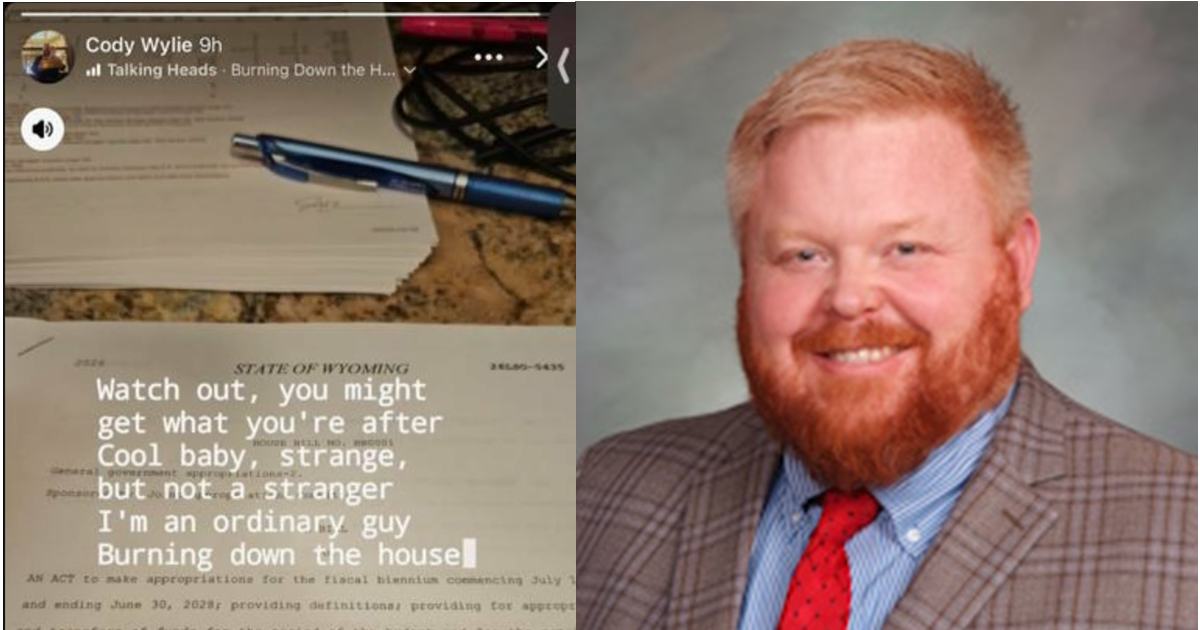
While the Wyoming House floor clock ticked down during debate on the state budget, Rep. Cody Wiley offered voters a soundtrack. Over a photo of the general appropriations bill, he posted lyrics from Talking Heads’ “Burning Down the House.”
“Watch out, you might get what you’re after… Burning down the house.”
The “house,” in this case, being the Wyoming House of Representatives. You can’t say the symbolism wasn’t on brand.
Not a Bystander
Wiley was not merely observing events from the sidelines. According to lawmakers present during the session, he rose repeatedly during extended debate — asking questions and offering comments as part of a coordinated filibuster effort that stretched proceedings on the budget bill.
Filibustering is a lawful procedural tactic. It is often used to slow debate, register protest, or apply political pressure. It is also a way to consume time. And during introduction deadlines, time is leverage.
When the Clock Becomes the Strategy
Under House rules, bills require a two-thirds vote for introduction. The introduction calendar is fixed. When the deadline passes, measures that have not been introduced simply die — not because they were debated and defeated, but because they never reached the floor.
Extended debate during this window has predictable consequences. As members continue to speak, question, and comment, the clock continues to run. Other bills wait. Some never get their moment. So, while debate stretched on — and while the introduction clock ticked down — the image circulating online paired the state budget with “Burning Down the House.”
Some may interpret the post as humor. Others may view it as commentary on fiscal policy. But when procedural tactics directly affect whether legislation lives or dies, symbolism is important.
Governance, Protest, or Performance?
Filibusters are part of legislative hardball. So is messaging. In the modern political era, social media runs parallel to floor debate. Lawmakers argue on the record and post in real time. But when the tool being used is time itself — and time determines which bills survive — the public is entitled to notice the optics. When the clock runs out, bills disappear quietly. The soundtrack doesn’t.