OPINION
For those who do not believe, those who are skeptical, in this time or in antiquity, there is one piece of evidence required to disprove the faith of billions. Its absence is also the basic earthly article of that conviction.
“That Christ died for our sins according to the Scriptures, and that He was buried, and that He was raised on the third day according to the Scriptures, and that He appeared to Cephas [Peter] and to the twelve. After that, He appeared to more than five hundred brethren at one time.”
Pontius Pilate, the Roman Prefect over Judea had to have known that he was presiding over a powder keg. Though the Romans typically allowed Jewish authorities to govern themselves, it was Pilate who sent Jesus to his death. It’s clear from all four Gospels that he didn’t want to “but the chief priests and the elders persuaded the multitudes to ask for Barabbas and to put Jesus to death.”
If the body of Jesus were to come up missing for any reason, as the Pharisees warned in Matthew 27:64, His followers would claim that Jesus’ own prophecy about his resurrection had come true. Or worse yet for Pilate, they could accuse His persecutors of stealing His body.
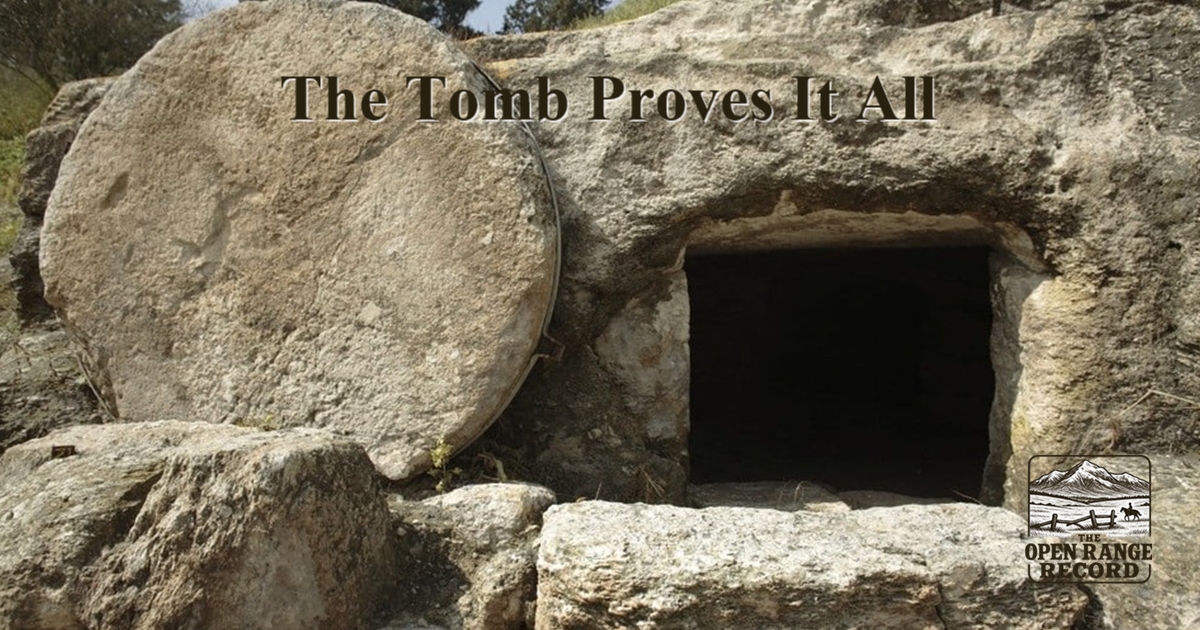
So, the chief priests had a huge stone placed in front of the tomb’s entrance and a guard in front of that. If after 3 days the tomb was still sealed with the body inside, there would be no fulfilled prophecy and no proof of Jesus’ divinity.
Mary Magdalene was the first to discover that the body of Jesus of Nazareth was missing. The Gospels of Mark, Luke and John only say when that Mary arrived she found the stone covering the entrance had been rolled away. Matthew’s account is slightly different. He adds that an angel appeared to Mary and moved the stone. But in all four, Jesus is not there.
In the ancient world, a woman’s word wasn’t valued in court. If a story were to be made up, likely the heroes would have been men. An embarrassing detail like this actually lends credibility to Mary’s accounting of events. A woman would not be relied upon for a story of this significance unless it were true.
Jesus’ life, his death by crucifixion and his immeasurable influence on our world are facts. What is also a fact is that there is absolutely no reference to his body, outside of the Bible, in the historical record.
If Jesus’ prophecy of his own resurrection was proven false, He’d have been posthumously pilloried. Ancient writers who were not followers of Christ would have written something entirely different than their descriptions of the depth of early Christians’ faith. For example, Lucian of Samosata who was writing approximately 130 years after the death of Christ wrote,
“The Christians, you know, worship a man to this day,–the distinguished personage who introduced their novel rites, and was crucified on that account…. You see, these misguided creatures start with the general conviction that they are immortal for all time, which explains the contempt of death and voluntary self-devotion which are so common among them; and then it was impressed on them by their original lawgiver that they are all brothers, from the moment that they are converted, and deny the gods of Greece, and worship the crucified sage, and live after his laws.”
Indeed, if jesus’ body was still in the tomb when Mary arrived, Jesus would be little more than a footnote in history—an influential teacher to be certain, but a man just like any other. His followers would have stayed, as John writes in his Gospel Chapter 20:19, “behind locked doors because they were afraid of the Jewish leaders.” But the disciples didn’t stay hidden.
These same men who hid in fear after the crucifixion suddenly risked everything to preach the resurrection in Jerusalem—the very city where it happened. James, Jesus' brother, and Paul, a former persecutor of Christians, became passionate leaders. Many early Christians faced persecution and death for this belief. People don't usually die for something they know is a lie.
Had the stone been still in place and Jesus’ body been undisturbed, word would have spread rapidly that the Jewish priests and pharisees were right all along; Christianity would have become no different than all the, what we now call, fringe religions that briefly existed across the Roman Empire.
But there was no body; Jesus’ tomb was empty.
Though Mary went “running to Simon Peter and the other disciple, the one Jesus loved, and said, ‘They have taken the Lord out of the tomb, and we don’t know where they have put him,’” It didn’t take long for Jesus to appear to her.
Jesus then appeared “when the disciples were together, with the doors locked for fear of the Jewish leaders, Jesus came and stood among them and said ‘Peace be with you!’ After he said this, he showed them his hands and side.”
There are several accounts of Jesus walking around as if her were alive and then he was gone. But his followers continued to preach his resurrection across the known world and many of them were killed for it. The average lifespan for a new Christian in the ancient world was roughly six months. That’s a high price to pay for a lie.
Skeptics argue that these accounts are little more than people writing what they wanted to see. But that belies what actually happened. It ignores what Jesus created and what His followers did. It ignores the empty tomb.
It is the empty tomb that proves it all.