The vastness of the Wyoming landscape has always been its defining feature. It is a source of pride, a symbol of freedom, and occasionally, a tool for intimidation. Recently, a local citizen reported a chilling encounter that suggests the state’s famous open spaces are being used as a rhetorical weapon.
According to this individual, a close associate of a prominent local landholder delivered a warning that felt ripped from a television screenplay. The messenger told the citizen that ranchers were unhappy with their work, adding an ominous postscript: "They ain’t going to kill you, but you know, there’s a lot of land out here."
To anyone who has followed the recent cultural shifts in the Mountain West, the line is instantly recognizable. It is the language of Yellowstone, the hit television series that has spent years romanticizing a specific, aggressive brand of "frontier justice." But in 2026, this Hollywood-inspired posturing is no longer confined to the screen or the local ranch. It has ascended to the highest levels of state government.
The Governor’s "Dutton" Persona
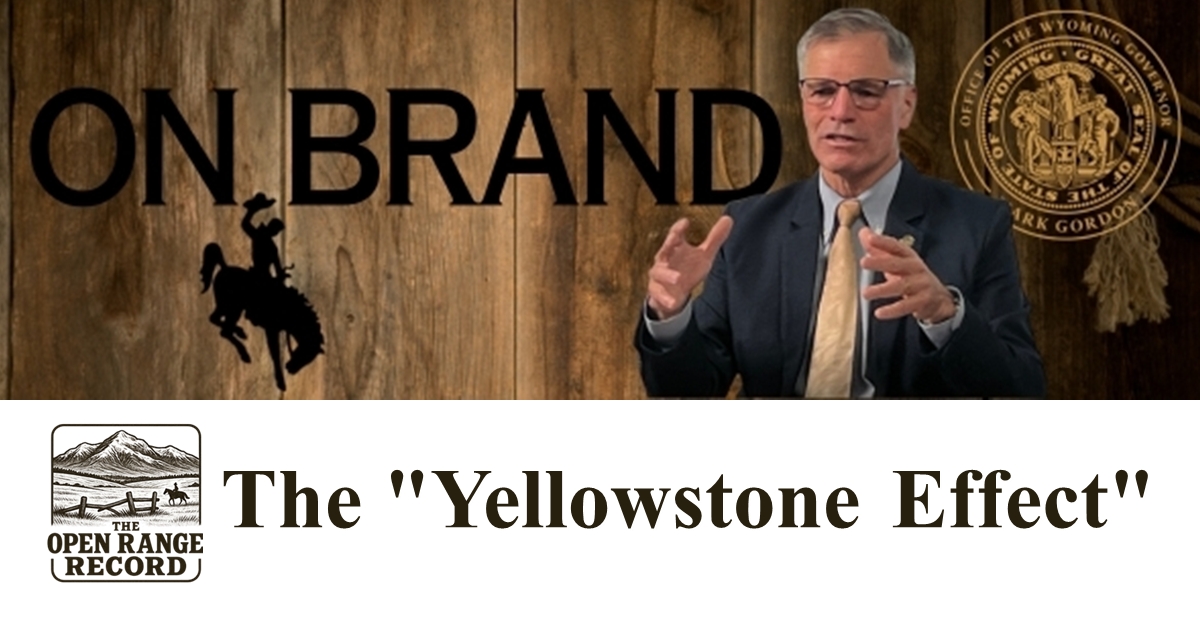
The "Yellowstone Effect" is not just a local phenomenon. It has become the go-to script for an establishment that is increasingly losing its grip on the political narrative. Nowhere is this more evident than in the recent behavior of Governor Mark Gordon.
Last week, during a meeting of the State Lands and Investment Board (SLIB) on April 2, the Governor exhibited a pattern of aggression that mirrored the "might makes right" philosophy of the Dutton family. During a heated debate over citizenship verification for affordable housing benefits, the Governor lost his composure. He shouted, "Shut up!" at board members and eventually stood up, pointing toward the exit while exchanging off-mic words with Secretary of State Chuck Gray. The live feed of the public meeting went black shortly after.
This was not an isolated incident. In January, during a similar dispute over "woke wind" leases, the Governor asked Secretary Gray if he wanted to "step outside." Gray later characterized the Governor’s behavior as a "fake tough guy persona" used to distract from the actual policy failures of the administration.
The Architects of Intimidation
The irony of this "cowboy" posturing by the Governor and local elites is rooted in its origin. The creative engine behind the Yellowstone universe, Taylor Sheridan and John Linson, used the West as a set for a story about outlaw subcultures. Sheridan has admitted the Dutton family’s obsession with holding land "at any cost" is a manifestation of his own personal trauma regarding the loss of his family’s ranch.
When local landholders or the Governor himself adopt this "hold the line" rhetoric, they are not channeling authentic Wyoming heritage. They are auditioning for a role written by Hollywood creators who view the law as an obstacle and the land as a place to bury "problems." This "train station" mentality has morphed into a metaphor for dealing with anyone who challenges the status quo. If they cannot defeat the grassroots movement through reasoned debate or policy, they resort to the script of the bully.
The Identity Crisis of the Establishment
This pattern of aggression is a symptom of a deeper political identity crisis. For decades, the established "moderates" in Cheyenne have claimed the mantle of rugged conservatism while voting for expanded government and higher taxes. As the Freedom Caucus and other genuine conservative movements gain ground, the establishment is lashing out.
The "lot of land" quote delivered to the local citizen, and the "step outside" line delivered by the Governor are two sides of the same coin. They are psychological tactics designed to isolate and silence dissenters. By framing themselves as the "true" defenders of the ranching way of life, these individuals hope to distract from the fact that they are often the ones voting against the very principles they claim to protect.
Protecting the Authentic Wyoming
The cost of this Hollywood inspired political theater is high. It erodes the genuine, neighborly culture that has sustained Wyoming for generations. Authentic conservatism in the Equality State was always about hard work, quiet resolve, and a firm belief in individual liberty. It was never about using the size of one’s ranch or the power of the Governor’s office to threaten a neighbor or "shriek" at a colleague.
As Wyoming moves toward its next election cycle, the challenge for voters will be distinguishing between the authentic leader and the person merely reading from a Taylor Sheridan script. The "lot of land" in Wyoming should remain a place of opportunity and freedom, not a backdrop for televised intimidation. If the state is to maintain its identity, it must reject this "fake tough guy" persona and return to a political discourse rooted in truth and genuine Wyoming values. A real cowboy doesn't need a script to tell the truth, and a real Governor shouldn't need to "step outside" to win a policy debate.