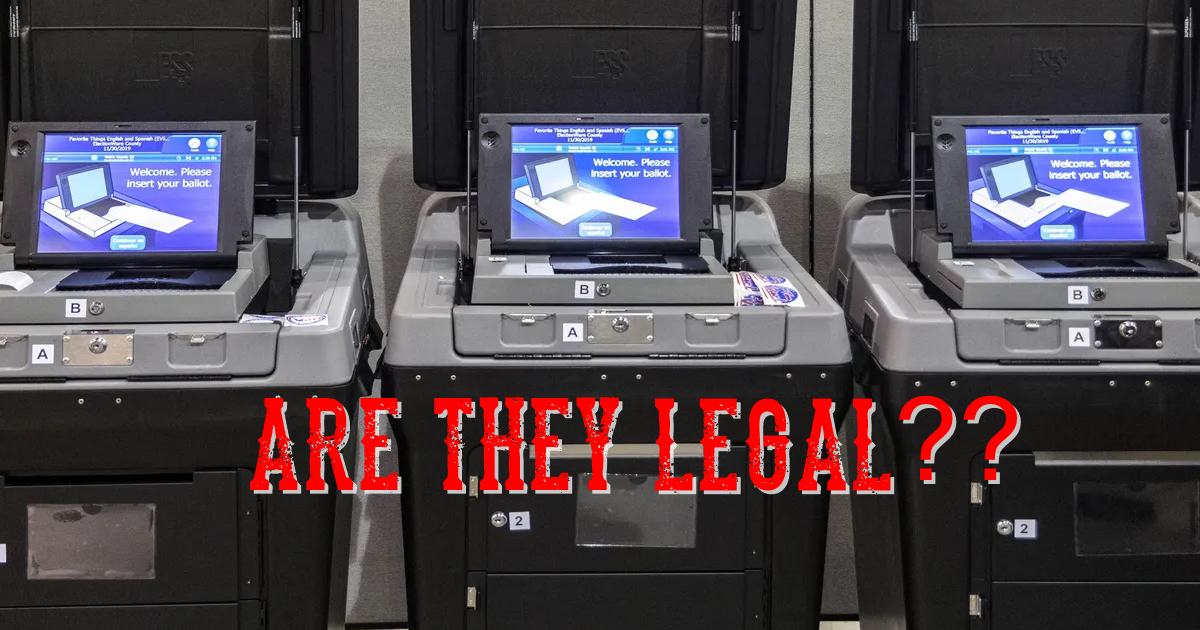
As Wyoming voters look toward future elections, a critical question looms over the state's election integrity: Are the electronic voting machines used in all 23 counties legal and secure? An investigation into state regulations, federal certification standards, and recent testing failures reveals a troubling landscape. Wyoming's election equipment, while technically compliant with state law, is certified to a federal standard that is nearly two decades old. This raises significant concerns about security and transparency.
At the heart of the issue are the Voluntary Voting System Guidelines (VVSG), the federal standards against which voting systems are tested. In February 2021, the U.S. Election Assistance Commission (EAC) adopted VVSG 2.0, a major overhaul designed to address modern cybersecurity threats, enhance accessibility, and improve the integrity of the voting process. However, research confirms that the equipment used across Wyoming, provided by vendor Election Systems & Software (ES&S), is not certified to this new standard. Instead, the ES&S EVS 6.x systems, which include the ExpressVote, DS200, and DS450 machines, are certified to VVSG 1.0, a standard from 2005.
This gap is permissible due to a loophole in Wyoming's own regulations. The Secretary of State's rules require that vendors certify their equipment meets the VVSG, but crucially, they do not mandate a specific version. This allows ES&S to sell, and Wyoming to use systems certified to an outdated standard, even as the EAC itself now requires all new systems to be tested against the more rigorous VVSG 2.0 guidelines.
While the EAC states that systems certified under the old standard remain federally certified and can be used securely, the fact remains that Wyoming's election infrastructure does not meet the latest federal benchmarks for security. The VVSG 2.0 standards were specifically developed to counter modern hacking techniques and improve auditability—features that are not guaranteed in the older VVSG 1.0 systems. Compounding the issue, ES&S has yet to certify any of its voting systems to the VVSG 2.0 standard, despite it being available for nearly five years. An ES&S FAQ document from 2021 noted that upgrading existing systems may not be “practical or cost-effective,” suggesting a business decision to stick with the older, less secure standard.
These certification concerns are not merely theoretical. In August 2024, just weeks before the primary election, Secretary of State Chuck Gray was forced to issue a public demand for multiple counties to retest their voting equipment. The initial tests had failed to comply with a clear state law, W.S. 22-11-104(b)(iii), which requires that a different number of votes be assigned to each candidate to ensure the machines can accurately distinguish between them. In several counties, the same number of votes were assigned to multiple candidates; a procedural failure that, according to Secretary Gray, was “plainly contrary to that statute” and undermined a crucial check on the machines' accuracy.
Pamela Smith, the president of the election integrity group Verified Voting, explained the importance of this testing requirement in an interview with Wyoming Public Media. She stated that varied vote counts are essential to confirm that a system is correctly programmed and is capturing all votes accurately. The failure of multiple Wyoming counties to perform this basic test correctly has only amplified existing doubts about the reliability of the state's election processes.
This combination of outdated certifications and procedural failures has fueled a growing movement within the state to reconsider its reliance on electronic voting machines. In the 2025 legislative session, a group of conservative lawmakers sponsored House Bill 215. This bill would have prohibited electronic voting equipment and mandated a return to hand-counting paper ballots [7]. While the bill was ultimately defeated in committee, its introduction reflects a deep-seated distrust of the current system.
As it stands, Wyoming's election machines operate in a gray area. They are technically “legal” under the state's permissive rules, but they are not certified to the modern security standards that experts and federal authorities have deemed necessary for 21st-century elections. For a state that prides itself on independence and integrity, the continued reliance on outdated technology and the recent evidence of procedural failures present a significant challenge that lawmakers and election officials can no longer afford to ignore.