OPINION
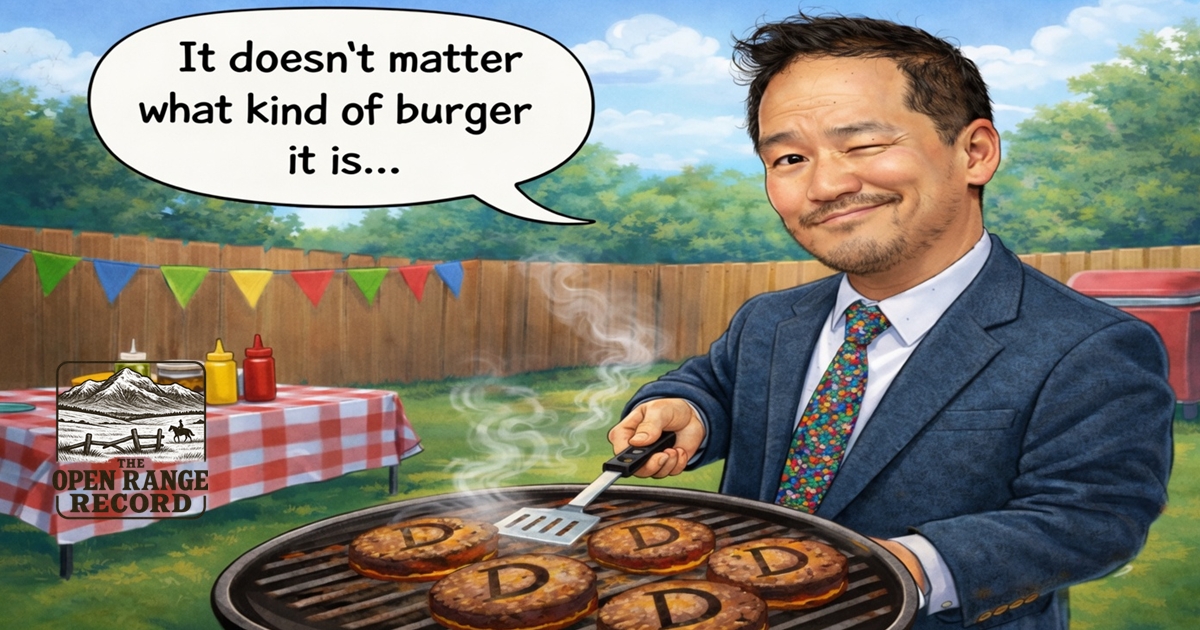
LaBarge — Wyoming voters are being told, once again, not to pay too much attention to the scoreboard. This time the message comes from Rep. Mike Yin, a Teton County Democrat, who recently penned a guest column urging voters to reject scorecards and tune out the people tracking legislative votes. Instead, they should rely on their own feelings about which candidates seem trustworthy, neighborly, and right for the job.
The message is wrapped in soft language about potlucks, funerals, fences, and community. It is written like a plea for civility, but underneath all that homespun packaging is an obvious political message: stop measuring lawmakers too closely. And this, my friends, is where Yin’s argument starts to wobble, because voters are not wrong for wanting receipts.
In fact, one of the healthiest things happening in Wyoming politics right now is that more people are paying attention. They are reading bills, asking harder questions, and comparing campaign rhetoric to actual votes. They are looking past the mailers, the slogans, the town hall charm and canned speeches. Voters are trying to figure out where their lawmakers really stand.
That is not extremism; that is what a critical-thinking civil society should be doing. Yin’s column tries to paint legislative scorecards and ideological accountability as some kind of outside contamination, as though Wyoming voters were better off back in the good old days when they just knew a guy from church, saw him at the fair, liked his handshake and trusted him with the future. Yin complains about social media pages and scoreboards tracking how lawmakers vote (especially when Republicans vote with Democrats) as if the real offense is not the vote itself, but the fact that somebody noticed their votes.
When Voters Start Watching the Whole Game
The whole point is that people are now noticing how this game is played, and some legislators don’t like it. The discomfort is not coming from misinformation; it comes from the scrutiny of voters who finally realize that the real game in Cheyenne is often played long before a flashy final vote ever makes headlines. Bills can be stalled, watered down, redirected, buried in committee, or blocked before they ever get a clean public fight.
The public is getting wiser to that process. They are learning that first reading matters, amendments matter, procedural votes matter, committee assignments matter, and budget-session introduction votes matter. And let us not forget the repeated patterns of Republicans voting with Democrats matter too. The constituency isn’t being unfair. That is how adults evaluate performance.
What Yin is really objecting to is not toxicity but transparency. Because once voters begin tracking the whole process instead of just the polished floor speeches, the image management gets harder to spin. It becomes harder for the incumbent to run as a conservative back home and govern like a moderate insider in Cheyenne. It becomes harder to sell personality over principle, and harder to dodge direct questions with vague, polished non-answers that sound thoughtful until the audience realizes nothing was actually said.
Let’s be honest: Wyoming has no shortage of politicians who can fake a personality. Some of them are very good at it. They know how to smile, work a room, crack a joke, give a nice little speech about freedom and family and local control, and then turn right around and vote in ways that leave their own voters wondering what on earth just happened.
That is why the idea that people should just “decide for themselves” based on instinct and familiarity is so thin. Of course, voters should decide for themselves, but they should decide for themselves with information.
Why Scorecards Matter
Voter education should include scorecards with vote analysis. It should also include comparing what a candidate said on the campaign trail with what he/she did once elected.
Some scorecards focus on ten or twelve bills that reflect a party platform. Others take a broader look at how lawmakers voted throughout the legislative process, including bill introduction, amendments, procedural motions, and final passage. Not all scorecards are perfect. Some can be slanted. But the answer to imperfect information is better information, not less information. The answer is not to scold voters for keeping score.
And here is the larger point Yin skips right past. If you are going to call yourself a Wyoming Republican, voters have every right to expect that your values, your votes and your judgment are at least recognizable next to the Wyoming Republican Party platform. That does not mean every bill is simple. It does not mean every issue is black and white.
Bills are often written in legalese thick enough to make the average person’s eyes cross, and frankly, sometimes even legislators do not seem to fully understand what they are voting on. Voters should allow room for confusion, honest disagreement, and the occasional mistaken vote. But that grace only goes so far.
What frustrates people is not one confusing amendment here or there. It is the pattern, the slippery rhetoric, and the constant spin. It is hearing one thing in a campaign flyer and seeing another thing on the floor. It is watching lawmakers get defensive when citizens ask where their morals, ethics and values line up when the vote is on the board.
Values Do Not End When Session Starts
That frustration is not confined to one side of the aisle. People across Wyoming want to know what their elected officials truly believe. They want to know whether a lawmaker values limited government or bigger government, self-reliance or dependence. Does he believe in free markets or subsidies; in individual responsibility or bureaucratic management. They want to know whether a representative means “pro-life,” “fiscal conservative,” and “limited government,” or whether those are just nice-sounding phrases for campaign season.
Values are not supposed to disappear the minute session starts. On the Republican side especially, the divide is not hard to understand. Platform Republicans generally believe in less government, less spending, individual liberty, self-reliance, personal responsibility and letting people keep more of what they earn.
Democrats, and often the Republicans who repeatedly line up with them, tend to be more comfortable with bigger government, more spending, more subsidies, more programs and more state involvement in shaping outcomes. Social issues, abortion, fiscal restraint, government dependence, business subsidies — those are not little side arguments. Those are major fault lines, and voters are not crazy for wanting to know exactly where their own lawmakers fall on these issues.
So, when Mike Yin tells Wyoming voters to back away from the scorecards, maybe the question is not whether the scorecards are too harsh. Maybe the better question is why so many people in power are suddenly nervous now that voters are reading them.
This is not about neighborliness or Wyoming manners. And it is definitely not about protecting the sacred right of voters to think for themselves. It is about whether voters will keep doing the one thing that makes politicians most uncomfortable: paying attention.