NEWS
CHEYENNE — If you spend an afternoon watching the Wyoming House, you might think you’re seeing a group of people who can’t make up their minds. A bill is called, the roll is taken, and a wave of "Ayes" fills the room. But just before the result is final, a handful of lawmakers suddenly flip their votes to "No".
This isn't a change of heart; it could be a "procedural save."
The "Winning Side" Ticket
The Wyoming legislative rulebook, guided by a manual known as Mason’s, has a very specific gatekeeper for second chances: the Motion to Reconsider. The rule is simple but strict: only someone on the prevailing side (the winning side) can ask for a second vote. That is, if the majority vote was to kill a bill, then only a member who voted against the bill can move to reconsider the vote. Likewise, if the vote was to pass the measure, then only a person who voted "Aye" can ask to have the vote reconsidered.
In the current 2026 Budget Session, passing a bill is hard: it requires a two-thirds supermajority of 42 votes just to get in the door. If a bill only gets 38 "Yes" votes, the "No" side wins. To keep the bill alive, a supporter who voted "Yes" has to perform floor-room gymnastics. Before the result is announced, a member originally on the "losing" side rises and announces they are changing their vote. By technically voting to "kill" the bill, they earn the right to stand up later and ask for a "reconsideration" of the vote because they joined the prevailing side.
The Fog of War
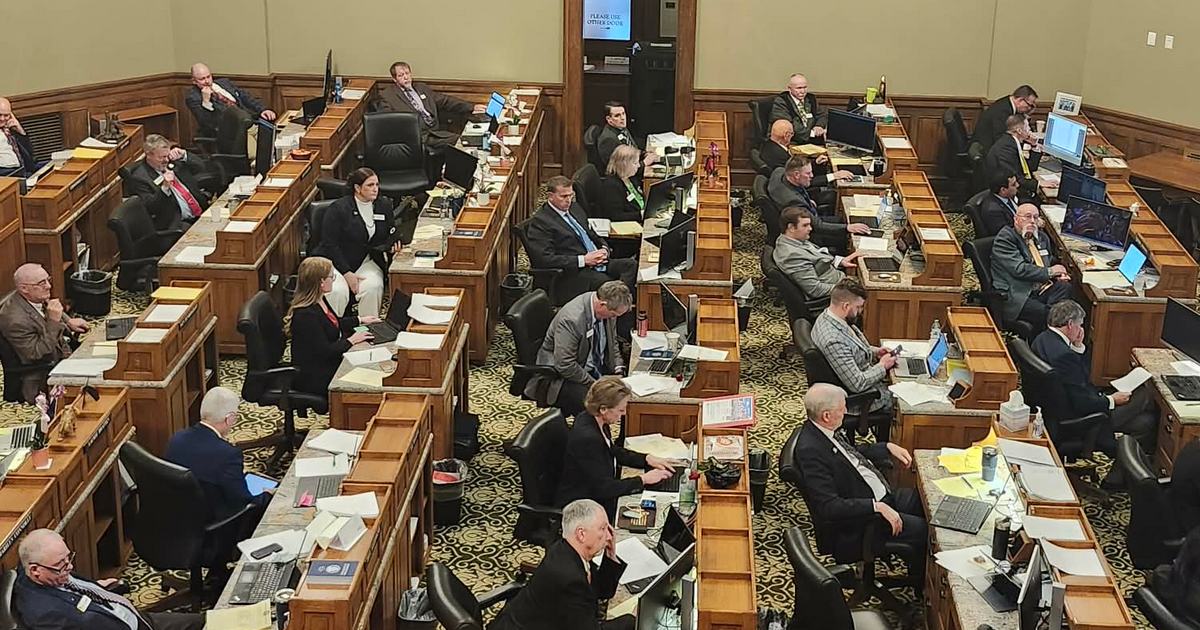
Because Wyoming doesn't use a giant electronic scoreboard, legislators have to be master bookkeepers. As the Chief Clerk calls the roll, members are at their desks, furiously tallying the "Ayes" and "Noes" by hand. "As the roll call proceeds, members individually tally the vote," the manual explains. If the tally shows the bill is going to fall short of that magic number of 42, the "scramble" begins.
This scramble was on full display during today’s session. An analysis of the voting records identifies 12 distinct bills brought to a vote with a total of 137 individual vote changes recorded. These are not random shifts; they are calculated responses to the real-time math happening on every representative's desk.
A Day of Tactical Flipping
Take the action surrounding HB 19. During this vote, a block of representatives—including Bill Allemand, Robert Wharff, Scott Smith, J.D. Williams, and Marlene Brady—all flipped from Aye to No in a single moment. Later, during the vote for HB 20, another wave occurred as Rachel Rodriguez-Williams, Tom Kelly, Darin McCann, and Joe Webb executed the same flip.
The pattern repeated consistently throughout the day. For HB 46, fourteen representatives, including Landon Brown, Steve Harshman, and Bob Nicholas, switched to "No". By the time HB 110 was called, a massive group including Kenneth Clouston, Julie Jarvis, Ken Chestek, Trey Sherwood, Karlee Provenza, Lloyd Larsen, and Ivan Posey followed suit.
Electioneering and Strategic Camouflage
While many flips are for reconsideration, there is a quieter reason for these shifts: the campaign trail. In the current political climate, "The Record" is everything. If a bill is clearly going to die, a representative may not want a "Yes" vote attached to a losing effort that could be used against them in a primary election mailer.
Alternatively, some flips are used to signal support for a popular cause even if the lawmaker knows the bill is already dead. By flipping from No to Yes at the last second on a doomed bill, a representative can technically claim to have "voted for" the issue on the final record. This "electioneering" allows members to tell their constituents they supported a policy while the procedural outcome remains unchanged.
The Power of the "Do-Over"
Why go through all this trouble? Because of the math. While it takes a massive two-thirds majority to start a bill, it only takes a simple majority of more than half to pass a motion to reconsider. Once that motion carries, the main question is right back where it was before, as though the first vote never happened.
There is no debate on the motion to reconsider itself. It simply calls for a new vote. This gives the losing side an opportunity to muster forces, perhaps because of the absence of members whose vote would reverse the decision, or because someone might be persuaded to a change of mind.
Possession and Timing
In the House, timing is everything. A vote may be reconsidered only if the bill jacket is still in the possession of the body. House rules require the mover to specify that the motion will be made at a specific time on the next legislative day.
However, in the session's last ten days, the window shrinks: reconsideration in the House must be no later than the last item of business on the day of the original vote. This creates a high-pressure environment where supporters must act instantly to preserve their bills. We saw this urgency today in the final minutes of the session during the votes for HB 79 and HB 86, where representatives like McKay Erickson, Andrew Byron, and Tomi Strock joined final waves of vote changes.
So, the next time you see a Wyoming lawmaker switch from a "Yes" to a "No" at the 11th hour, don't assume they've turned their back on the issue. They might just be the only person in the room with the power to bring it back to life.