NEWS
It has now been one year since a Laramie County District Court judge ruled Wyoming’s public school funding system unconstitutional — a judgment that grew out of the lawsuit Wyoming Education Association v. State, brought by the Wyoming Education Association and eight school districts.
In that February 2025 ruling, Judge Peter Froelicher agreed with plaintiffs that the state was not adequately accounting for inflation, competitive salaries, or essential services such as mental health counselors, school safety officers, nutrition programs, and student technology. He ordered the state to modify its funding model to meet constitutional standards and explicitly noted that 2025 was a recalibration year, Wyoming Public Media calledit an “excellent window of opportunity” to address those deficiencies through the statutory recalibration process.
One year later, recalibration remains unresolved.
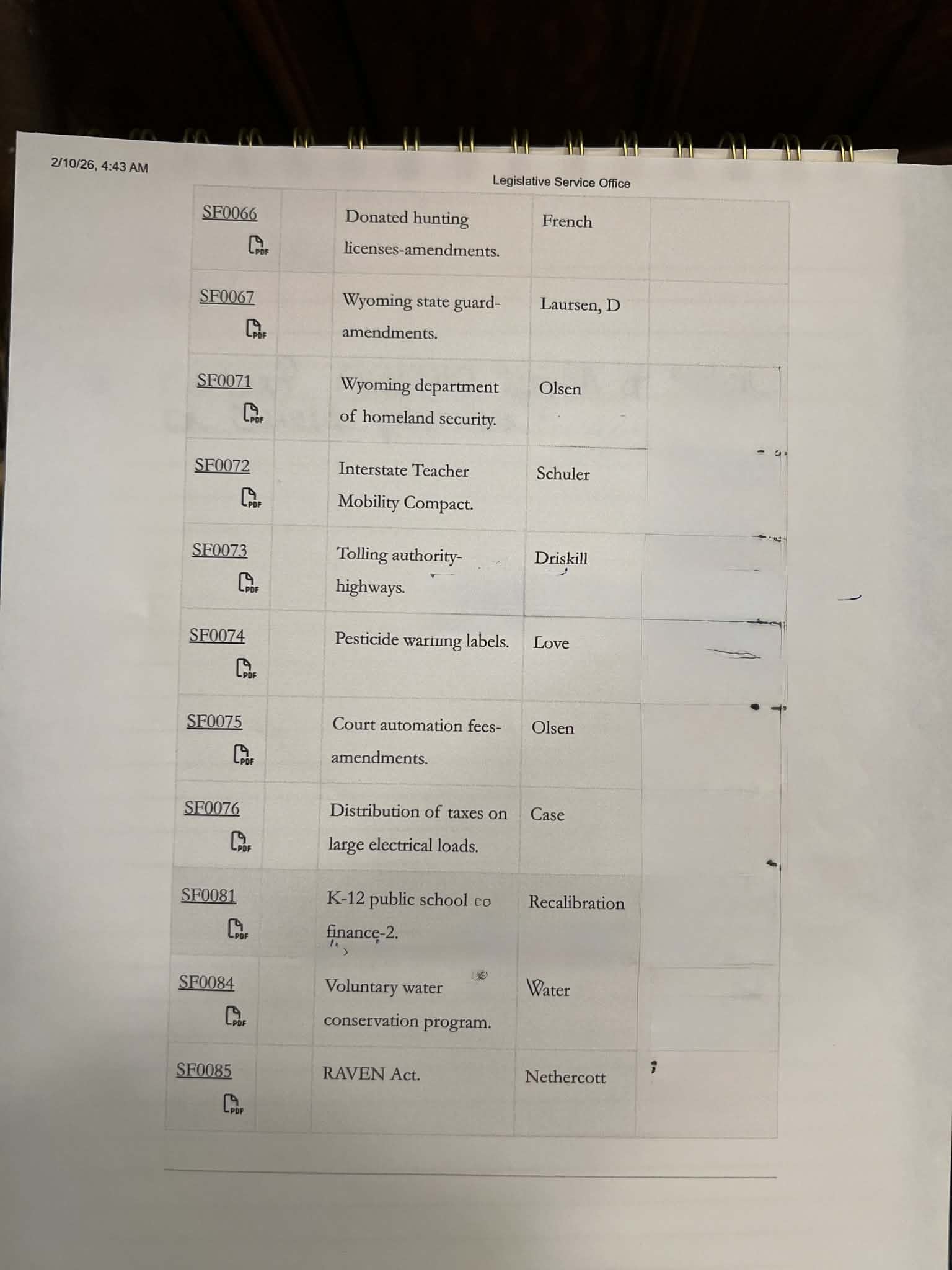
On the Senate side, SF0081, the recalibration bill, appeared on the printed Senate’s introduction docket at 4:43 a.m. on February 10 and was pulled off the docket by 8am. Sources have told the Open Range Record, that Senate President Dennis “Bo” Biteman has placed SF0081 in his drawer.
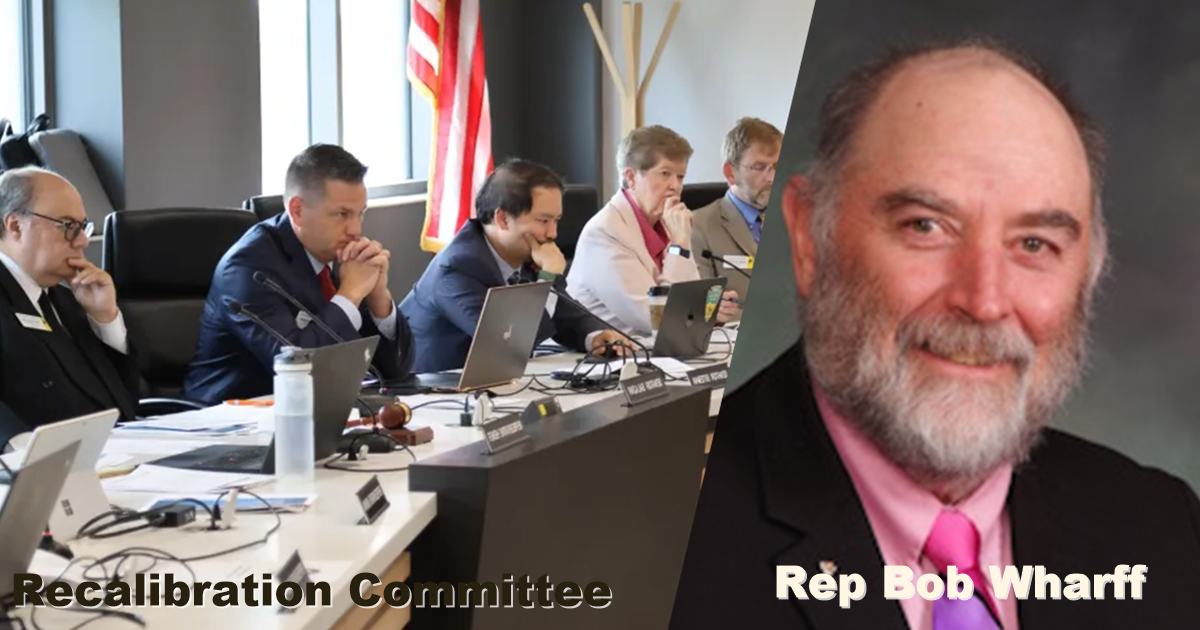
On the House side, HB0110, the house recalibration measure, failed the 2/3 introduction threshold February 9, 2026 by a vote of 41-21, effectively blocking legislative recalibration this session. Normally conservative Bob Wharff (HD49-Uinta County) sided with all of the Democrats and liberal Republicans to end the recalibration effort in the Wyoming House.

Following that House vote, House Floor Majority Leader Scott Heiner issued the following statement:
“The WEA, school districts and liberal legislators have made it clear that they do not want recalibration of our outdated public education funding model. These liberal legislators abdicated their constitutional duties to the courts and refused to let it come to the House floor for discussion. As a direct result, teachers will not get a well deserved pay raise, nor additional adults and resources in the classroom. The Joint Recalibration Committee worked hard this past summer to strengthen the classroom, raise wages and add over $100 million annually to Wyoming schools. Unfortunately, this will have lasting and detrimental effects for our children in Wyoming.”
Whether one agrees with Rep. Heiner’s characterization or not, the timeline is undisputed:
• February 2025: A court ruled Wyoming’s school funding
system unconstitutional and pointed directly to recalibration as the
Legislature’s responsibility.
• February 2026: Recalibration bills in both chambers failed to advance.
The Obstruction Question
This is where the role of the Wyoming Education Association warrants scrutiny.
The WEA successfully sued the state arguing that the Legislature failed its constitutional duty to adequately fund education. Yet one year later, as recalibration bills are introduced, the organization has actively opposed legislative recalibration — including pressure campaigns urging lawmakers not to advance those bills.
The outcome of that opposition is clear: recalibration has been blocked.
Blocking recalibration does not preserve legislative authority. It transfers it.
When the Legislature fails to act, judges will decide school funding levels, exactly as courts have warned. That may serve litigation strategy, but it removes accountability from elected lawmakers and places it with the judiciary.
That creates a serious separation-of-powers problem.
Judges have made clear that when recalibration does not occur, the courts will impose remedies — meaning judicial decision-making could determine school funding in Wyoming. That result is precisely what many legislators publicly criticized just days earlier during discussions about judicial overreach and “legislating from the bench.”
Public Questions That Remain Unanswered One Year Later
• Why were recalibration bills blocked instead of debated
and amended openly?
• How does delaying recalibration comply with a standing court ruling that
directs legislative action?
• Why would an organization that sued to force constitutional compliance oppose
the legislative mechanism designed to achieve it?
• If courts step in again, who will be accountable to teachers, parents, and
taxpayers for that outcome?
This is not just legislative infighting. It is not an abstract policy dispute.
It affects teachers waiting for promised pay raises, students waiting for classroom resources, parents demanding stability, and taxpayers who will ultimately pay for court-imposed solutions if legislative inaction continues.
One year after the court’s ruling, recalibration remains stalled — not because it is optional, but because it has been blocked.
This Legislative Watch will continue tracking whether recalibration resurfaces — and which lawmakers and organizations choose to own or obstruct the Legislature’s constitutional obligation to fund Wyoming’s public schools.